





Blue and White Teacups
Blue and white teacups carry centuries of hand-painted cobalt and crisp porcelain, offering a tangible link to historical tea tables.
Blue and White Teacups
When you search for blue and white teacups, you encounter centuries of ceramic history ranging from eighteenth-century English factories to Qing Dynasty pieces and Japanese export wares. The forms span tea bowls, coffee cans, saucers, and full trios.
You are most likely to meet eighteenth-century English porcelain tea bowls and saucers alongside nineteenth-century Staffordshire and Worcester productions. These vessels were made for social tea drinking, utilising cobalt underglaze decoration that defines the palette.
How they were made
The body of these vessels is typically formed from porcelain, bone china, or soft-paste porcelain, shaped by hand or wheel before firing. Early English and Asian pieces rely on precise mineral compositions to achieve their characteristic translucency.
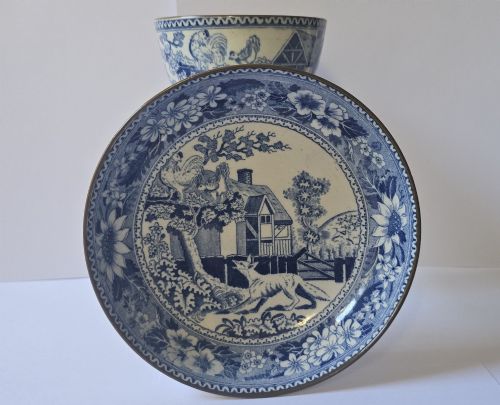
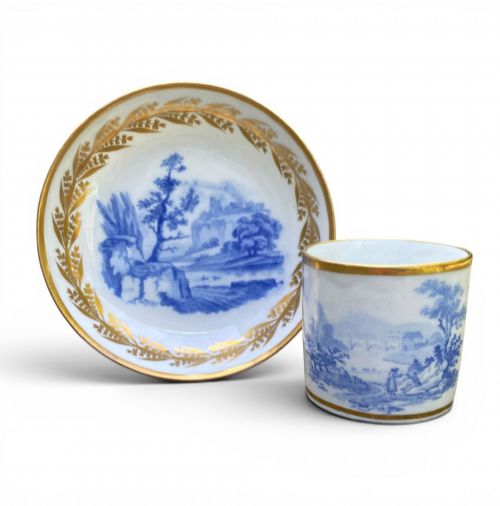
Decoration is applied using cobalt underglaze pigment beneath a clear glaze, sometimes supplemented with enamel colours or gold gilding and gold leaf. The pieces are then subjected to high-temperature kiln firings to fuse the cobalt permanently into the glaze.
Blue and White Teacups Retail Price Guide 2026
Typical asking prices for blue and white teacups among the pieces listed under this phrase on Sellingantiques today, from the lower quarter to the upper quarter. They describe what is for sale here now, not the wider market.
Historical porcelain tea sets occasionally preserve wonderfully eccentric pattern names like 'Crazy Cow' or 'Bengal Tiger'.
What varies in quality
Quality rests in the precision of the cobalt painting and the clarity of the porcelain body, where finer pieces display crisp brushwork and thin, even walls. Potteries such as Worcester or early Chinese kilns achieved superior chemical control during firing.
The refinement of the glaze surface and the delicacy of any added gilding or enamel work distinguish ordinary production from exceptional workshop output. Hand-painted detail demonstrates the individual skill of the decorator rather than mass-produced transfer printing.
H and R Daniel·New Hall·Coalport·Derby·Worcester·Yates·Minton·Lowestoft·Sutherland
The Blue and White Teacups Glossary
- Underglaze
- Decoration applied to the ceramic body before the glaze is applied and fired. This technique protects the cobalt blue pigment beneath a glassy layer, ensuring durability over centuries of use.
- Soft-Paste Porcelain
- A fired ceramic composite made from glass frit and white-firing clays rather than hard-paste materials. It produces a warm, slightly creamy body frequently found in eighteenth-century English teaware.
- Tea Bowl
- A handleless vessel used for drinking tea before the widespread adoption of handled cups in Western service. They require both hands to hold when the liquid is hot.
- Coffee Can
- A straight-sided cylindrical cup designed specifically for drinking strong coffee in eighteenth and nineteenth-century domestic settings. They often accompany saucers in matched trios with tea cups.
- Celadon-Ground
- A pale green jade-like ceramic glaze background used on oriental porcelains. It provides a contrasting field for underglaze blue decoration.
Blue and White Teacups: Frequently Asked Questions
How do I date a blue and white teacup?
Dating relies on identifying the paste type, factory marks, and painting style characteristic of periods like the eighteenth century or Georgian era. Subtle variations in the footring and handle shape also point to specific decades of manufacture.
Factory attribution is further confirmed by comparing paste translucency and cobalt hue against known reference examples from makers like Worcester or New Hall.
Were tea bowls used without handles?
Early European tea bowls copied Chinese prototypes directly and were deliberately made without handles for drinking green or black tea. Holding the warm bowl in both hands was an established part of eighteenth-century tea etiquette.
Handles only became standard on teacups later as European porcelain manufacturing evolved and hot black tea with milk grew popular.
Can I use antique teacups for tea?
Soft-paste porcelain and early bone china tea vessels can be used gently, though thermal shock from boiling water should be avoided. Hand washing is essential to preserve fragile enamel details and gold gilding.
Many collectors prefer to display these fragile porcelain pieces rather than risk accidental hairline cracks or staining to the historic glaze.
What is the difference between a tea set and a trio?
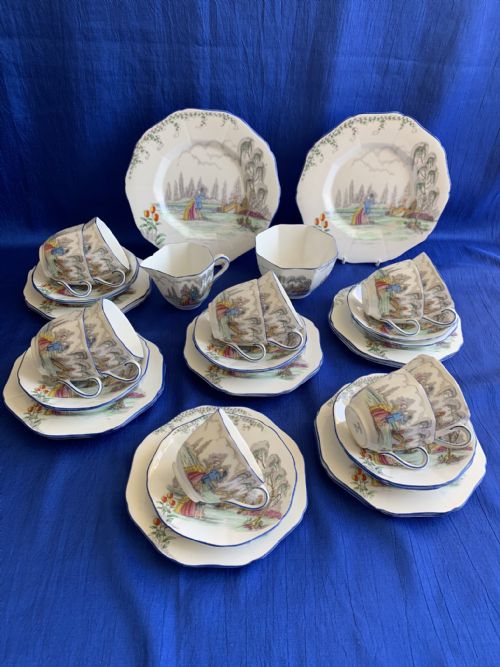
A trio consists of a teacup, a coffee can or second cup, and a matching saucer designed for versatile entertaining. A tea set includes multiple cups, saucers, and often larger service pieces like teapots or slop bowls.
Trios were particularly popular in the early nineteenth century when households served both tea and coffee to guests.