

Two Light Sconces
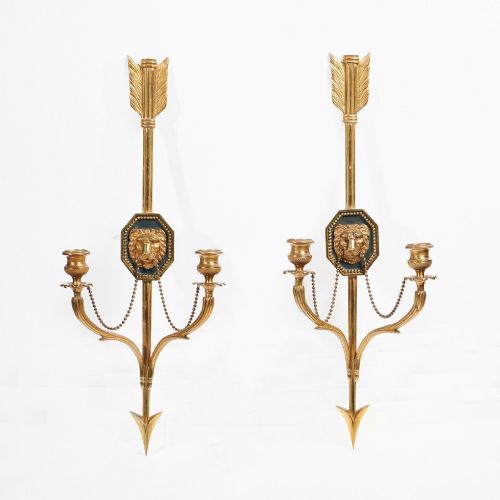
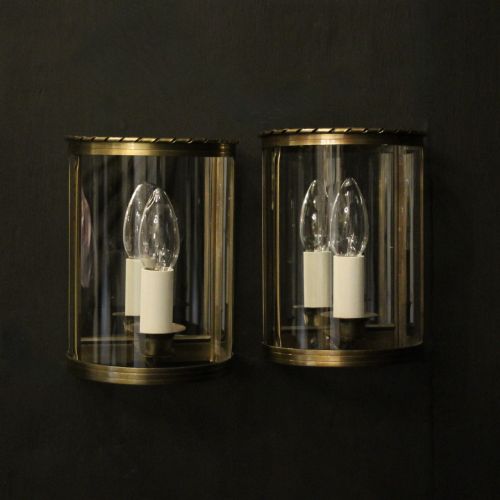
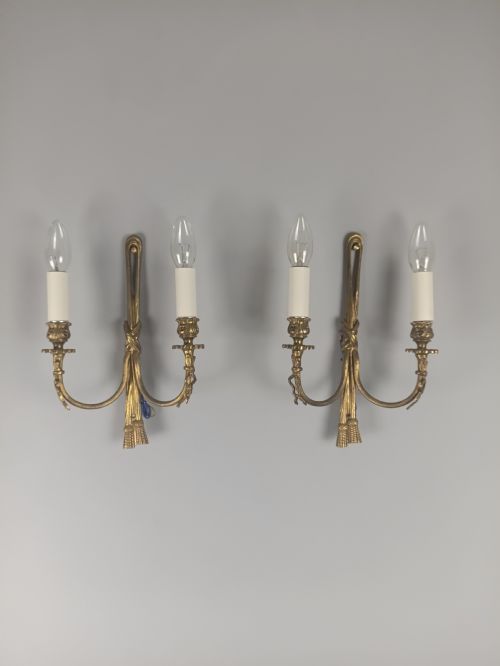
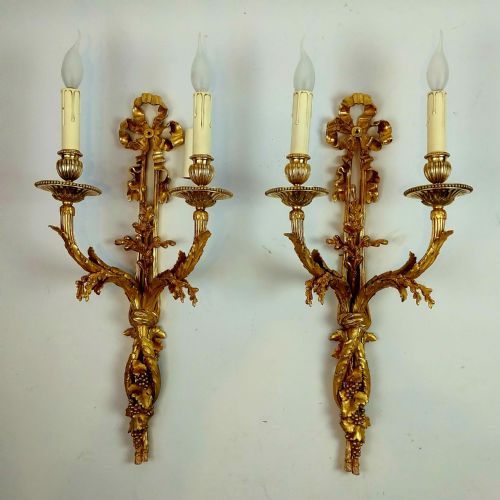
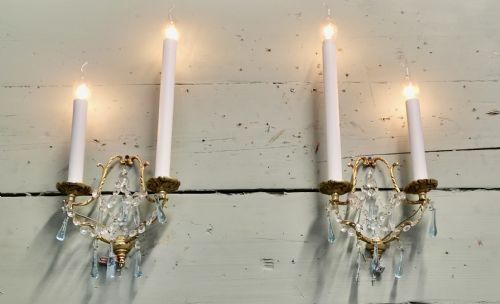
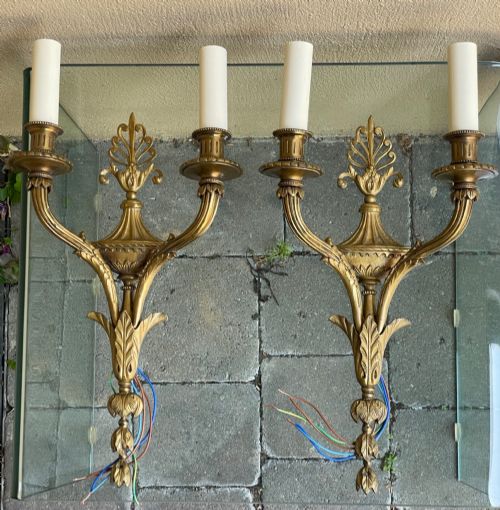
These two light sconces provide paired illumination to a wall, blending functional design with decorative metalwork and crystal.

Two Light Sconces
When searching for two light sconces, buyers encounter wall mounted fixtures designed to hold a pair of candles or electrical fittings, predominantly taking the form of pairs. The selection spans the nineteenth century through the early twentieth century, with strong representation from the nineteen-thirties.
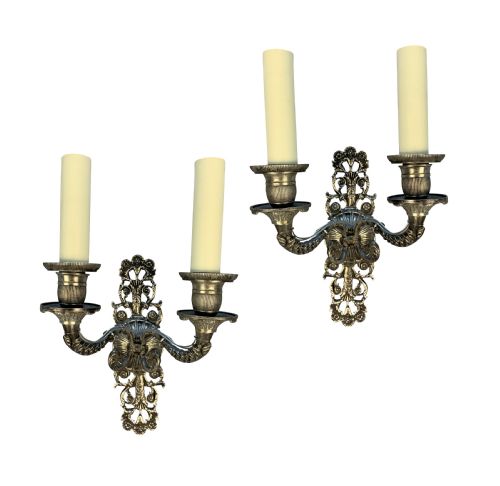
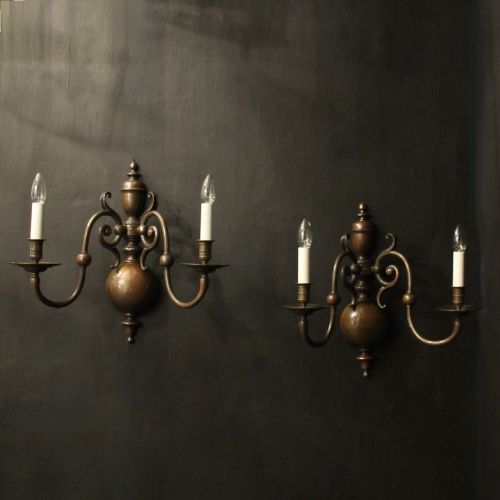
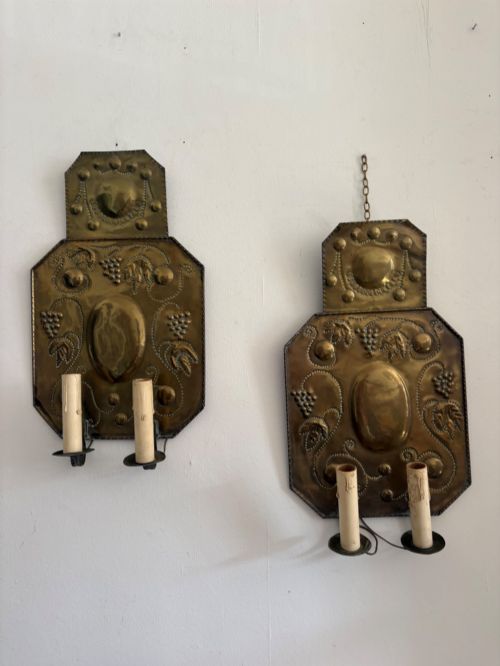
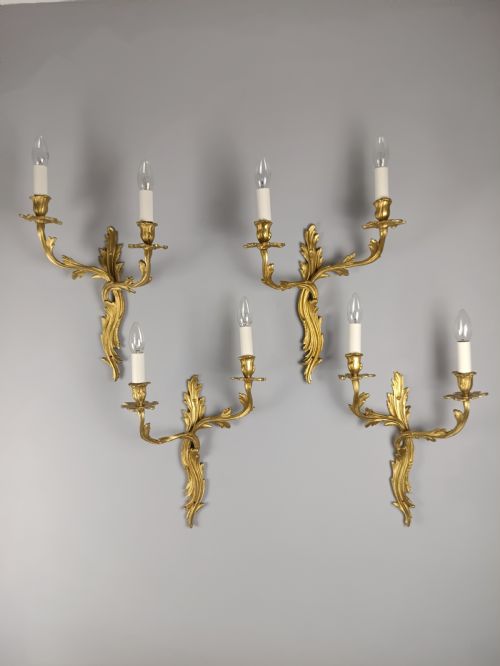
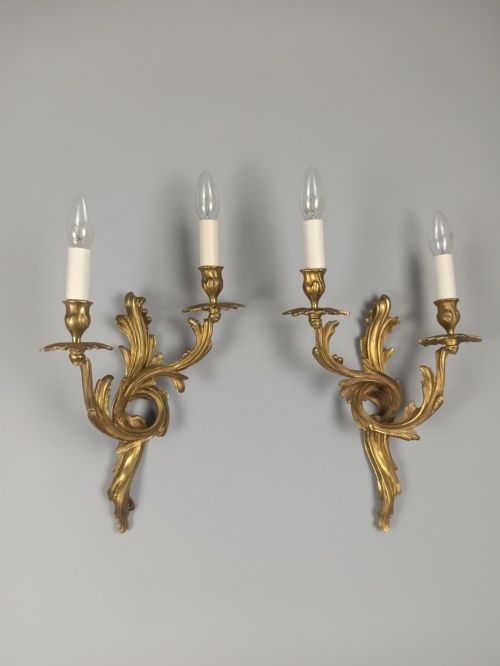
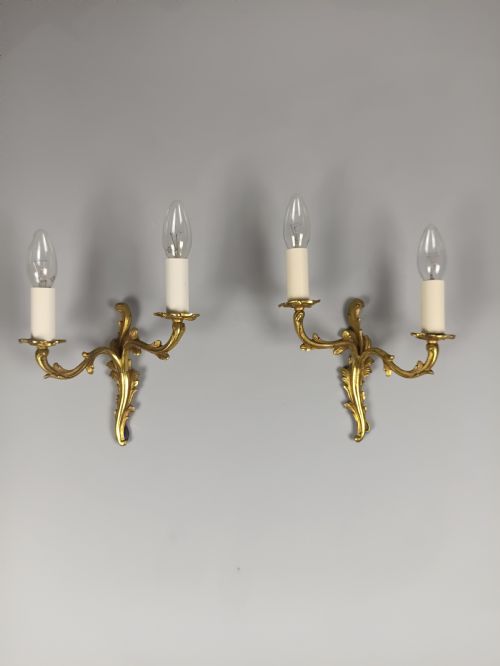
The dominant forms recorded are French and Italian wall lights, alongside Dutch repousse brass examples and English brass and bronze pieces. Many pieces utilise twin arms branching from a central backplate, often described as wall lights, appliques, or wall candelabra.
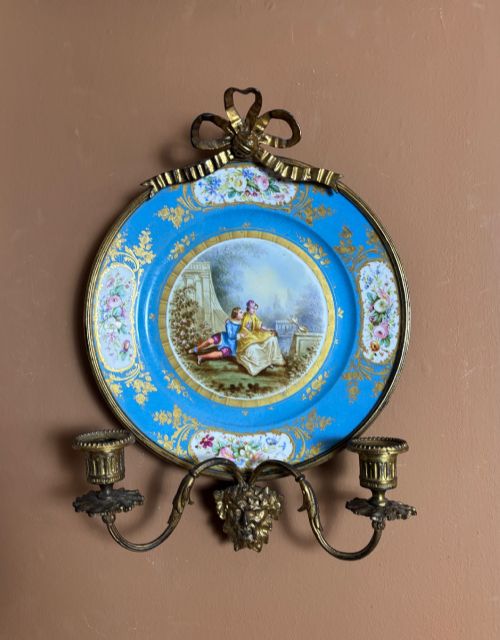
Stylistic influences range widely across the periods, incorporating French Rococo, French Empire, Louis XIV Revival, Dutch Baroque, Florentine giltwood, and Adam styles. Materials lean heavily towards cast metals ornamented with gilding, glass, and porcelain mounts.
What Varies in Quality
Quality diverges notably in the crispness of the metal chasing and the depth of the casting detail, where superior examples exhibit sharp relief and refined finishing. The quality of the gilding and the integration of secondary materials like porcelain or crystal determine the visual impact of the piece.
Structural integrity of the twin arms and the backplate mounting points separates standard production from finer workshop output. Superior pieces display harmonious proportions and balanced arm placement that reflect considered design during the manufacturing process.
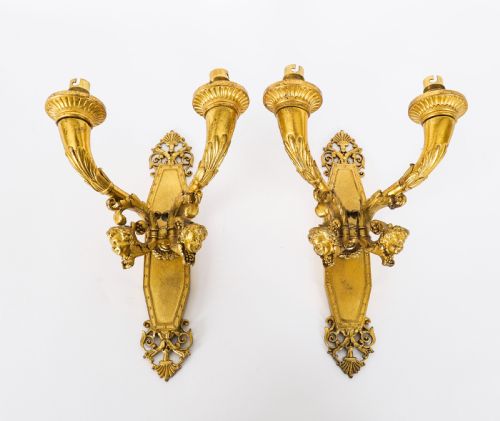
Cherub motifs peer out from nineteenth century ormolu arms, holding up twin branches to light the room.
The Two Light Sconces Glossary
- Ormolu
- Gilded bronze, produced by applying a mercury and gold amalgam to cast bronze before heating. This technique creates a durable golden surface frequently found on nineteenth century French fixtures.
- Repousse
- A metalworking technique where the metal is hammered from the reverse side to form a raised design in relief. This method is characteristic of Dutch brass wall sconces.
- Applique
- A wall mounted light fixture designed to direct illumination outwards into a room. The term is frequently used interchangeably with wall sconces in French and Italian decorative arts.
- Giltwood
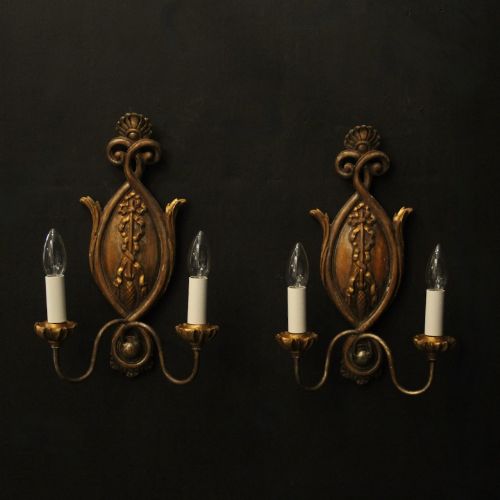
- Timber, commonly carved gesso on wood, treated with gold leaf or metallic paint. This finish defines many Florentine and French wall lights from the nineteenth and early twentieth centuries.
- Toleware
- Lacquered or enamelled metal items, often painted with polychrome motifs. It appears on specialised half lanterns and wall light sconces.
Two Light Sconces: Frequently Asked Questions
How were two light sconces traditionally used?
These fixtures were mounted on walls in pairs or sets to provide ambient illumination in reception rooms and hallways. They held candles positioned to reflect light off surrounding mirrors and gilded surfaces.
Over time, many of these wall lights have been adapted for electrical wiring while retaining their original decorative positioning on the wall.
What periods do these wall lights represent?
The available pieces span from the nineteenth century through to the nineteen-thirties, capturing multiple revival movements. Earlier nineteenth century items often showcase French Empire and Louis XIV revival designs.
Later pieces from the early twentieth century continue these classical motifs alongside Florentine giltwood and Adam style interpretations.
Which materials are most common?
Brass, bronze, and ormolu form the primary metallic structure for the majority of these wall mounted fixtures. Gilding appears extensively across both metal and wooden components.
Additional materials include crystal drops, glass panels, carved wood, and porcelain inserts from makers such as Sevres and Limoges.
How do French and Italian styles differ?
French wall lights often emphasise cast ormolu, gilt bronze, and neoclassical symmetry derived from Empire and Louis XIV influences. The metalwork is typically crisp and heavily chased.
Italian fixtures frequently showcase carved giltwood, polychrome finishes, and Florentine leaf motifs, emphasising organic wooden forms over cast metal.