
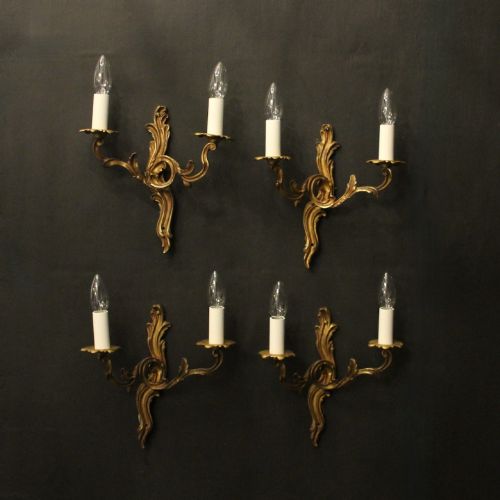
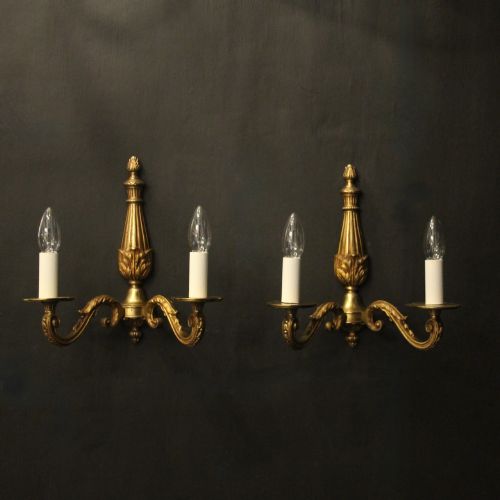
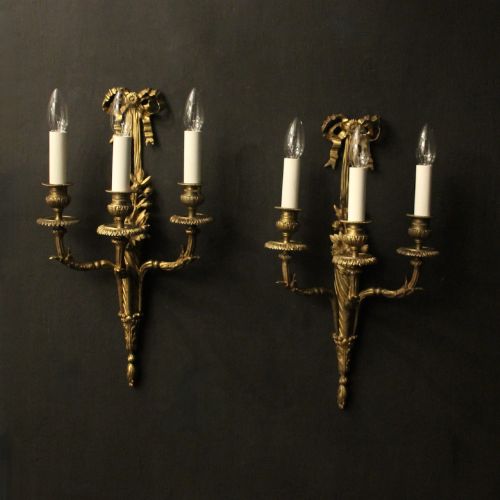
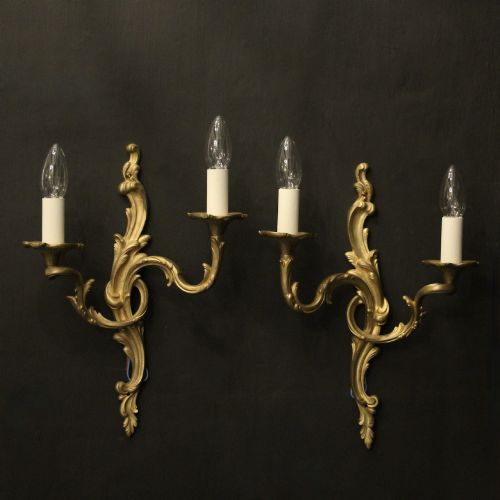
Ormolu Wall Sconces Pair
An ormolu wall sconces pair brings historical illumination to an interior, combining cast bronze metalwork with gilded surfaces.
Ormolu Wall Sconces Pair
When searching for an ormolu wall sconces pair, a buyer encounters lighting fixtures designed to mount directly onto vertical surfaces. These items originate predominantly from nineteenth and early twentieth century French workshops, reflecting traditional design idioms.
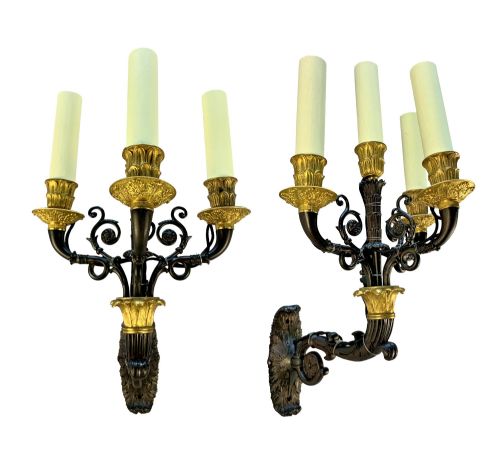
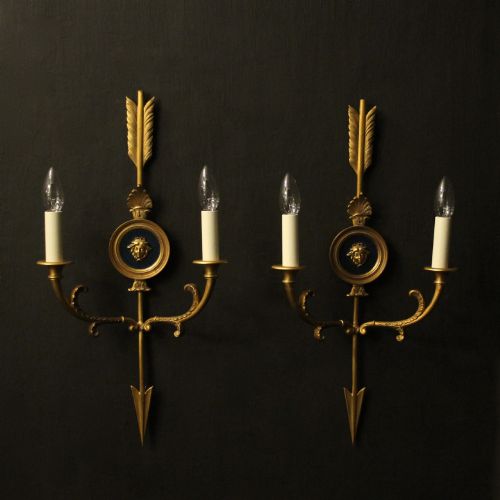
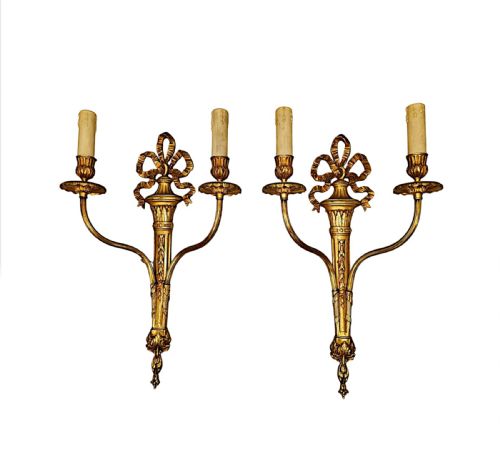
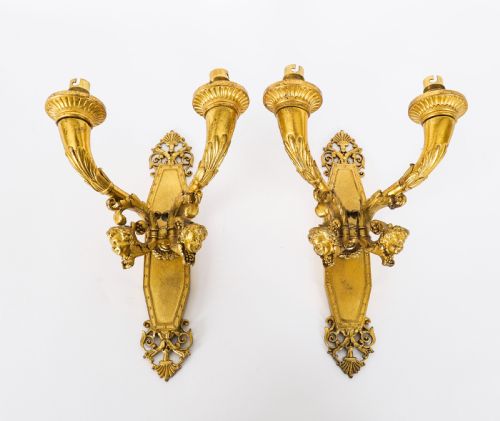
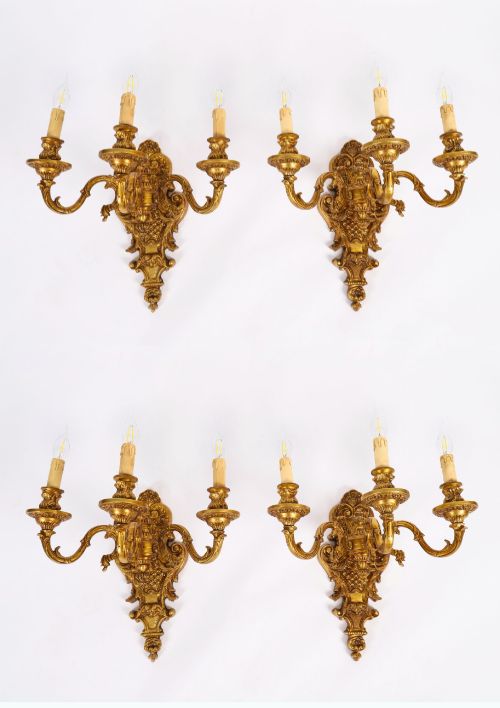
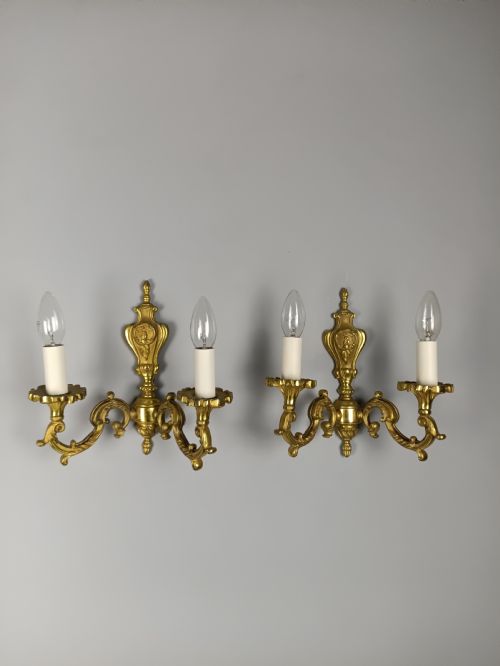
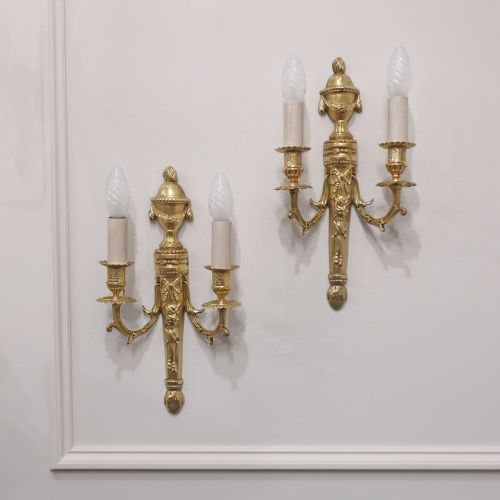
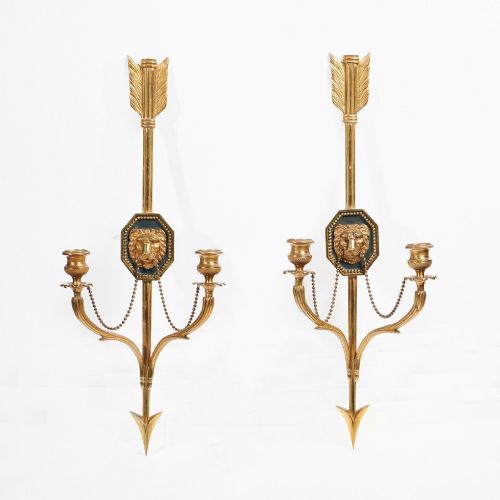
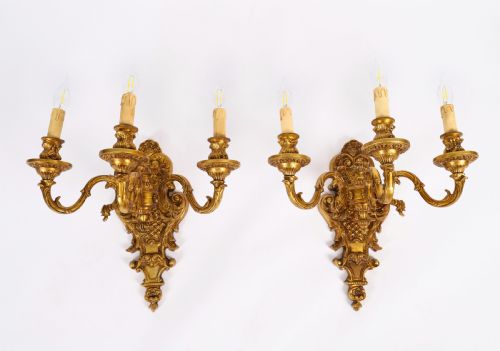
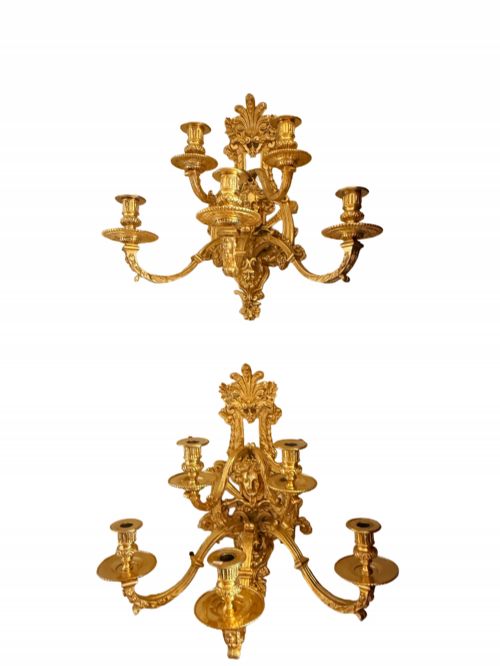
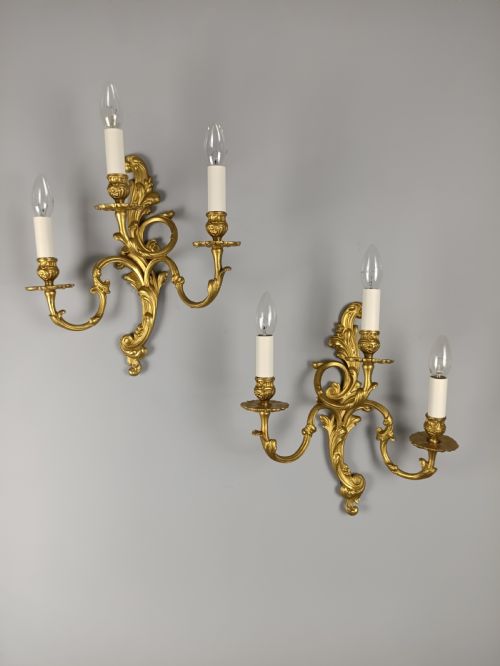
The pieces on this page appear most frequently in forms carrying two, three, or four candle branches. Makers often styled them using French Rococo, Louis XVI, and Empire aesthetics, incorporating motifs such as cherubs, porcelain flowers, and ram's head masks.
Surviving examples span periods from the Regency era through to the 1930s. Twin-arm and triple-arm configurations dominate the selections seen in both current listings and archive records.
Materials and technique
The foundation of these fixtures relies on cast bronze, brass, or mixed metals shaped into elaborate armatures and backplates. Manufacturers applied gilding to the base metal, creating the characteristic golden ormolu surface finish.
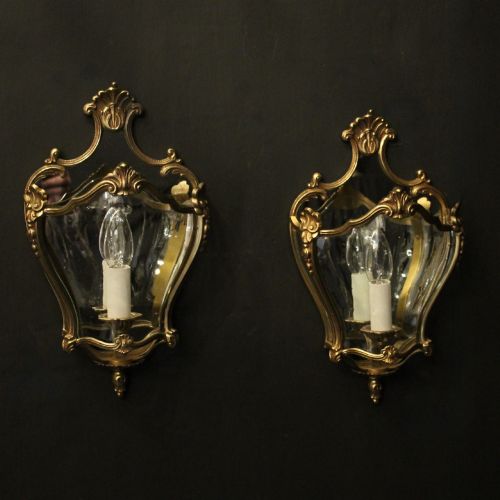
Secondary elements such as glass drops, mirrors, and porcelain flowers or plaques complement the metalwork on specific designs. Assemblages are held together using threaded components and pins, allowing individual branches and bobeches to be secured firmly.
Craftsmanship and detail
The weight of the metal and the complexity of the arm configurations also separate standard production from exceptional pieces. Heavier bronze castings with intricate, hand-chased surface details indicate a higher standard of original manufacture.
Casier·Henri Vian
The Ormolu Wall Sconces Pair Glossary
- Ormolu
- A method of applying finely ground gold-mercury amalgam to a bronze object, or the resulting gilded bronze surface itself. This technique was widely utilised by French makers to give base metals a rich golden appearance.
- Applique
- A wall-mounted light fitting designed to hold candles or electric lamps. The term is frequently used interchangeably with wall sconce.
- Bobeche
- A small collar or drip pan fitted beneath the candle nozzle to catch melting wax. It protects the arms and backplate of the sconce.
- Candelabrum
- A multi-branched lighting fixture designed to hold more than one candle or light source. Sconces of this type feature branching arms extending from a central wall-mounted backplate.
- Rococo
- An ornate artistic style characterised by asymmetry, scrollwork, and naturalistic plant motifs. Many nineteenth-century wall lights adopt this decorative vocabulary.
Ormolu Wall Sconces Pair: Frequently Asked Questions
How were ormolu wall sconces used?
These fixtures were mounted on drawing room and hallway walls to provide reflected candle illumination at eye level. Placing them near mirrors helped amplify the available light within nineteenth-century interiors.
Modern interiors utilise them to add accent lighting and architectural character to a room. They function effectively on either side of a fireplace, doorway, or large artwork.
Are these wall sconces wired for electricity?
Many surviving examples have been rewired for modern electrical supply to allow standard bulb usage. Listings often indicate whether a pair retains electrical fittings or remains in candle-only format.
Buyers should consult a qualified electrician to inspect the internal wiring before installation. This ensures the vintage metal components integrate safely with current domestic power circuits.
How do I distinguish Louis XVI style from Rococo?
Louis XVI style pieces rely on symmetrical geometry, neoclassical motifs, straight lines, and architectural restraint. They frequently incorporate urns, swags, and ram's head masks.
In contrast, Rococo designs embrace flowing curves, asymmetrical scrolls, and organic plant forms. They avoid rigid symmetry in favour of dynamic, wave-like movement across the backplate and arms.
What does ormolu mean?
Ormolu translates from the French phrase describing ground gold. It denotes a technique where a gold amalgam is fired onto bronze to create a durable golden finish.
Over decades of handling, genuine ormolu develops a warm, muted golden tone distinct from modern electroplated finishes. The surface responds well to gentle dusting while preserving its historical patina.