


Four Light Wall Sconces
Four light wall sconces bring symmetry and warmth to a room, offering grouped illumination through matching multi-branch fixtures.
Four Light Wall Sconces
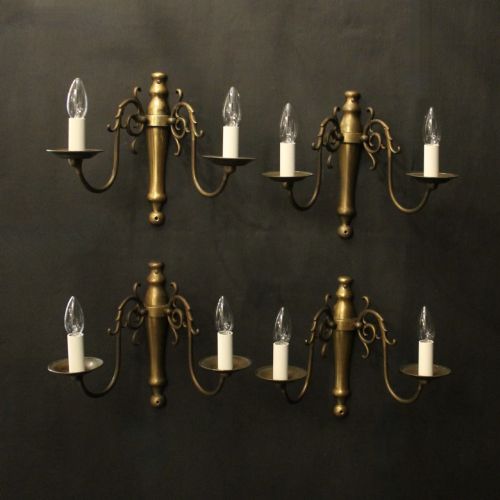
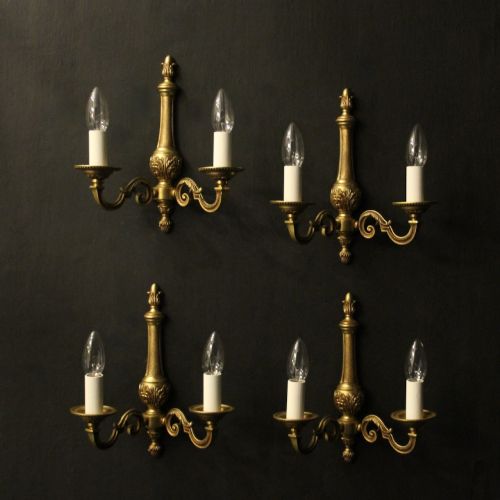
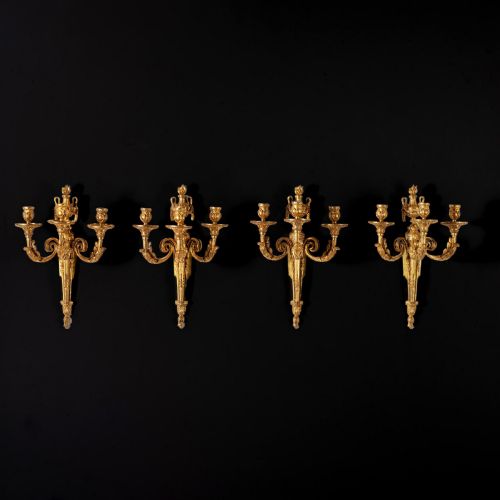
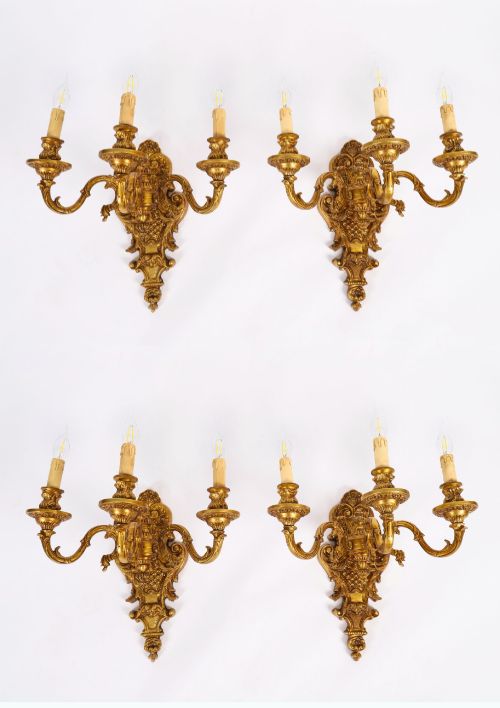
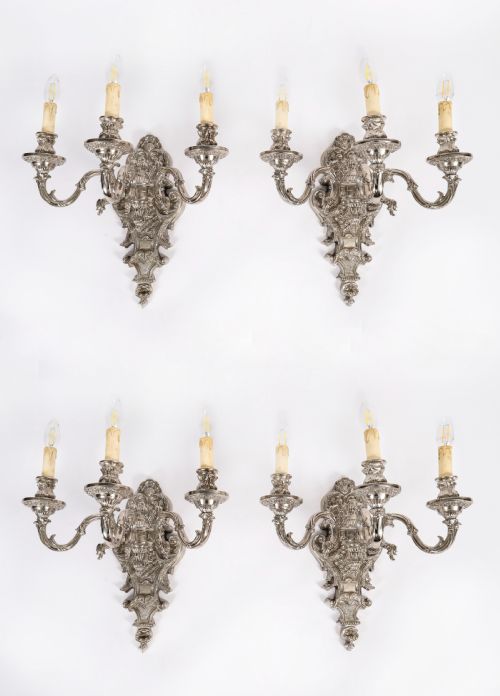
When you search for four light wall sconces, you encounter coordinated sets designed to balance illumination across a room rather than rely on a single central fixture. These fixtures appear primarily as matched groupings of four, originating from domestic and formal interiors spanning the eighteenth century through to the art deco era.
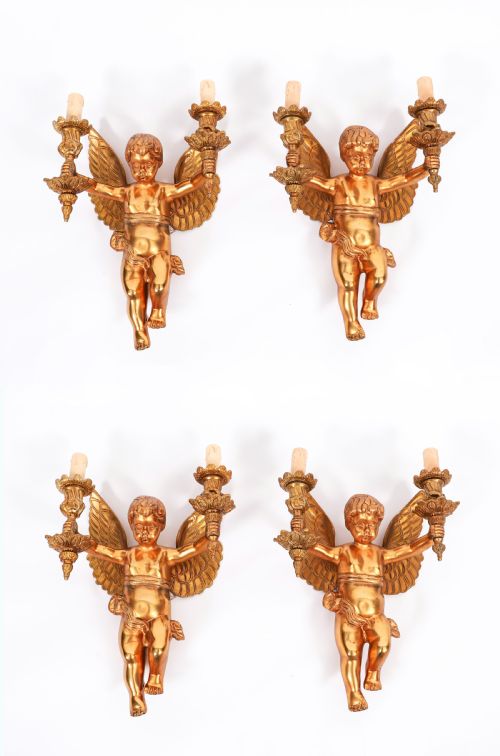
The selections available range from sturdy English brass pieces to elaborate French ormolu and Italian giltwood designs. Wall lights and appliques form the bulk of the options, with periods stretching from the eighteenth century up to the 1940s.
Buyers meet variations involving twin-arm, three-branch, and six-branch formats, often attached to backplates styled in French rococo, classical, or adam revivals. The surviving sets demonstrate how interior lighting was conceived in balanced multiples rather than isolated units.
Distinguishing quality in multiple sconces
The refinement of the casting and chasing separates standard production pieces from exceptional examples, particularly in ormolu and gilt bronze where crisp detail defines the foliage and figures. Superior sets maintain absolute consistency across all four matching units, ensuring that arms, backplates, and branch configurations align precisely.
The depth and durability of the original gilding or silver plating influence the overall visual weight of the fixture. Examples retaining their initial surface treatment without excessive rubbing exhibit greater historical integrity than those stripped or heavily refinished.
Flying cherubs persistently hover across these French and Italian sconces, hauling branch arms aloft as if lighting a ballroom single-handedly.
Faraday and Sons
The Four Light Wall Sconces Glossary
- Applique
- A wall-mounted light fixture or sconce, frequently originating from French tradition. These pieces fix directly to vertical surfaces to provide ambient illumination.
- Ormolu
- Gilt bronze created by applying a finely ground high-carat gold-mercury amalgam to a bronze base. This technique produces a rich, lasting metallic lustre seen on fine period sconces.
- Giltwood
- Timber that has been carved and coated with a thin layer of gold leaf. It appears on Florentine and decorative wall lights to create ornate, reflective frames.
- Louis XV Style
- A design movement characterised by asymmetrical rococo scrolls, naturalistic foliage, and C-scroll motifs. This aesthetic heavily influences eighteenth-century and revival wall lights.
- Adam Style
- A neoclassical design vocabulary drawing on ancient Roman and Greek motifs. Sconces in this taste display clean symmetry, urns, and delicate swags.
Four Light Wall Sconces: Frequently Asked Questions
How were four light wall sconces originally used?
These multi-branch fixtures were positioned in pairs or larger symmetrical arrangements along principal rooms to supplement natural daylight and candle or electric illumination. Their grouped branches maximised light output across dark wood panelling or wallpaper.
In domestic settings, they framed mirrors, fireplaces, or architectural doorways to create balanced pools of light. The matched set format ensured uniform decorative styling across a grand interior space.
How do I date an antique wall sconce?
Dating relies on identifying the underlying decorative style, such as rococo revival, art deco, or adam, combined with the material composition and casting technique. Eighteenth-century examples display hand-chased ormolu work, whereas twentieth-century pieces often reflect art deco geometry or standardised manufacturing.
Examining the screw threads, backplate fixings, and wiring channels provides further clues regarding age. Archived manufacturing traits and regional motifs help narrow the period of origin.
Are these sconces wired for modern electricity?
Many surviving wall lights have been adapted for electrical use during the twentieth century to suit contemporary living requirements. The conversion methods vary from internal rewiring of the original arms to surface-mounted flex integration.
Buyers should inspect the internal channels and lampholders to understand how previous generations updated the fittings. Professional rewiring is frequently recommended for older brass and bronze pieces before installation.
How do I clean gilt bronze and brass safely?
Maintenance requires gentle dusting with a soft, dry brush to prevent abrasive particles from damaging delicate gilt surfaces. Chemical polishes must be avoided on gilt bronze and ormolu, as they strip away the historic gold layer.
Solid unlacquered brass components tolerate mild cleaning if tarnish obscures the detail, but gilded finishes require extreme caution. Preserving the original surface patina maintains both the visual depth and historical value of the fixture.