
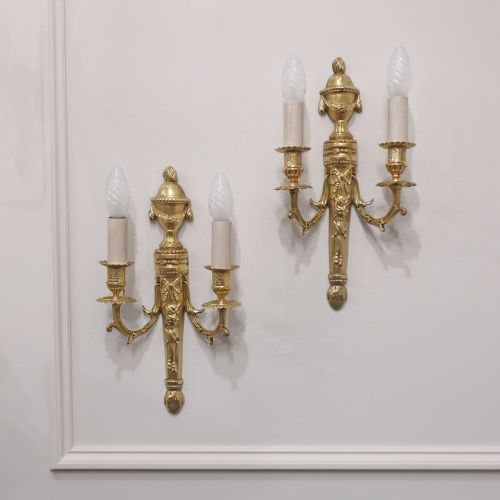
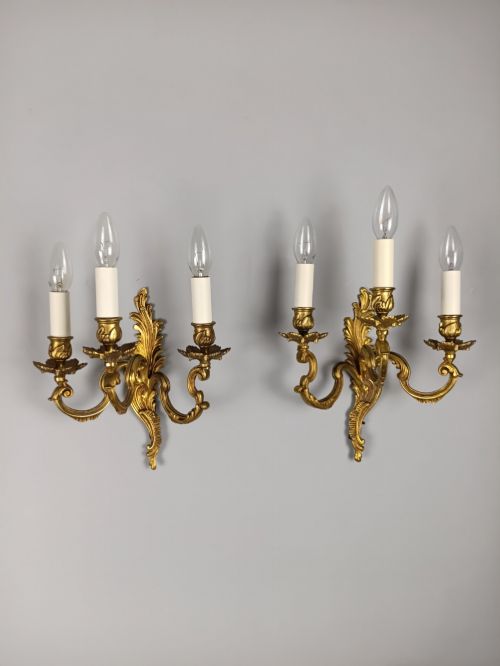
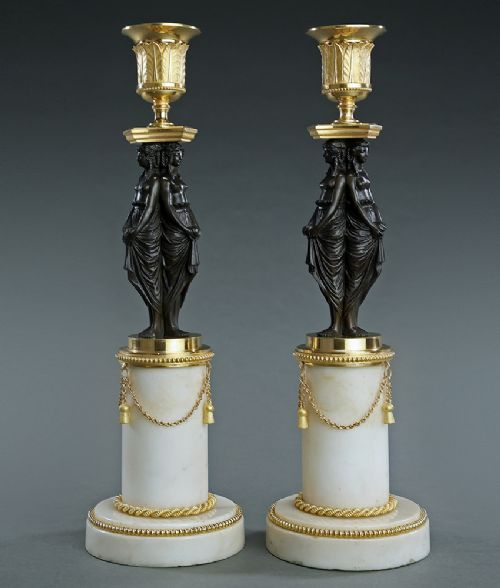
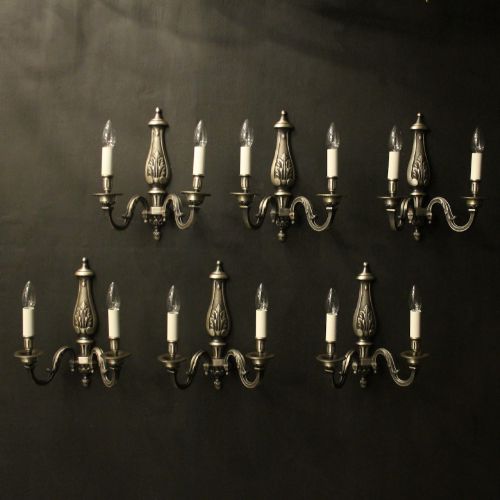
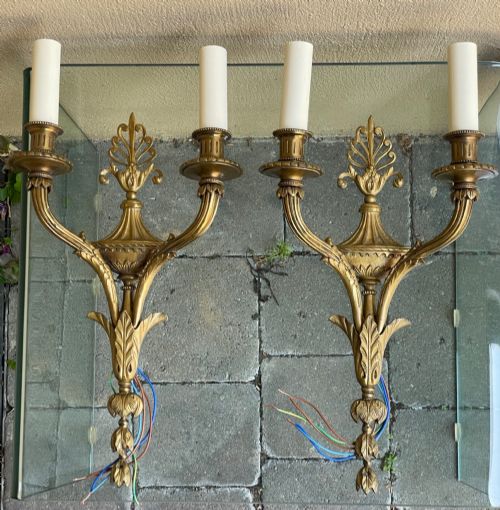
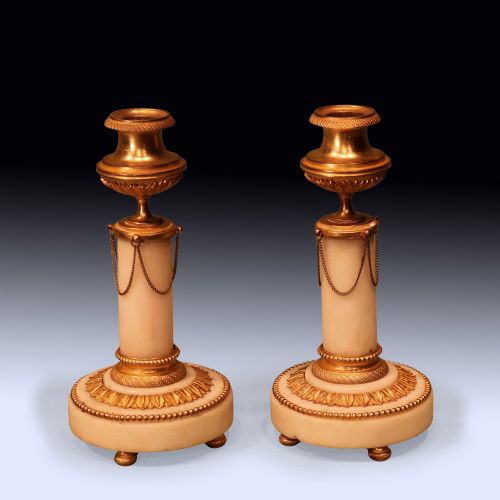
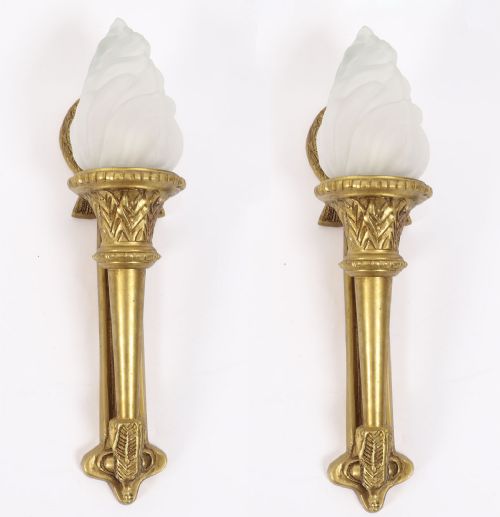
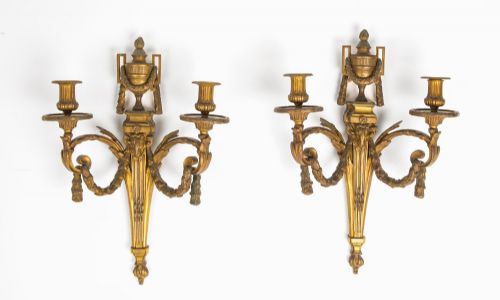


Classical Bronze Sconces Pair
Classical bronze sconces pair illuminate rooms with enduring architectural lines and rich metallic patinas derived from nineteenth and early twentieth century French workshops.
Classical Bronze Sconces Pair
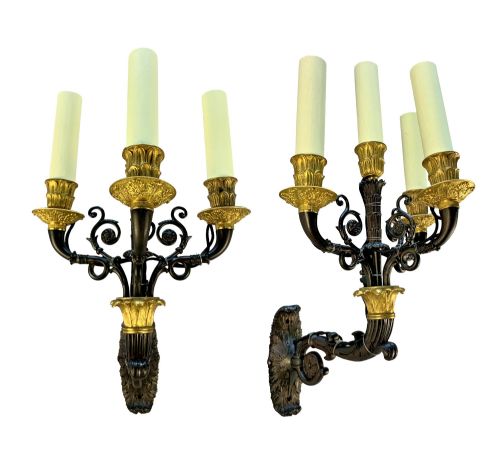
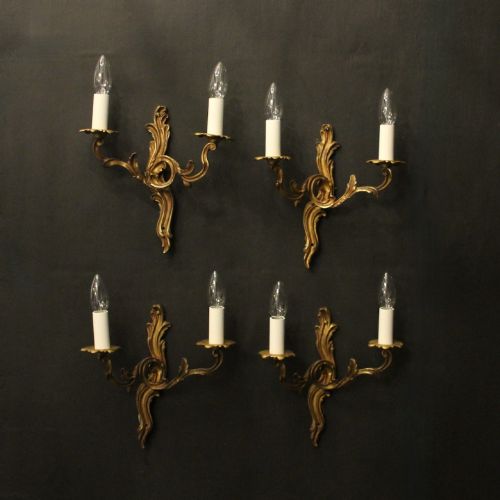
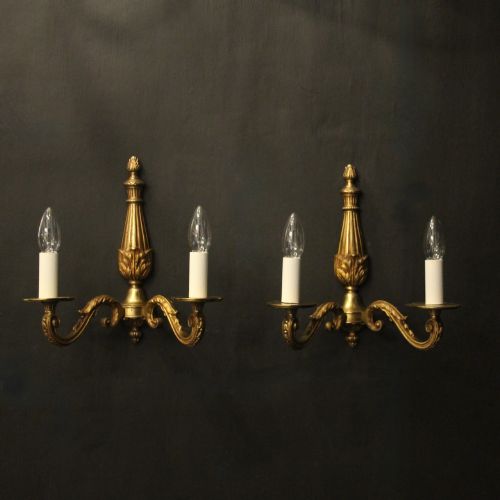
When you search for classical bronze sconces pair, you encounter dual wall mounted lighting fixtures rooted in Neoclassical, French Empire, and Louis XVI design traditions. The pieces appearing most frequently across these listings are French wall lights featuring twin, triple, or four branch configurations cast in gilt bronze and ormolu.
These fixtures serve as paired architectural ornaments designed to flank mirrors, fireplaces, or doorways. Their forms draw directly from classical antiquity, incorporating motifs such as caryatids, ram's head masks, flaming torches, and cherubs mounted upon solid metal brackets.
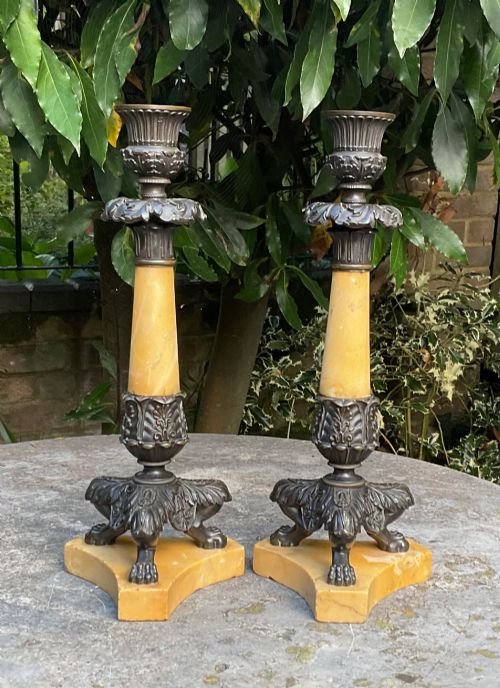
Originating predominantly from nineteenth and early twentieth century French makers, the selection also includes related candlestick pairs and wall mirrors adapted for illumination. The prevailing aesthetic balances strict classical symmetry with decorative metalwork ranging from restrained Regency lines to elaborate Rococo revival details.
How they were made
The foundation of these lighting fixtures lies in traditional metal casting techniques utilising bronze, brass, and ormolu. Molten metal was poured into intricate moulds to create the heavy arms, backplates, and sculptural figures that define the style.
Surface finish was achieved through mercury gilding or gold leaf application over bronze and brass, producing the distinctive gilt bronze and ormolu patinas seen on the pieces. Artisans combined this cast metalwork with contrasting natural materials such as white marble, onyx, and occasionally glass elements to add visual weight and texture.
Bronze cherubs occasionally trade strict classical dignity for playful poses, clutching candle holders atop marble bases with surprising vigour.
What varies in quality
The integrity of the mercury gilding or original fire gilt surface also dictates standard, with higher grade pieces retaining a rich, warm lustre across the bronze and ormolu. Furthermore, the weight and structural stability of the heavy backplates and the symmetry between the paired branches reveal the level of craftsmanship invested in the workshop.
Casier·Dugourc
The Classical Bronze Sconces Pair Glossary
- Ormolu
- Finely ground high-carat gold mercury-gilded to a bronze object. This technique yields a deep, enduring metallic sheen characteristic of French decorative arts.
- Gilt Bronze
- Bronze metal treated with a gold surface coating. It provides the signature golden luminescence found on nineteenth century wall lights.
- Caryatid
- A sculpted female figure serving as an architectural support. These figures frequently form the structural columns of Neoclassical wall lights and candlesticks.
- Girandole
- A branched wall sconce fitted with a mirror backplate. The reflective glass multiplies the candlelight within nineteenth century interiors.
- Regency
- An English design period spanning the early nineteenth century. It is defined by refined classical restraint and archaeological revival motifs.
Classical Bronze Sconces Pair: Frequently Asked Questions
How do I mount heavy bronze sconces?
Secure the fixtures directly into structural wall studs or utilise heavy duty wall anchors appropriate for metal weight. Because these paired pieces utilise solid bronze and marble components, professional installation ensures the mounting bracket bears the load safely.
Position the sconces at eye level, typically flanking a mirror, fireplace, or large piece of furniture to maintain balanced nineteenth century interior proportions.
Were these sconces electrified originally?
Original period examples were constructed to hold candles or oil before later conversion to electricity during the twentieth century. Many surviving pairs retain their historic branch configurations adapted cautiously for modern wiring.
Inspect the candle tubes and drip pans to see how previous generations integrated electrical components into the classical bronze or brass structure.
How should I clean gilded bronze surfaces?
Dust the metal gently with a soft, dry cloth to prevent accumulation in the recesses of the cast ornament. Avoid chemical polishes or abrasive cleaners which strip the delicate ormolu or fire gilt layer from the bronze underneath.
Preserving the natural patination accumulated over the nineteenth and twentieth centuries maintains both the visual character and historical integrity of the paired pieces.
How do I distinguish Louis XVI style from Empire?
Louis XVI style pieces emphasise restrained classical geometry, delicate ribbon twists, floral garlands, and slender caryatid supports derived from archaeological discoveries. They present a lighter, more refined decorative vocabulary.
Empire style pieces instead project military might and Roman grandeur through heavier proportions, bold laurel wreaths, sphinxes, and rich ormolu contrasts against dark patinated bronze.