


Silvered Brass Sconces
Silvered brass sconces combine polished metal reflection with period illumination, offering collectors a striking addition to historic wall schemes.
Silvered Brass Sconces
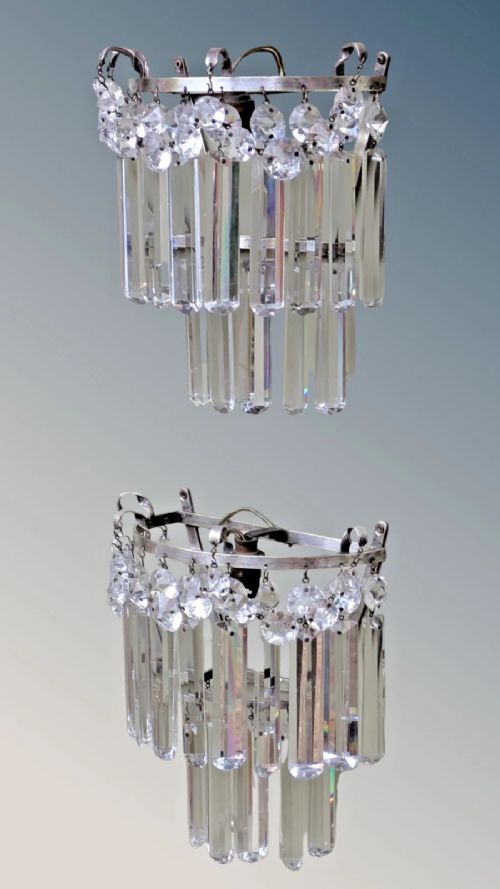
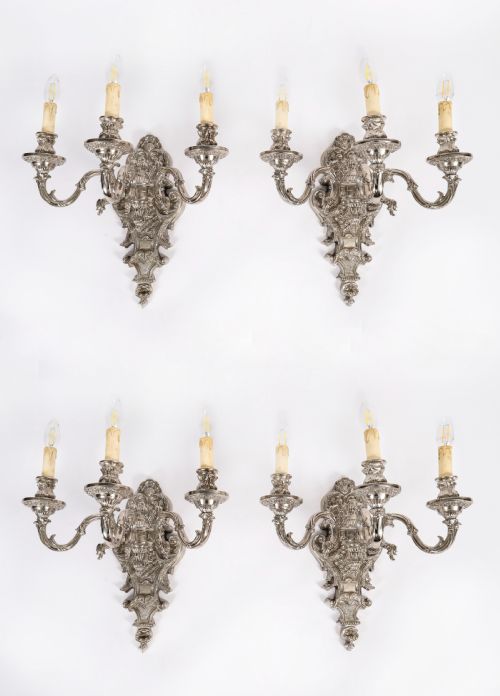
When you search for silvered brass sconces, you find wall-mounted lighting and mirrors spanning the Victorian, Edwardian, and early twentieth century periods. The selection encompasses English and French examples, ranging from simple brass frames to elaborate twin-arm designs.
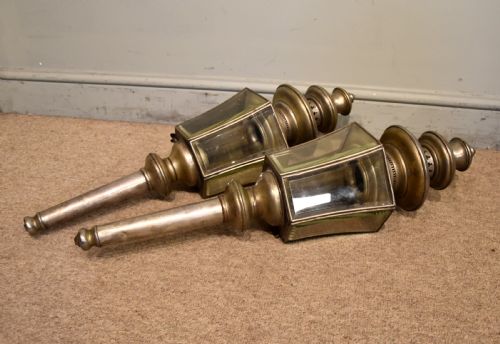
You are most likely to encounter pairs of wall lights and appliques from the 1920s and 1930s, alongside nineteenth-century coaching lamps and mirrors. Styles draw heavily upon French Rococo, Louis XVI, and Neoclassical revival traditions.
The objects serve primarily as decorative wall lights or reflective wall mirrors, often incorporating cut crystal drops or silver plating to enhance their luminosity in period rooms.
How they were made
The construction relies fundamentally on brass and metal forming techniques, shaped into intricate wall frames and arms. Many pieces receive a silvered finish, silver plating, or silver gilding to create a bright metallic sheen.
Makers integrated cut crystal and glass components into the designs, suspending prisms or panels from brass frames to refract light. Bronze and nickel also appear as structural or accent materials across the inventory.
Coaching lamps originally guided horse-drawn carriages through dark lanes before finding a second life illuminating indoor walls.
What varies in quality
The distinction between standard production and finer pieces rests upon the crispness of the cast metalwork and the integration of decorative elements. Heavier brass foundations and precise chasing elevate an example above mass-market alternatives.
Quality also shows in the retention of original silvered or gilded surfaces, where skilled application ensures an even and enduring lustre. The presence of undamaged cut crystal drops adds further distinction to the assembled fixture.
The Silvered Brass Sconces Glossary
- Sconce
- A wall-mounted lighting fixture designed to hold candles or electric bulbs. These pieces project outward from the wall surface to illuminate corridors and rooms.
- Applique
- A French term for a wall light or sconce, frequently used to describe decorative continental lighting fixtures. They often feature multiple arms and intricate metal casting.
- Silver Gilt
- A metallic surface treatment where a thin layer of gold is applied over silver or silvered base metal. This technique imparts a warm, dual-toned metallic appearance.
- Cut Crystal
- Glass that has facets cut into its surface by abrasive wheels to increase light refraction. It drapes from frames to catch and scatter illumination.
Silvered Brass Sconces: Frequently Asked Questions
How do I install antique wall lights safely?
Historic wall lights require careful mounting to secure the weight of brass and crystal components against the wall. Modern wiring must be integrated by a qualified professional to meet current safety standards.
Original backplates should be assessed to ensure they can support the fixture without damaging historic plaster or wood paneling. Proper anchoring preserves both the wall and the structural integrity of the sconce.
Were these fixtures originally made for candles?
Many nineteenth and early twentieth century wall lights were manufactured for candle use before being converted to electricity later in their lifespan. The form and proportions of the arms typically reflect this traditional candle-bearing heritage.
When examining older examples, evidence of candle cups and drip pans often remains visible beneath modern electrical fittings. This conversion history is entirely normal for pieces spanning the Victorian and Edwardian eras.
How do I clean silvered brass fixtures?
Gentle dusting with a soft, dry cloth is the safest method for maintaining delicate silvered and gilded surfaces. Avoid harsh chemical polishes that can strip away historic plating and patination.
Crystal elements can be washed separately in lukewarm soapy water if they are detached from the metal frame. Thorough drying prevents moisture from damaging surrounding brass and metal joints.
What rooms suit wall lights best?
Wall lights provide ambient illumination that complements main ceiling fixtures in principal reception rooms, hallways, and dining spaces. Pairs of sconces look particularly effective flanking mirrors, fireplaces, or architectural doorways.
Their decorative metal frames add visual interest to walls even when the lights are switched off. Selecting pieces matching the period of the room ensures a cohesive interior scheme.