


Silver Brass Sconces
Silver brass sconces bring period illumination and reflective warmth to a room, spanning wall lights and coaching lamps from the Victorian era to the 1930s.
Silver Brass Sconces
When you search for silver brass sconces, you are looking at domestic wall illumination and mirrored fittings designed to cast and reflect light in period interiors. The selection on this page centres primarily on wall lights, appliques, and wall mirrors dating from the Victorian period through to the 1930s.
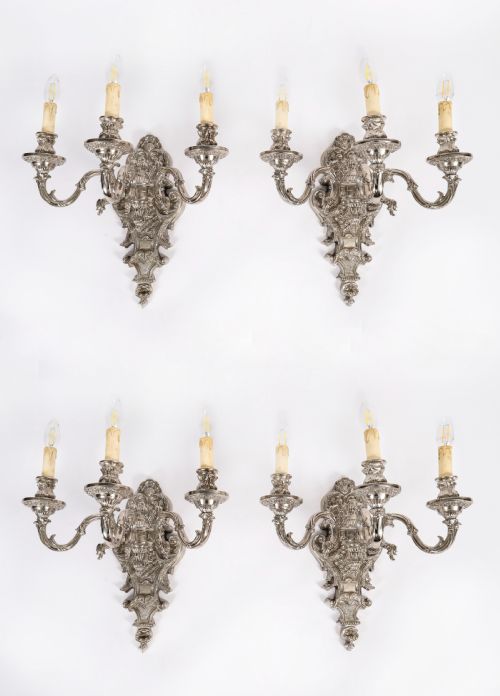
The most common forms you will meet here are pairs and sets of twin-arm wall lights, often carrying French styling such as Rococo, Louis XVI, or Neoclassical revivals alongside English Edwardian and Victorian pieces. Alongside standard wall lights, the evidence includes related items like coaching lamps and brass-framed wall mirrors.
Origins span English workshops and French ateliers, capturing styles from robust Victorian designs to ornate Edwardian Rococo and later silver gilded or silver plated finishes. These pieces served both functional illumination and decorative symmetry in hallways, salons, and formal rooms.
How they were made
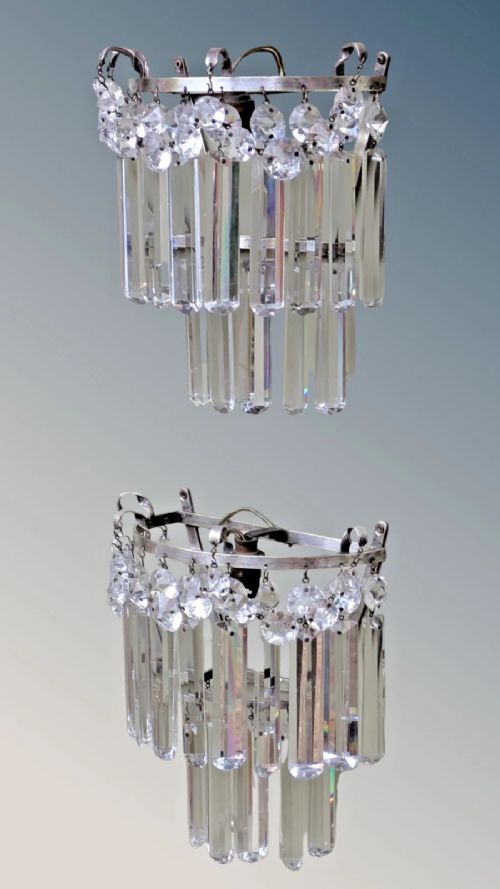
Construction relies heavily on brass as a base metal, frequently treated with silver plating, silver gilt, or a silvered finish to alter the surface sheen. Workshops combined cast and chased brass components with glass elements such as cut crystal drops and bobeches to enhance light diffusion.
Period manufacturing techniques involved hand-assembly of multi-arm frames, mounting brackets, and reflective mirror plates within metal or glass frameworks. The integration of bronze, nickel, and cut crystal across various pieces demonstrates the diverse metalworking and glass-cutting skills of Victorian and early twentieth-century artisans.
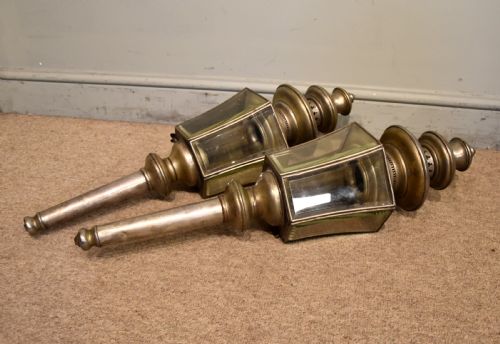
Some coaching lamps started life on horse-drawn carriages before ending up mounted indoors to cast a very dramatic hallway glow.
What varies in quality
Quality in these wall lights and mirrors is defined by the crispness of the casting and the depth of the metal plating or gilding. Finer pieces display finely chased details on the brass arms and mounts, whereas simpler items rely on smoother, more commercial stampings.
The integration of original glass components, such as matched cut crystal drops and intact mirror plates, distinguishes superior examples from those with later replacements. The weight of the metal and the structural integrity of the mounting points further separate standard domestic output from more ambitious decorative pieces.
The Silver Brass Sconces Glossary
- Applique
- A wall-mounted light fixture designed to hold candles or electric bulbs, structurally similar to a sconce. These French-origin pieces often feature multiple scrolling arms and decorative backplates.
- Silver Gilt
- Metal that has been coated with a thin layer of silver or treated to simulate silver leaf over a bronze or brass base. This finish provides a bright, reflective surface popular in French decorative arts.
- Cut Crystal
- Glass that has been faceted by cutting on a wheel to increase sparkle and light refraction. It frequently dangles from wall lights to scatter illumination across a room.
- Coaching Lamp
- A specialised exterior or interior lamp originally designed for horse-drawn carriages and later adapted for decorative domestic use. They typically incorporate heavy brass frames and protective glass panels.
- Rococo Style
- A decorative movement characterised by asymmetrical scrollwork, C-scrolls, and organic plant motifs. It appears frequently on Edwardian and French-influenced wall lights from this period.
Silver Brass Sconces: Frequently Asked Questions
Where should I hang these wall lights?
These wall lights suit flanking positions beside fireplaces, mirrors, or in hallways where pairs can provide balanced illumination. Their reflective metal and crystal elements make them effective in rooms requiring added brightness.
Ensure the mounting surface can support the weight of brass and crystal fixtures, and consult a qualified electrician if adapting period wiring for modern use.
How do I clean silvered brass?
Cleaning requires a soft, dry cloth to remove dust without abrasive polishes that might strip thin silver plating or silver gilt layers. Gentle care preserves the historical finish accumulated over the decades.
Avoid chemical dips entirely, as they can permanently damage the underlying brass and any patinated surfaces built up since the Victorian or Edwardian periods.
Are these fixtures wired for electricity?
Many period wall lights have been adapted for modern electrical circuits, though the exact wiring state varies by individual piece and past conversion work. Checking the specific listing details will confirm whether a piece retains original candle-holders or has been fitted for bulbs.
Any converted fitting should be inspected by a professional electrician prior to installation to ensure it meets current safety standards.
What is the difference between silver plated and silver gilded?
Silver plating involves bonding a thin layer of silver to a base metal like brass, creating a uniform metallic sheen. Silver gilding typically applies a delicate leaf or finish that imparts a warmer, slightly textured reflective quality often seen on French decorative pieces.
Both techniques were used across the late nineteenth and early twentieth centuries to achieve the look of solid silver without the prohibitive weight and cost.