
Turned Pedestal Stand
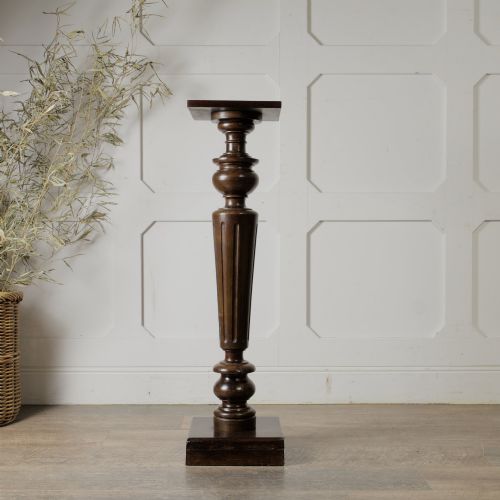
A turned pedestal stand raises lamps, plants and small treasures above the floor on a single column, bringing elegance to empty corners.
Turned Pedestal Stand
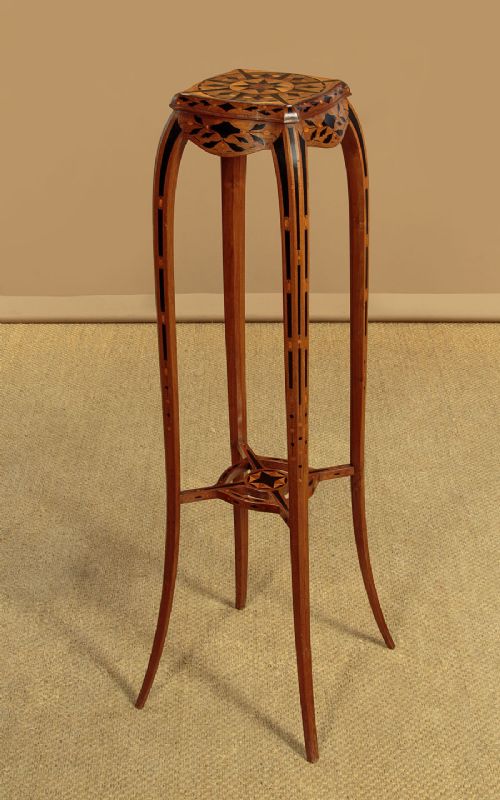
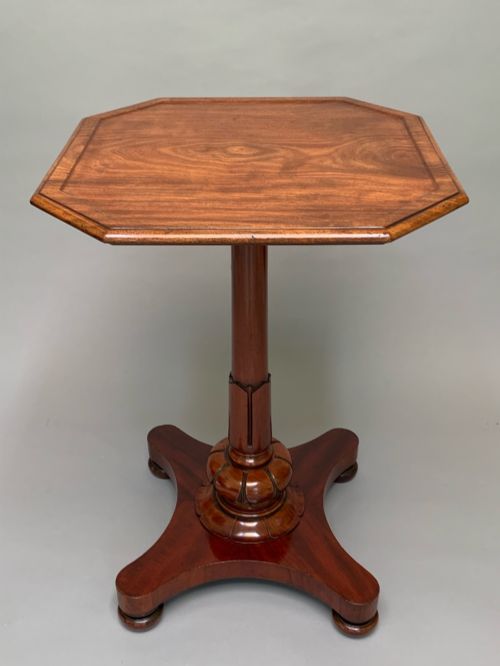
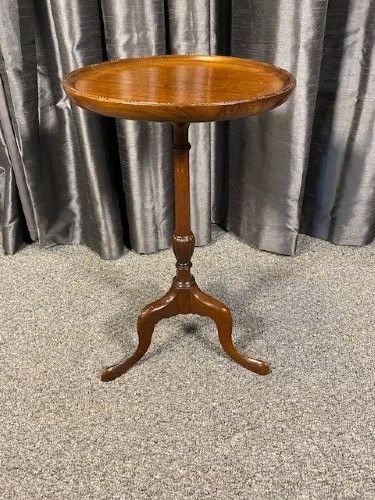
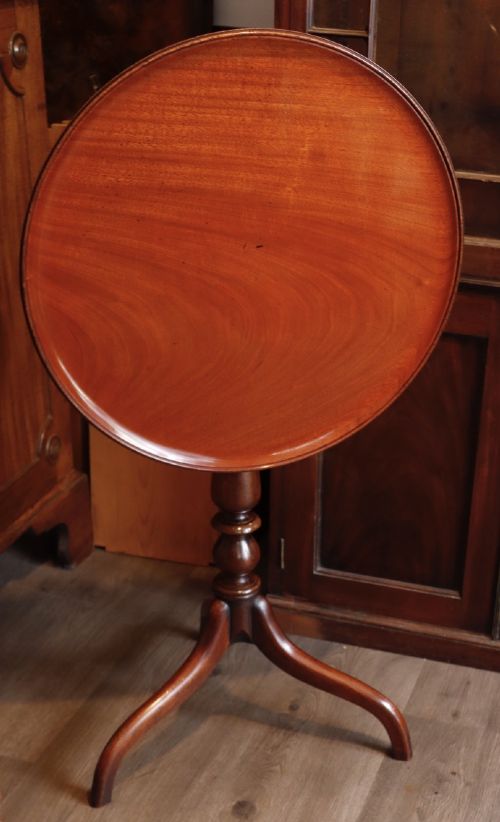
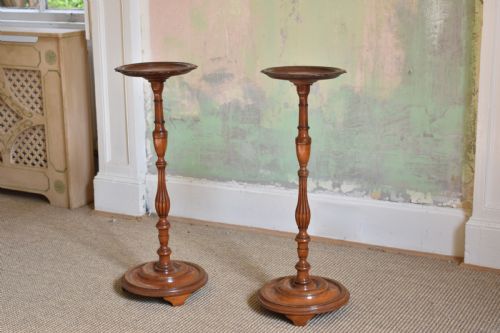
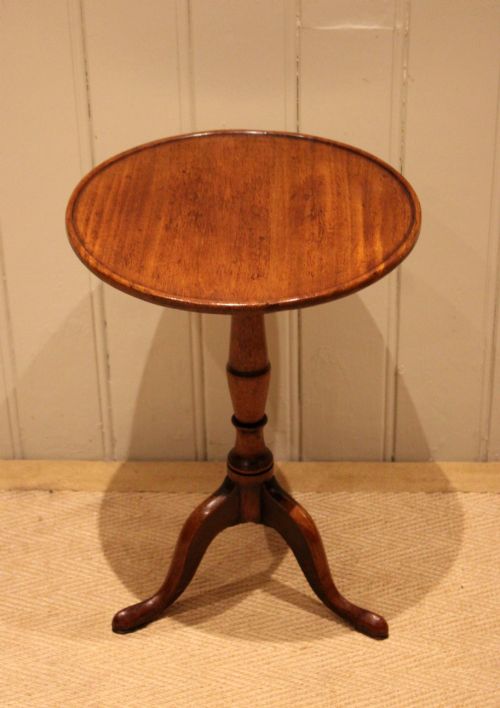
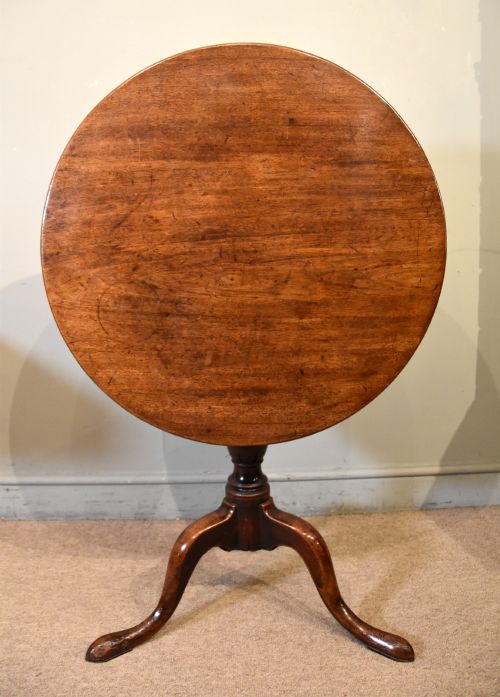
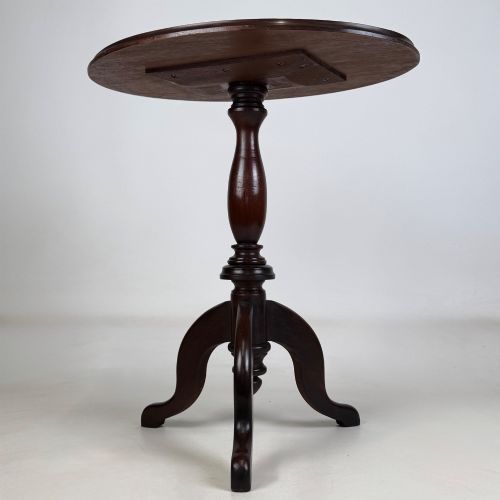
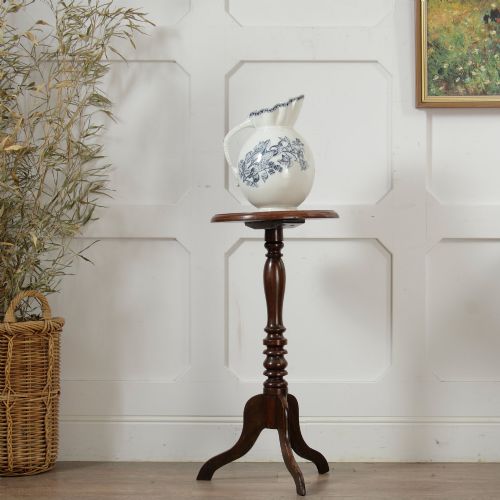
A turned pedestal stand serves multiple domestic purposes, appearing as a wine table, a torchere, a plant stand or an occasional lamp table. These pieces support daily household items while occupying minimal floor space.
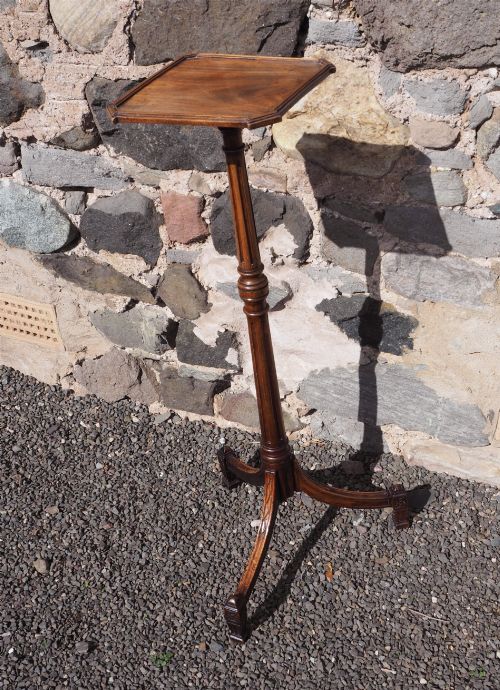
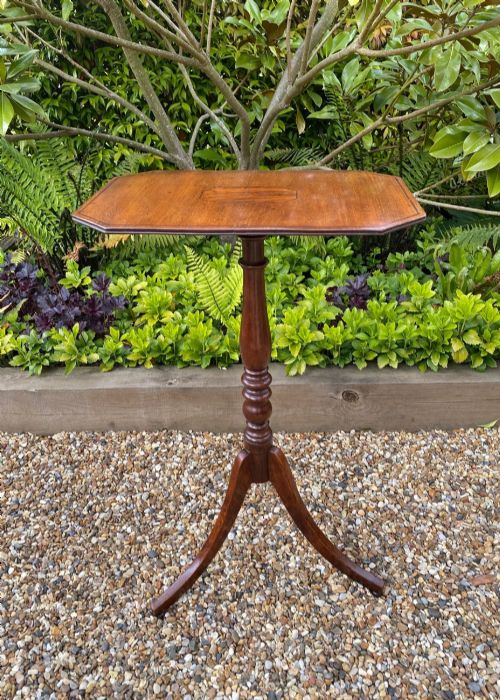
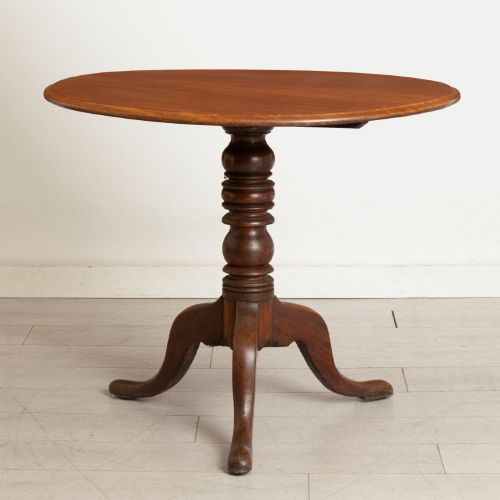
The most common examples on this page are mahogany wine tables and torchers resting on tripod legs, spanning periods from the Georgian era through the Victorian period and into the early twentieth century. Oak, walnut and satinwood also appear regularly in various regional and revival styles.
Makers shaped these surfaces for specific household tasks, such as holding evening drinks, displaying floral arrangements or elevating sculpture. The column and base configuration determines whether the piece functions as a sturdy plant holder or a light portable wine table.
Materials and Technique
Cabinetmakers utilised dense timbers like mahogany, oak and walnut, turning central columns on lathes to achieve slender, balanced profiles. Satinwood and brass provided contrasting inlay and hardware on finer examples.
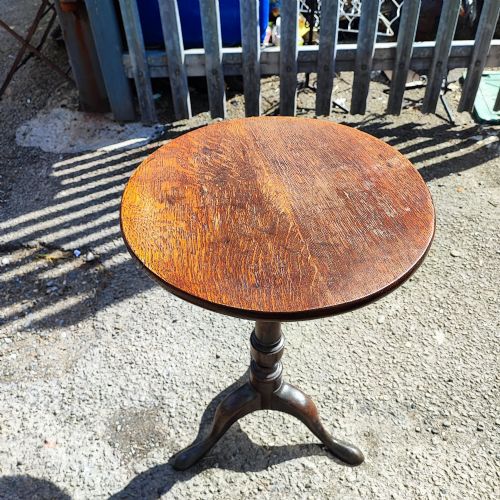
Tripod bases were joined to the central shaft using traditional tenon or dovetail joints to ensure stability on uneven floors. Tilt-top mechanisms, where fitted, allowed circular or rectangular tops to fold away flat when not in use.
Turned Pedestal Stand Retail Price Guide 2026
Typical asking prices for turned pedestal stand among the pieces listed under this phrase on Sellingantiques today, from the lower quarter to the upper quarter. They describe what is for sale here now, not the wider market.
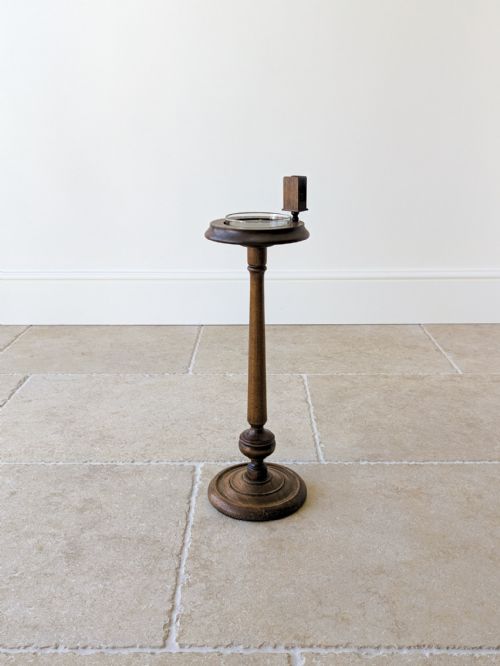
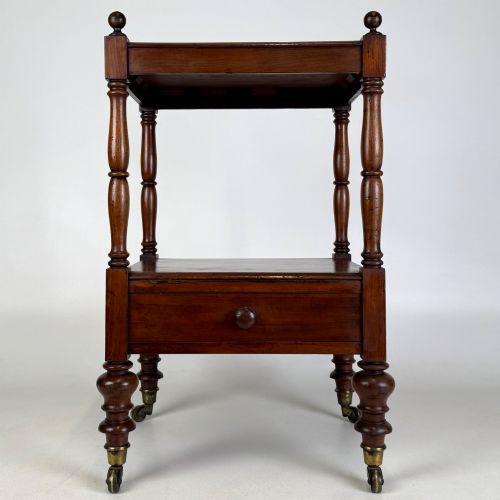
Smokers stands of the early twentieth century kept ash trays and matches safely elevated on turned wooden pedestals beside smoking chairs.
Evaluating Quality
Quality rests upon the crispness of the timber turning and the proportional balance between the top, the central shaft and the spread of the tripod feet. Heavier, solid woods with tight grain patterns outlast softer secondary timbers.
Refined pieces display hand-carved tripod legs that flow smoothly into the pedestal base, alongside subtle inlay or penwork decoration. Simpler vernacular pieces rely on honest utility rather than decorative flourishes.
Gillows·Druce and Co London·Shoolbred·Baillie Scott
The Turned Pedestal Stand Glossary
- Torchere
- A tall stand designed specifically to elevate a candle, lamp or plant. These slender supports became popular in the eighteenth century.
- Tripod table
- A small table supported by a pillar above three legs. This construction prevents wobbling on uneven floorboards.
- Tilt-top
- A hinged table top that pivots to a vertical position. This clever mechanism saved space in smaller rooms.
- Birdcage
- A revolving wooden framework beneath a table top that allows the surface to turn and tilt. It represents a more complex form of joinery.
- Vernacular
- An object made by local craftsmen for everyday use without high-style academic pretension. These pieces often utilise regional woods like oak and cherry.
Turned Pedestal Stand: Frequently Asked Questions
What was a wine table used for?
A wine table held glasses, bottles and cups during evening gatherings in the parlour or dining room. Its small top kept refreshments close to hand beside a chair.
Because of its portable nature, servants could easily move the table around the room as guests shifted position during an evening.
How do I use a torchere today?
A torchere makes an ideal stand for a potted plant, a sculptural lamp or a ceramic bowl. Placing one in a dark corner adds height and visual interest to a room.
The slender footprint ensures it fits comfortably beside a sofa or in a narrow hallway without blocking passage.
How do I distinguish Georgian from Victorian stands?
Georgian stands generally favour simpler, elegant proportions with restrained carving and rich mahogany or oak patination. They date from the eighteenth and early nineteenth centuries.
Victorian pieces often display heavier proportions, darker finishes and revival influences like Chippendale or Gothic motifs reflecting late nineteenth-century tastes.