
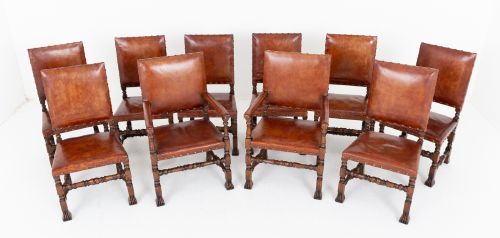
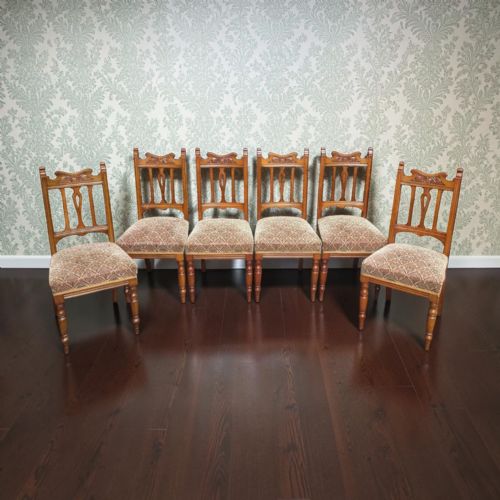
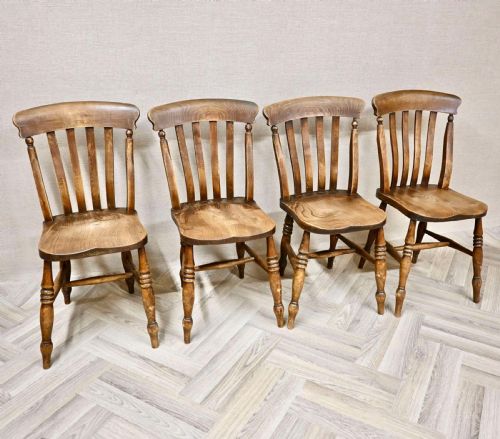
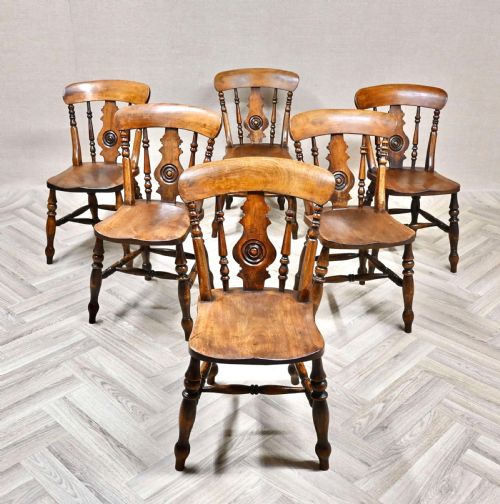
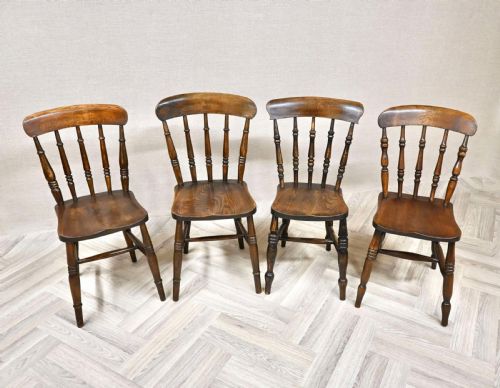

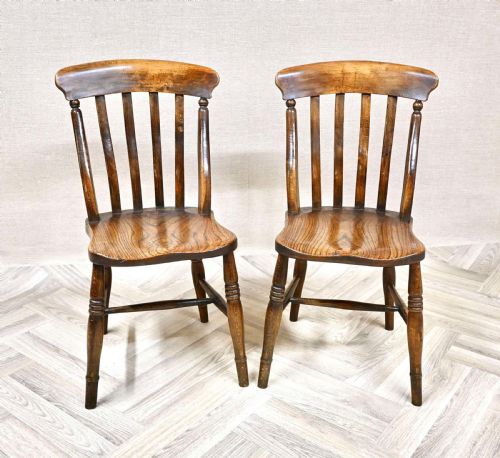
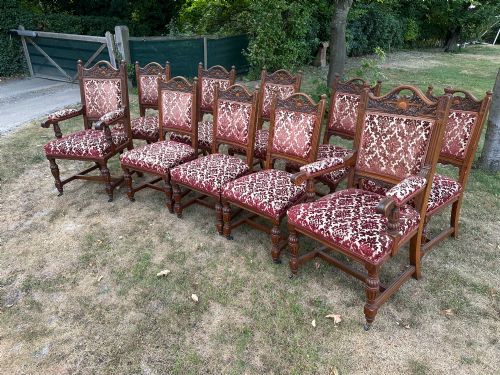
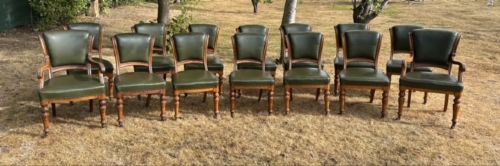
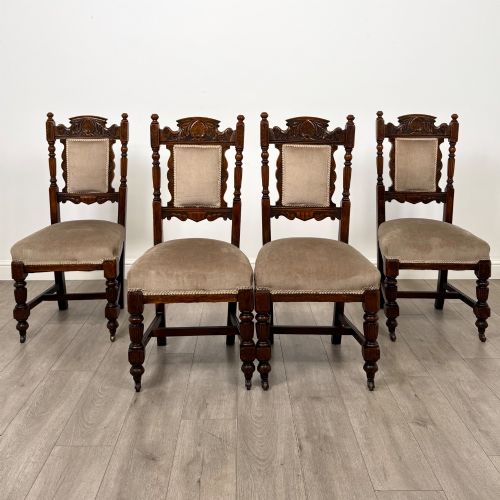
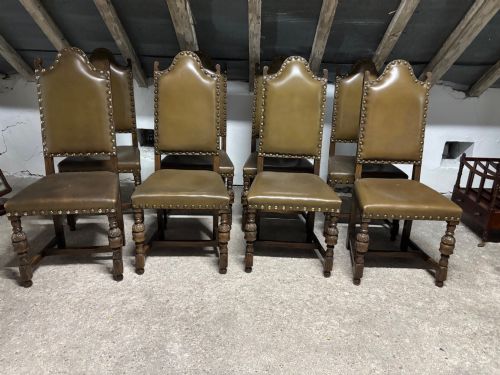
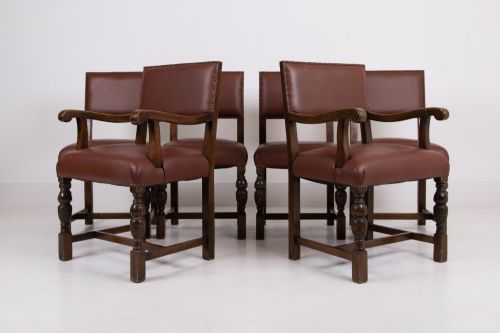
Turned Oak Dining Chairs
Turned oak dining chairs bring substantial timber frames and historic character to the table.
Turned Oak Dining Chairs
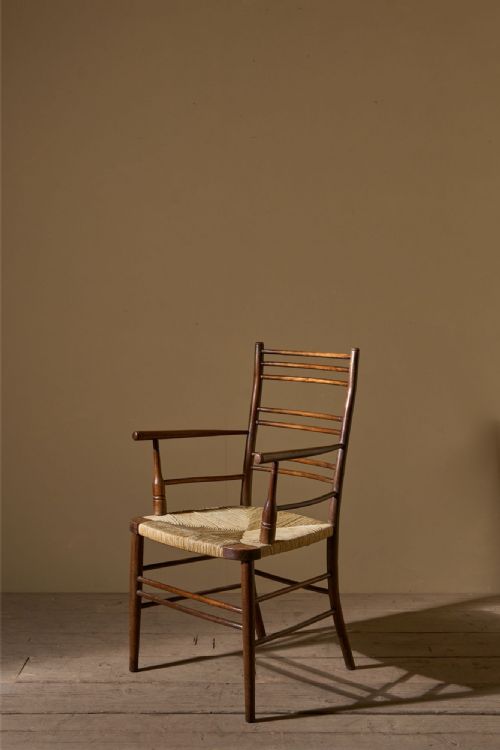
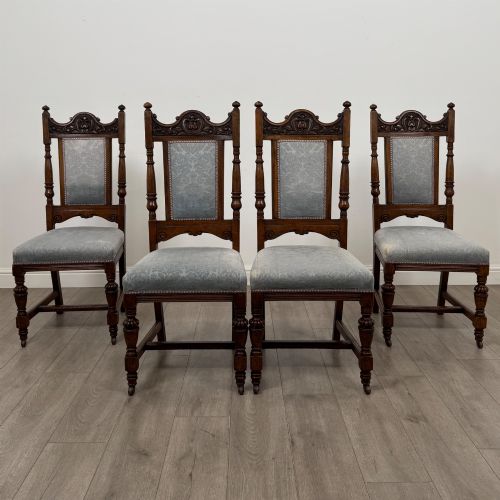
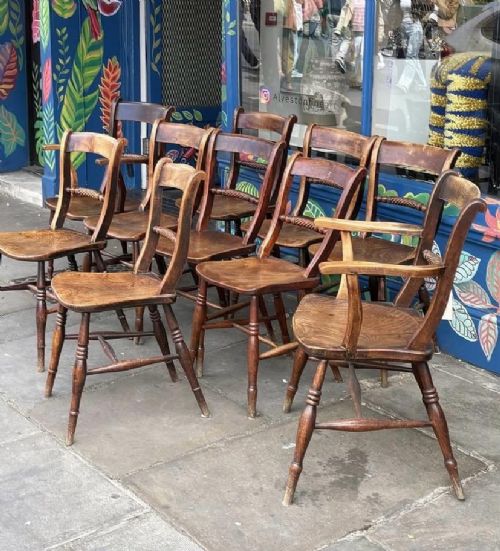
Turned oak dining chairs encompass seating from seventeenth-century origins through to twentieth-century revivals, including country kitchen Windsors, ladder backs, and formal dining suites.
The varieties met most frequently include nineteenth-century Windsor forms with turned spindles and nineteenth to twentieth-century sets in Jacobean, Arts and Crafts, and Victorian styles.
Makers utilised solid oak alongside elm, beech, and rush to construct side chairs, armchairs, high chairs, and hall chairs designed for domestic dining.
Construction and Materials
Carpenters shaped solid oak timbers using lathes to produce bobbin-turned, spindle, and column supports, joining components with pegged mortise and tenon joints.
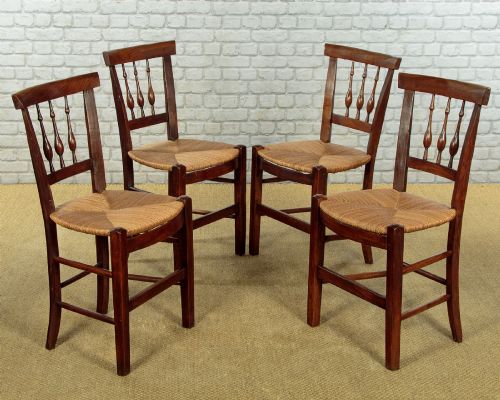
Secondary timbers such as elm and beech frequently form seats and structural frames, while rush, leather, velvet, and fabric provide flexible or cushioned seating surfaces.
Listings span periods from the 17th century through the Victorian and Edwardian eras, utilising oak, elm, beech, and rush.
Judging Quality
Quality rests upon the integrity of the timber, the precision of the lathe work on the turned elements, and the retention of matching sets over centuries of use.
Early joined examples demonstrate tight structural joints and dense heartwood, whereas later revival pieces rely on stylistic carving and proportion to convey historical character.
John Taylor & Son·Liberty & Co·Strahan of Dublin
The Turned Oak Dining Chairs Glossary
- Bobbin turned
- Timber shaped on a lathe into a series of rounded spheres resembling bobbins of thread. This decorative turning appears frequently on seventeenth-century and revival frames.
- Windsor chair
- A chair built with a solid wooden seat into which the legs and back spindles are separately inserted. These vernacular forms often incorporate bentwood bows and turned supports.
- Ladder back
- A chair back constructed with horizontal arched slats between two upright posts. The style appears across country kitchen and dining chairs.
- Rush seat
- A seating surface woven from dried marsh reeds. It offers a resilient, textured platform within wooden chair frames.
- Joined oak
- Furniture construction utilising mortise and tenon joints secured with wooden pegs. This method creates rigid frames without relying on metal fasteners.
Turned Oak Dining Chairs: Frequently Asked Questions
How do I care for antique oak chairs?
Feed the dry timber occasionally with a traditional wax polish to maintain the sheen. Avoid placing solid wood near direct heat sources to prevent timber splitting.
Keep rush and fabric seats clean by gentle brushing and vacuuming with a low-suction attachment. Ensure chairs sit level on uneven floors to avoid stressing old joints.
Are these chairs comfortable for daily dining?
Many historic chairs feature supportive upright backs and contoured wooden seats designed for long sittings. High-backed styles offer substantial support during meals.
Models with rush or upholstered pads provide softer seating. Adding loose cushions can adjust the height and comfort for modern tables.
How do I distinguish seventeenth-century chairs from later revivals?
Early pieces display hand-riven tool marks, pegged joinery, and heavy heartwood oak that has darkened naturally over centuries. Their construction reflects the specific carpentry methods of the period.
Revival furniture from the Victorian and Edwardian eras often shows standardised machine turning and cleaner, more uniform timber preparation while imitating older styles.
Can I mix these chairs with a modern table?
The warm tones of aged timber blend easily with contemporary glass, metal, or stone dining tables. Pairing historic seating with a modern surface creates a striking contrast of textures.
Matching a set of turned chairs to a plain table anchors the dining space in traditional craftsmanship without dictating the entire room design.