
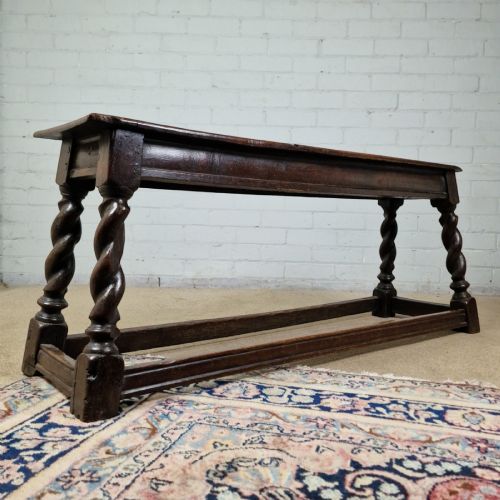
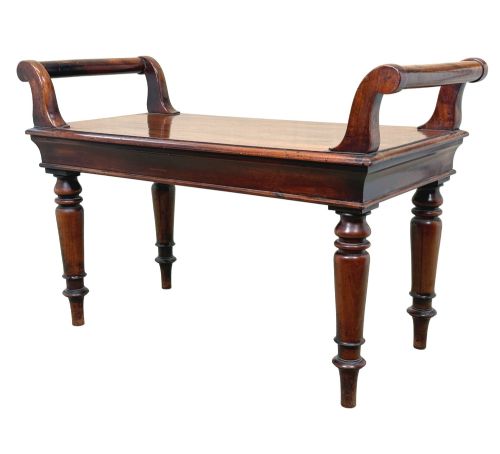

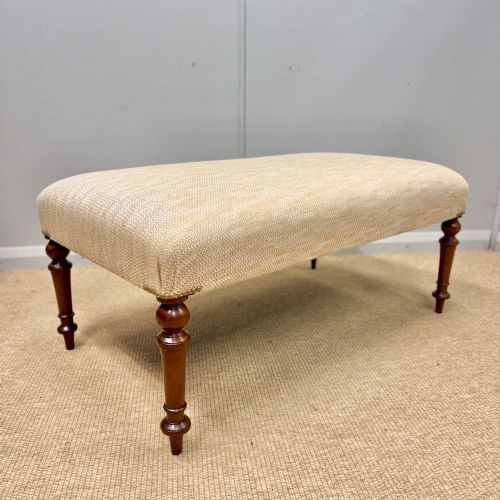
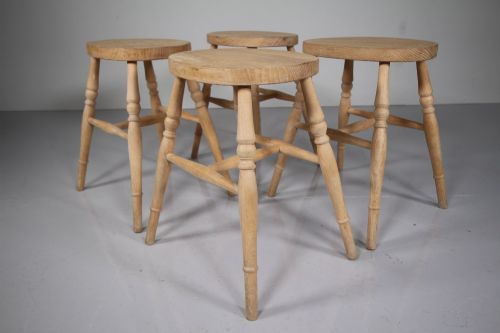
Turned Leg Wooden Bench
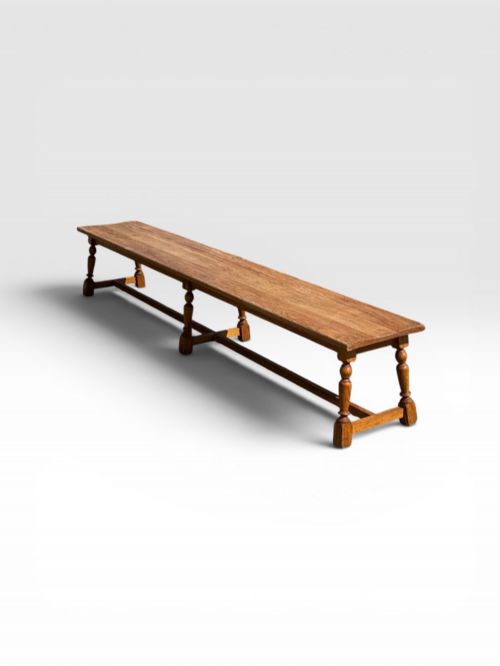
These turned leg wooden bench examples offer enduring utility and robust joinery, bringing honest historic character to a hallway or window space.
Turned Leg Wooden Bench
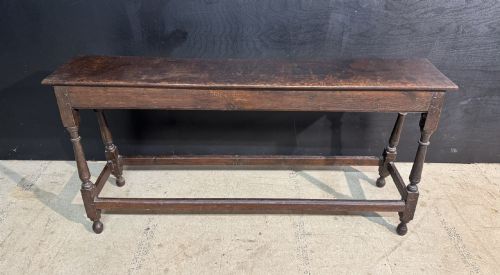
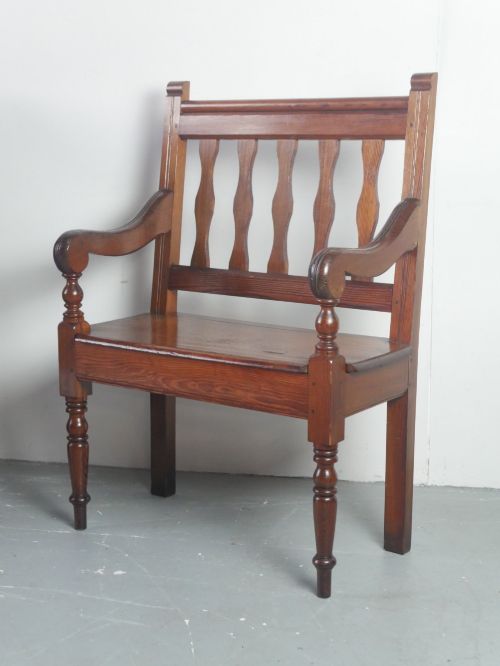
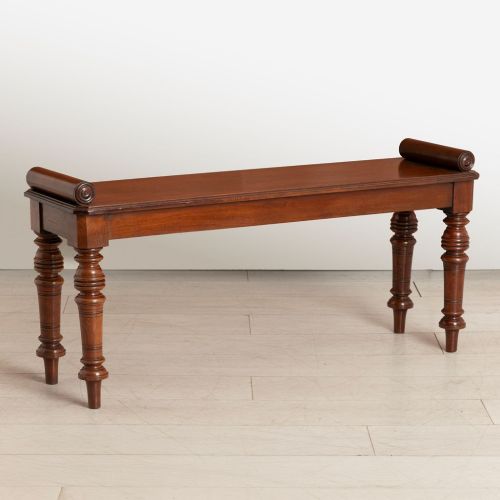
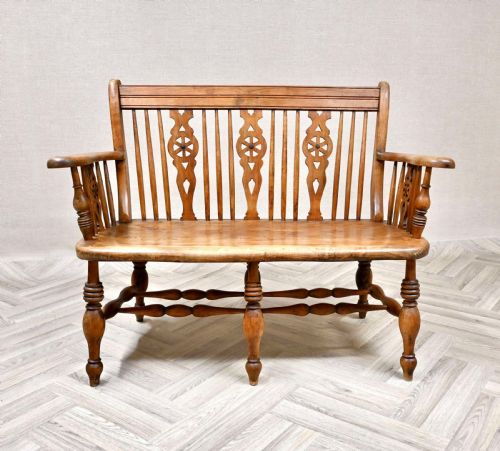
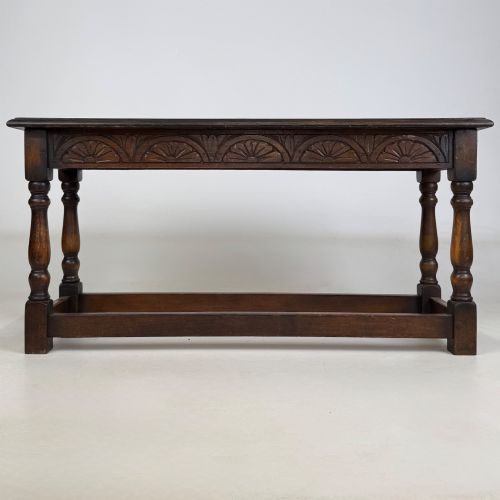
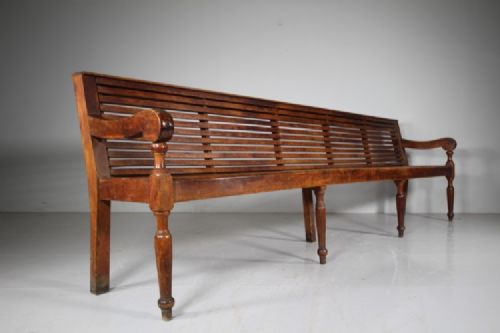
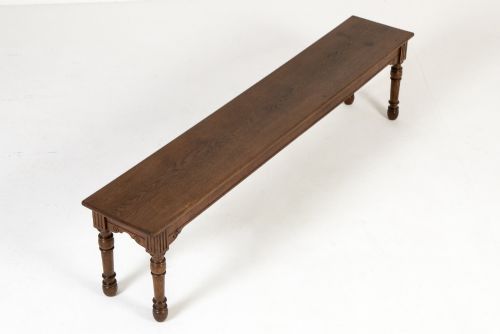
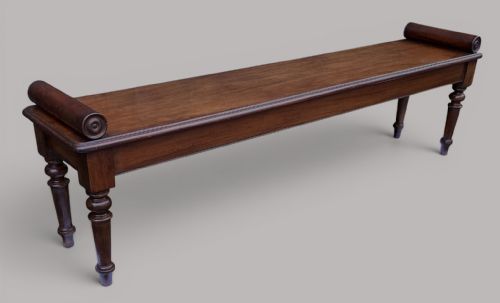
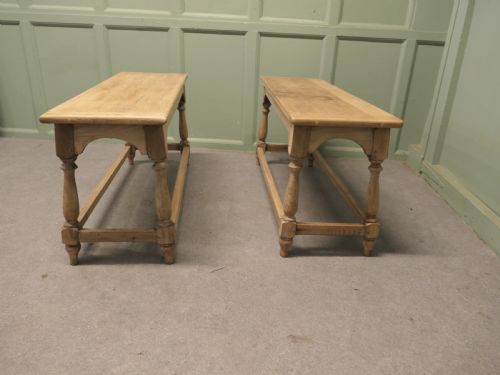
A turned leg wooden bench encompasses various seating forms designed for hallways, windows, and reception rooms, spanning periods from the eighteenth century through the Edwardian era. You will frequently encounter long oak farmhouse benches, mahogany window seats, and compact joint stools bearing distinct turned supports.
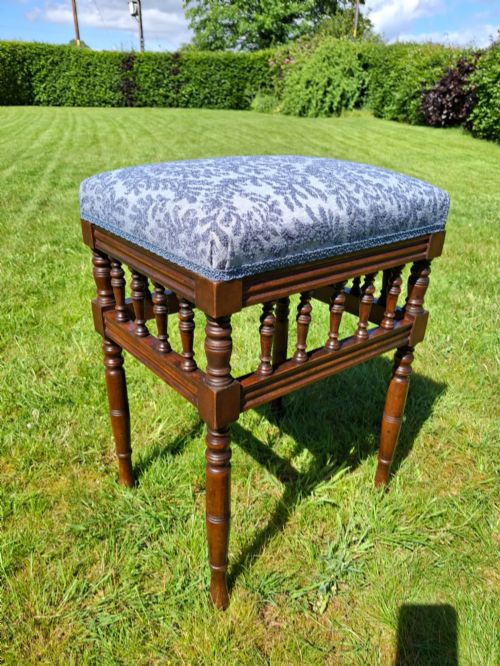
The selection ranges from substantial ash luggage racks and walnut waiting room benches to cane-seated stools and upholstered footstools. These functional pieces served utilitarian purposes in country houses and town residences alike, adapting to domestic spaces with straightforward proportions.
Materials and construction
Craftsmen built these benches using native and imported hardwoods including oak, mahogany, walnut, ash, beech, and elm, often pairing timber frames with cane, fabric, or leather seating surfaces. Structural integrity relied on traditional joinery methods, such as mortise and tenon joints for early joint stools and sturdy turned framing for later examples.
Surface treatments vary from polished finishes and bleached oak treatments to natural wax coatings that highlight the grain of the wood. Upholstered variants incorporate traditional stuffing methods beneath linen, Kilim, or modern fabric coverings.
Some nineteenth-century luggage stands come fitted with raised rear upstands, designed specifically to keep travelling guests from scuffing the wallpaper.
Evaluating craftsmanship and condition
Quality reveals itself in the crispness of the turning on the legs and the structural stability of the frame joints. Superior examples maintain their original timber surfaces without excessive replacement wood or compromised structural pins.
The balance of proportions and the choice of primary timber elevate certain forms above standard utility pieces. Finer items exhibit thoughtful detailing in carved elements and well-integrated auxiliary supports like raked rear upstands.
Brown & Lamont
The Turned Leg Wooden Bench Glossary
- Joint stool
- A sturdy wooden stool constructed with mortise and tenon joints rather than turned legs alone. These early seating pieces often feature pegged stretchers.
- Window seat
- A narrow bench designed specifically to fit within the architectural recess of a window. They frequently share proportions with hall benches and feature upholstered or wood tops.
- Luggage stand
- A low support frame with slatted or webbed tops used for holding travel bags in bedrooms and dressing rooms. Many nineteenth-century versions incorporate raised rear upstands.
- Turned leg
- A structural support shaped on a lathe to create decorative cylindrical profiles. This technique appears across various nineteenth-century and earlier seating forms.
- Cane work
- Woven plant material used to form resilient, breathable seat panels. It requires careful hand-weaving around the interior frame rebate.
Turned Leg Wooden Bench: Frequently Asked Questions
Where should I place a wooden bench?
These benches suit entrance halls, narrow corridors, or placement beneath large windows where low profiles do not obstruct light. Their sturdy construction handles daily seating demands in high-traffic areas.
Longer oak and mahogany variants anchor open spaces, while compact joint stools fit neatly beside doorways for removing shoes.
How do I identify an eighteenth-century bench?
Early pieces typically feature solid oak construction with pegged mortise and tenon joints, displaying deep patination from centuries of use. The joinery is entirely hand-wrought without modern metal fasteners.
Turnings on eighteenth-century examples tend to be heavier and simpler compared to the refined machine-turned legs seen on later Victorian and Edwardian furniture.
Are luggage stands suitable as extra seating?
Luggage stands are engineered primarily to support weight horizontally rather than act as primary chairs, though sturdier ash and mahogany versions can hold seated individuals. Their low frames and slatted tops make them useful for auxiliary resting spots.
Consider the webbing or wooden laths before heavy use, as delicate cane or stretched fabric surfaces may sag under full body weight.
How do I care for antique wood finishes?
Maintain polished hardwood surfaces by applying a quality beeswax sparingly and buffing with a soft cloth to preserve the natural grain. Avoid placing wooden benches near direct heat sources or strong sunlight to prevent timber shrinkage and splitting.
For cane or fabric seats, gentle dusting and occasional vacuuming with a soft brush attachment will keep the organic materials from degrading over time.