








Turkmen Tribal Runner
A turkmen tribal runner brings nomadic Central Asian heritage into a home through rich geometric patterns and deep earthy red tones.
Turkmen Tribal Runner
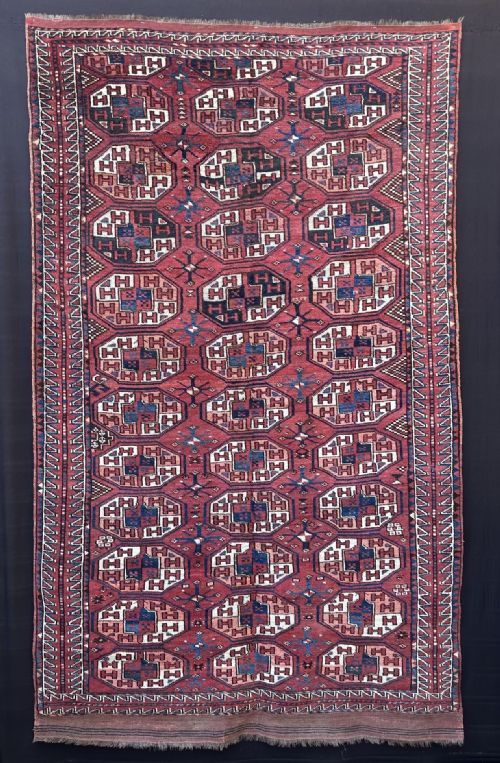
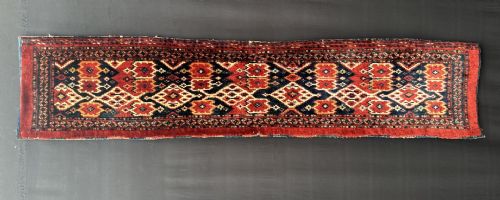
A turkmen tribal runner encompasses long, narrow textile forms originating from Central Asian nomadic and tribal groups, including the Tekke, Ersari, Yomut, and Kizyl Ayak. These pieces serve functional purposes in yurt interiors, functioning as floor coverings, tent bands, storage bag faces, and prayer rugs.
The aesthetic is dominated by repeat guls, which are octagonal medallion motifs that identify specific tribal lineages and weaving traditions. While many antique examples take the form of larger carpets, torbas, or square rugs, the elongated formats follow the same traditional design vocabulary and structural discipline.
The pieces available on this page span the mid-nineteenth century to the early twentieth century, showing the persistence of tribal motifs across generations of nomadic and village weavers. Regional variations link specific formats to locations such as the Middle Amu Darya region and Turkmenistan.
Materials and construction
Weavers constructed these textiles predominantly using wool and hand-spun wool foundations and pile, combined with cotton details in specific regional formats. The natural dyes employed produce deep madder reds, browns, and contrasting accents that hold their character over decades of use.
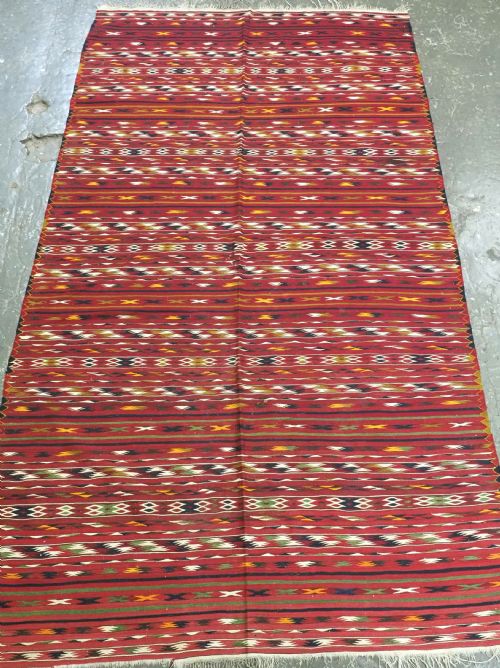
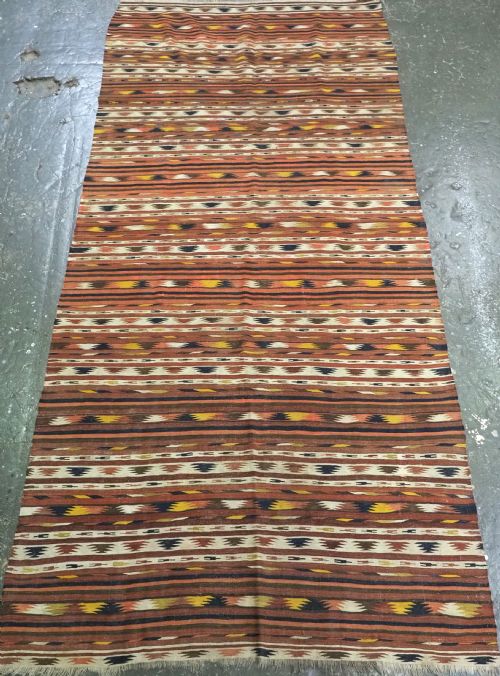
Techniques range from dense knotted pile to flat weave structures like kilim, soumak, and cicim work. Tent bands and storage pieces demonstrate structural versatility, utilising specialised weaving methods designed for nomadic portability and durability.
Turkmen Tribal Runner Retail Price Guide 2026
Typical asking prices for turkmen tribal runner among the pieces listed under this phrase on Sellingantiques today, from the lower quarter to the upper quarter. They describe what is for sale here now, not the wider market.
Listings on this page span several decades, starting from 1850 and extending through to 1930.
Assessing quality and execution
Knot density and structural tightness set finer examples apart from coarser village productions, with very fine weaves demonstrating exceptional control over complex geometric layouts. The precision of the gul drawing and the clarity of the secondary motifs reflect the weaver's skill and the importance of the specific commission.
Colour saturation and the complexity of the palette dictate the visual impact of an individual textile. Pieces retaining deep, varied natural dye tones and intact original kilim ends or borders command greater appreciation among collectors.
The Turkmen Tribal Runner Glossary
- Gul
- An octagonal medallion motif repeated across the field of a carpet, serving as an emblem for specific tribes and clans. Different tribal groups such as the Tekke and Ersari utilise distinct gul variations.
- Torba
- A small storage bag face produced by nomadic weavers for use inside a yurt or tent. These pieces often feature carefully arranged primary guls and detailed lower borders.
- Ensi
- A tribal rug designed to hang over the doorway of a yurt, typically featuring a quartered design layout. They hold significant cultural value within nomadic households.
- Soumak
- A flat-weave technique where decorative pattern threads are wrapped over the warp threads before passing back, creating a textured surface resembling embroidery. It provides structural durability without a cut pile.
- Madder
- A natural plant dye derived from the roots of the Rubia tinctorum plant, providing the characteristic deep reds found in Central Asian textiles. It produces rich, varied shades depending on the mordants used.
Turkmen Tribal Runner: Frequently Asked Questions
What is a gul design?
A gul is a repeating octagonal medallion that acts as a tribal badge for specific Central Asian groups. These motifs identify the weaving lineage of the textile.
Weavers passed these geometric symbols down through generations, allowing modern observers to trace pieces to specific tribes such as the Tekke or Ersari.
How were these textiles used?
Nomadic communities utilised these woven pieces inside tents and yurts for practical insulation, floor coverage, and storage. Items ranged from large main carpets to narrow tent bands and hanging door rugs.
Every format served a specific function within daily nomadic life, combining structural utility with strong tribal symbolism.
How do I date an antique piece?
Dating relies on examining the natural dye palette, the handling of the wool, and the structural characteristics of the weave. Pieces from the nineteenth century often display softer hand-spun textures and specific archaic colour combinations.
Comparing structural details with documented examples from periods like the 1880s or 1900 helps narrow down the probable decade of creation.
How should I care for a tribal rug?
Protecting these textiles involves minimising direct exposure to intense sunlight and using a breathable underlay to prevent sliding on floors. Regular gentle vacuuming without a rotating brush helps remove embedded dust.
Professional cleaning tailored for antique wool rugs ensures the natural dyes and hand-spun fibres remain preserved over time.