




Turkish Flatweave Rug
When you search for a turkish flatweave rug, you are looking at wool and cotton textiles woven without pile across Anatolia and the Balkans.
Turkish Flatweave Rug
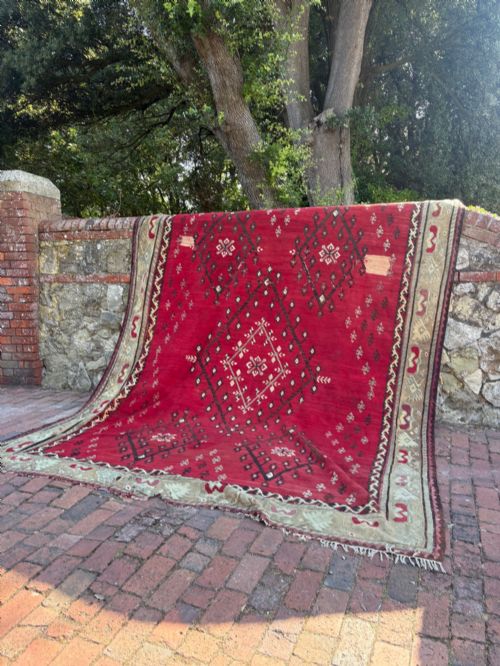
A turkish flatweave rug encompasses various forms such as large room-size carpets, runners, prayer kilims, and scatter rugs originating from regions like Konya, Malatya, Ushak, and Sarkoy. These pieces date from the mid-nineteenth century through the early twentieth century, reflecting traditional tribal and regional weaving practices.
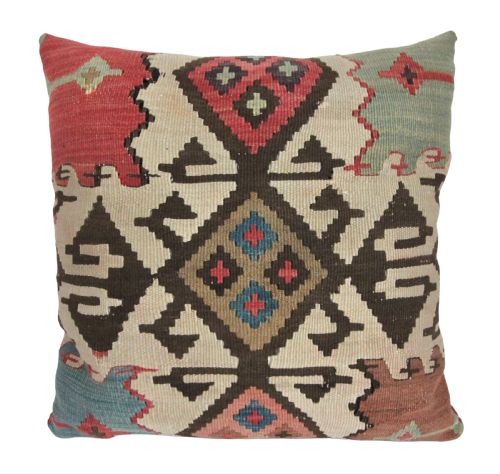
The inventory on this page frequently includes smaller decorative items converted from larger textiles, specifically throw cushions made from antique kilims, alongside wall-hanging embroidered panels. Buyers often encounter two-part woven carpets alongside standard single-panel runners and large area rugs.
Materials and construction
The construction relies on wool and cotton yarns, utilising the slit-tapisserie flatweave technique where discontinuous weft threads are looped back at the boundary of each colour block to create distinct geometric motifs. Larger formats, particularly from regional centres like Pirot and Sarkoy or the Reyhanli and Karakecili areas, were frequently woven in two separate parts and joined down the centre.
Dyes determine the palette, yielding soft reds, pastels, and warm tones that characterise regional groups such as Esme, Bergama, and Mut. Embroidered panels utilise supplementary thread work on a woven ground, while cushions repurpose aged textile sections with fabric backings.
Listings span the mid-nineteenth century to the mid-twentieth century, featuring wool and cotton materials across Anatolian and Balkan traditions.
What separates examples
Quality rests on the integrity of the weave, the clarity of the regional design, and the vibrancy or harmony of the palette. Pieces exhibiting bold, well-balanced repeat medallions or traditional all-over patterns hold greater visual strength than simpler or heavily compromised compositions.
Condition varies from untouched, excellent states with minimal wear to pieces bearing timeworn repairs, structural distress, or later alterations such as cut-down sections repurposed into cushions. The degree of surviving original dye saturation and the precision of the tribal motifs distinguish the finest examples.
Ushak·Malatya·Konya·Sarkoy·Pirot
The Turkish Flatweave Rug Glossary
- Kilim
- An untufted, flat-woven textile produced by tightly interweaving warp and weft strands to form a smooth surface without pile. These textiles function primarily as floor coverings, wall hangings, or decorative covers.
- Warp
- The stationary vertical threads stretched onto a loom that form the structural foundation of the rug. Weft yarns pass horizontally over and under these structural threads.
- Weft
- The horizontal yarns passed through the warp threads to build the pattern and colour of the textile. In flatweaves, these coloured threads create the design directly without knotted piles.
- Prayer kilim
- A specialised rug featuring a mihrab or niche design historically oriented toward Mecca during daily prayers. These pieces often display specific regional iconography tied to weaving communities.
- Juval
- A large storage bag face or sack traditionally woven by nomadic groups for domestic use. Surviving examples are typically collected and displayed as flat textiles.
Turkish Flatweave Rug: Frequently Asked Questions
What is a flatweave rug?
A flatweave rug is a textile constructed without knotted pile, produced by interlocking warp and weft threads on a loom. This method creates a thin, durable fabric that lies flat on floors or hangs easily on walls.
These pieces were traditionally produced across Anatolia and the Balkans by nomadic and village weavers for practical domestic use. Their lightweight nature makes them versatile for modern interiors compared to thick, knotted carpets.
How do I care for an antique kilim?
Care involves gentle vacuuming without a beater bar and professional textile cleaning when necessary. Keeping the rug out of direct sunlight prevents the natural dyes from fading over time.
Using a breathable underlay prevents slipping and reduces friction between the flatweave and the floorboards. Rotating the rug periodically ensures even wear across high-traffic areas.
Why are some rugs woven in two parts?
Many historical looms had width limitations, requiring weavers to produce large room-size carpets in two separate lengthwise strips. These panels were then carefully stitched together down the middle to form a single wide carpet.
This construction method is a recognised characteristic of specific regional weaving traditions found in parts of Anatolia and the Balkans. It does not detract from the authenticity or utility of the piece.
How are kilim cushions made?
Kilim cushions are created by repurposing sections of worn, damaged, or oversized antique flatweaves into smaller decorative covers. Artisans select patterned portions of the textile and back them with durable fabric.
This practice salvages usable fragments from textiles that are no longer viable as full floor rugs. It allows collectors to incorporate authentic tribal patterns into seating arrangements.