



Vintage Red Wool Kilim
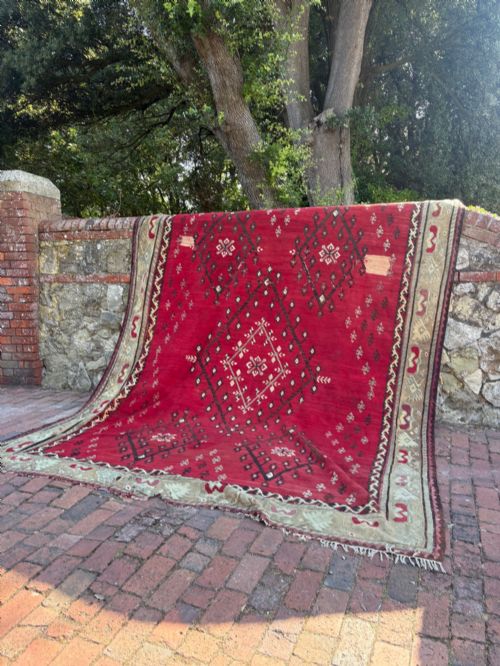
A vintage red wool kilim brings flatweave warmth and geometric tribal artistry into a room, offering durability and historical depth.
Vintage Red Wool Kilim
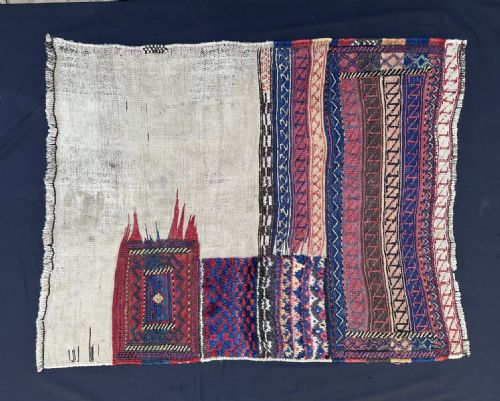
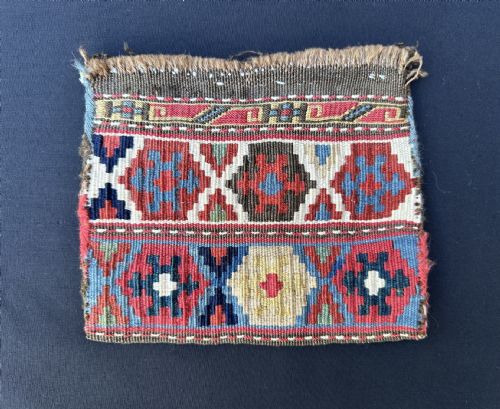
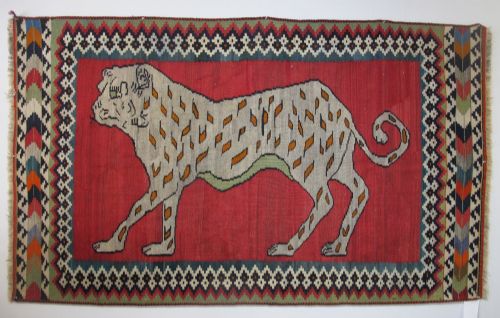
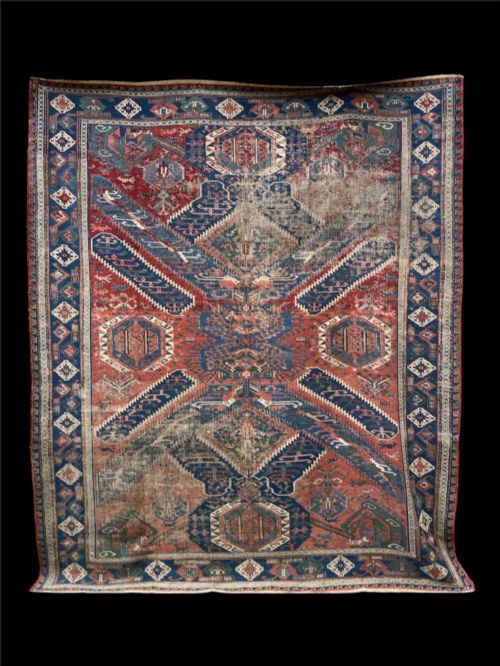
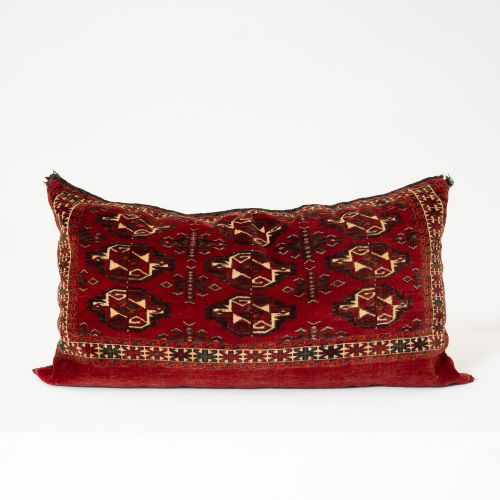
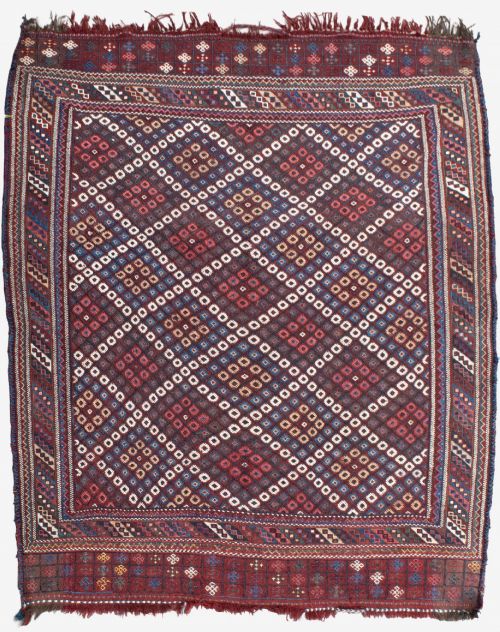
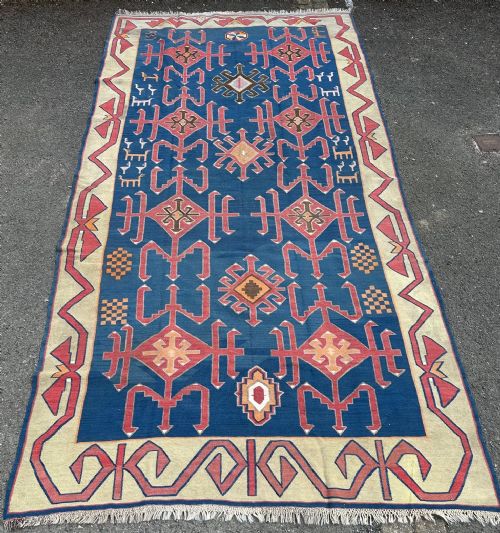
A vintage red wool kilim is a flatwoven textile originating from tribal and village communities across Persia, Anatolia, the Caucasus, and Central Asia. These pieces function primarily as floor coverings, rugs, runners, and wall hangings, alongside utilitarian forms like bread sofrehs, grain bags, and cushions.
The selections encountered here span from the mid-nineteenth century through the early twentieth century, capturing distinct regional weaves produced by nomadic groups. Buyers will find large carpets alongside smaller utilitarian items adapted into modern furnishings.
Materials and construction
These flatweaves rely primarily on hand-spun wool and cotton foundations, occasionally incorporating goat hair for structural durability and wood or brass elements in associated nomadic trappings. Natural dyes impart the characteristic deep red tones across the wool surface.
The technique involves interweaving warp and weft threads tightly without a pile, creating a flat surface where the design appears sharply defined on both sides. Artisans from diverse regional traditions employ slit-weave and banded flatweave methods to execute complex geometric patterns.
Assessing quality and craftsmanship
Quality rests upon the tightness of the weave, the consistency of the hand-spun wool, and the complexity of the regional geometric design. Tighter structures and finely spun fibres endure decades of use while retaining structural integrity.
The richness and depth of the natural dyes distinguish superior examples, as does the precision of the flatweave execution across larger formats like carpets and runners. Timeworn repairs and age-related fading reflect the historical utility of these textiles rather than diminishing their intrinsic character.
The Vintage Red Wool Kilim Glossary
- Kilim
- A flatwoven textile produced without a pile, common throughout nomadic and village regions in the Near East and Central Asia.
- Sofreh
- A utilitarian woven cloth traditionally used for spreading meals, kneading dough, or serving bread within nomadic households.
- Sumak
- A decorative flatweave technique wrapping weft threads around the warp to create a textured, braided surface finish.
- Mafrash
- A large rectangular storage bag or compartment used by nomadic tribes for bedding and household possessions during migration.
- Warp
- The stationary vertical threads stretched across a loom that form the foundational structural grid of the textile.
Vintage Red Wool Kilim: Frequently Asked Questions
How were kilims used originally?
Nomadic and village communities utilised these flatweaves as floor coverings, blankets, horse covers, and storage containers during seasonal migrations. They served practical daily functions within tents and houses before entering the antique market.
Larger formats covered main living spaces, while smaller bags and panels held grain, bread, or household goods. Every piece fulfilled a distinct domestic purpose tailored to tribal life.
Where do these textiles come from?
The pieces originate from tribal weaving traditions across Persia, Anatolia, the Caucasus, and Central Asia. Specific groups such as the Qashqai, Shahsevan, and Uzbek communities developed distinct regional motifs.
Geographic origins dictate the particular palette, wool quality, and weaving structure observed in each textile. Local traditions shaped the specific geometric vocabulary passed down through generations.
How do I care for a wool kilim?
Regular gentle vacuuming without a rotating brush roll prevents dust accumulation within the flatweave structure. Keeping the textile out of direct sunlight preserves the natural red wool dyes over time.
Professional cleaning suited for antique wool textiles ensures proper maintenance without damaging the natural fibres. Prompt attention to spills prevents staining and preserves the integrity of the weave.
How can I tell regions apart?
Regional differences appear in the specific geometric motifs, border arrangements, and structural weave techniques employed by different tribes. Caucasian and Anatolian pieces often feature sharp, angular medallions, while Persian tribal weaves display intricate banded designs.
Examining the materials, such as the inclusion of goat hair or specific cotton foundations, provides further clues to geographic origin. Each weaving group maintained distinct aesthetic conventions that distinguish their work.