





Tunbridge Ware Marquetry
Tunbridge ware marquetry items bring intricate mosaic woodwork into daily life, offering miniature architectural scenes and geometric panels built from thousands of tiny timber blocks.
Tunbridge Ware Marquetry
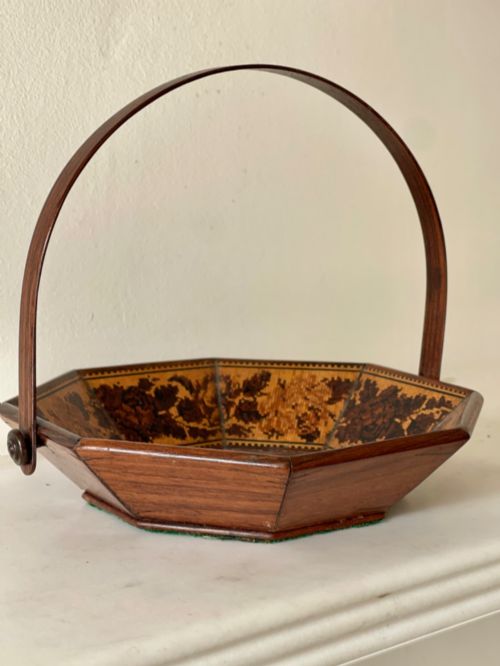
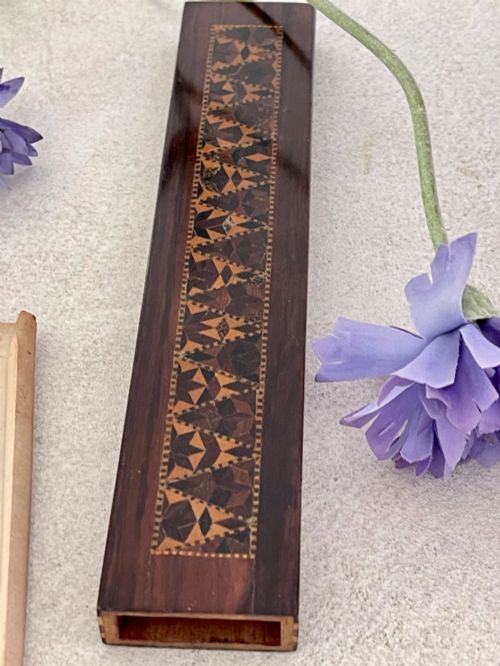
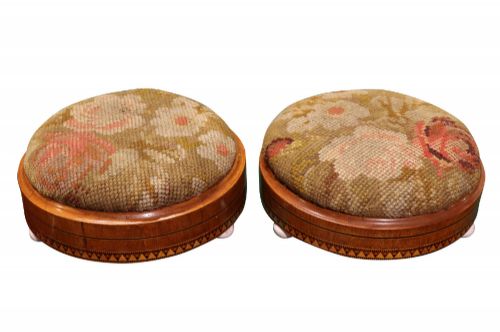
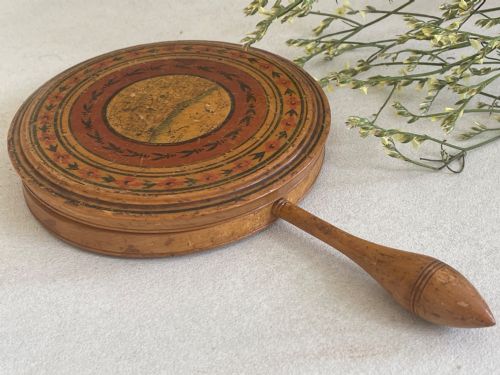
You will also find smaller accessories such as book slides, pin cushions, stamp boxes, cribbage boards, and wall plaques. These pieces rely on precise pictorial tessellation rather than surface painting to depict castles, butterflies, and geometric bands.
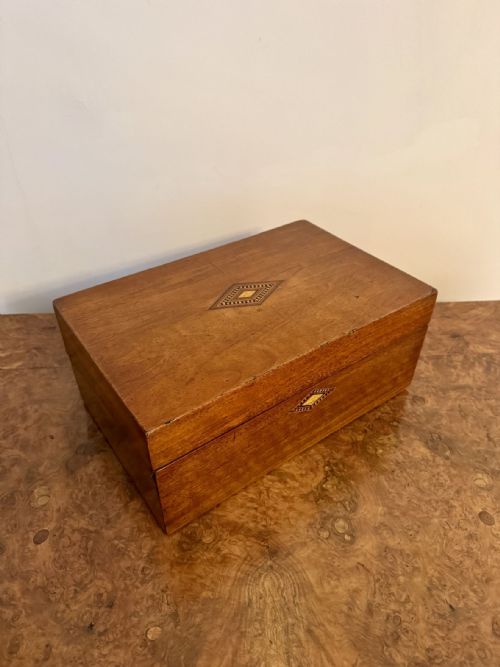
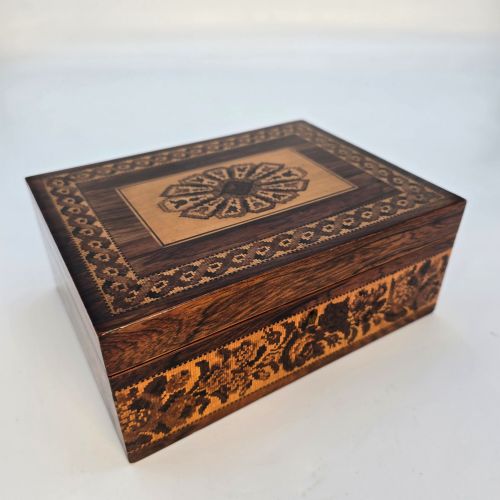
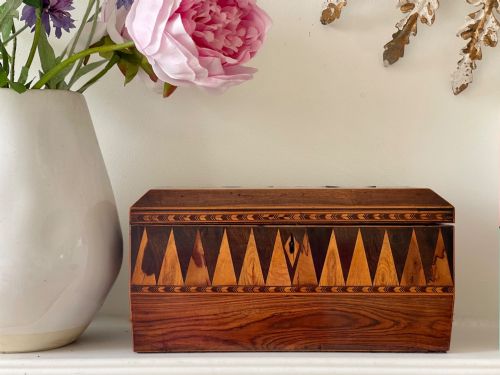
Dating primarily from the Victorian and Regency periods, these objects utilise native and exotic timbers arranged in repeating mosaic borders. The items range from modest travel pieces to fitted stationary boxes and card tables.
Woods and mosaic construction
Craftsmen built these pieces by grouping hundreds of tiny tinted wood slips together in specific geometric or pictorial arrangements, then slicing them transversely like loaves of bread to produce identical mosaic bands.
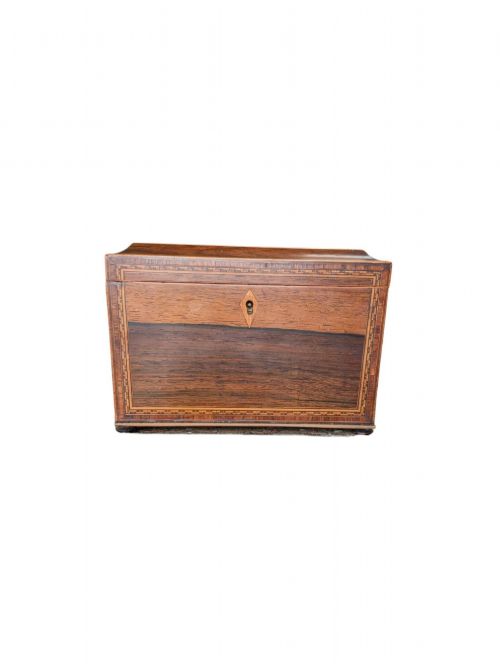
The primary carcases utilise walnut, rosewood, burr walnut, and mahogany, providing dark contrasting grounds for the bright mosaic borders. Inlays incorporate boxwood, sycamore, and brass to achieve natural colour variations without the use of artificial stains.
Tunbridge Ware Marquetry Retail Price Guide 2026
Typical asking prices for tunbridge ware marquetry among the pieces listed under this phrase on Sellingantiques today, from the lower quarter to the upper quarter. They describe what is for sale here now, not the wider market.
Distinctions in craftsmanship
The fineness of the mosaic tesserae separates standard items from exceptional examples, with superior pieces containing minuscule individual wood blocks that create sharp pictorial detail. The complexity of the central motif, such as a detailed castle view or a multicoloured butterfly, indicates the maker's skill.
The selection of cabinet timbers also distinguishes the range, where figured burr walnut and dense rosewood carcases with fitted interiors reflect higher production costs than plain sycamore or mahogany boxes.
Edmund Nye·Henry Hollamby
The Tunbridge Ware Marquetry Glossary
- Mosaic
- The assembly of countless tiny wood blocks arranged to form a picture or geometric pattern. This technique forms the defining characteristic of the craft.
- Tesserae
- The individual miniature wooden blocks used to construct the mosaic pictures and borders. Each block is cut from bundled strips of dyed timber.
- Tea caddy
- A container designed to store loose tea leaves, frequently featuring fitted internal compartments and lids. These boxes often showcase elaborate geometric mosaic panels.
- Writing slope
- A portable slant-topped desk opening to reveal a velvet writing surface and storage compartments for paper and ink. They frequently incorporate parquetry and marquetry banding.
- Parquetry
- Geometric wood inlay forming repeating patterns across a surface. It differs from pictorial marquetry by relying on angled shapes rather than figurative designs.
Tunbridge Ware Marquetry: Frequently Asked Questions
What is tunbridge ware marquetry?
Tunbridge ware marquetry refers to decorative wooden objects decorated with intricate mosaics made from thousands of tiny wood blocks. These tiny pieces of timber are glued together in bundles and sliced across to create repeating geometric bands and pictorial scenes.
Originating in Kent, this technique transforms everyday boxes, tea caddies, and desk accessories into miniature works of carpentry. The makers used natural wood colours rather than paint to build castles, flowers, and geometric patterns.
How do I date a piece?
Dating relies on examining the object form, timber choices, and construction methods used in the carcase. Regency and early Victorian pieces often feature rosewood or mahogany with simpler geometric banding, while mid-Victorian examples frequently showcase burr walnut and pictorial castle panels.
Labels on the underside or inside lining occasionally name specific makers or retail locations in Tunbridge Wells. Comparing the style of the mosaic borders with documented examples helps narrow the production decade.
How were tea caddies used?
Tea caddies served to store expensive tea leaves securely under lock and key in the Victorian parlour. The interior typically featured one or two lidded compartments and sometimes a small mixing bowl.
Because tea was a valuable commodity, these boxes sat prominently on the table. The elaborate mosaic decoration announced the owner's taste and wealth to assembled guests.
How do I clean the wood?
Maintenance requires gentle dusting with a soft, dry cloth to prevent dirt accumulation in the mosaic crevices. Avoid liquid cleaners, moisture, and modern polishes that can seep between the tiny wood blocks and loosen the glue.
Keep the items away from direct sunlight and radiators to prevent the wood from shrinking and the delicate veneer from lifting. Occasional application of microcrystalline wax helps protect the polished surface.