



Tufted Leather Ottoman Bench
A tufted leather ottoman bench brings timeless seating and surface utility to a room, combining buttoned hide with sturdy timber frames.
Tufted Leather Ottoman Bench
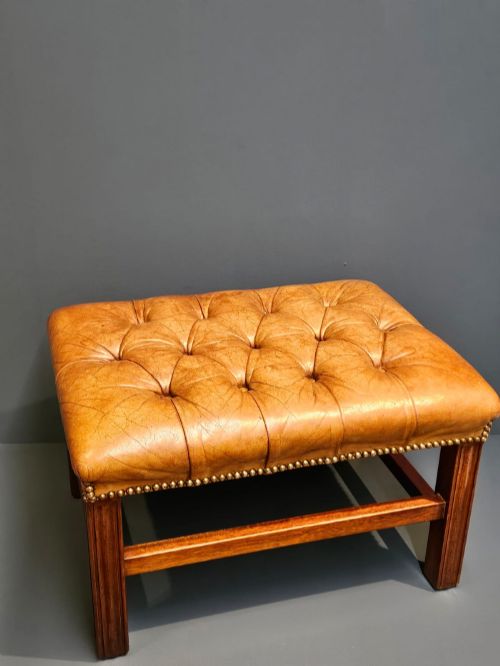
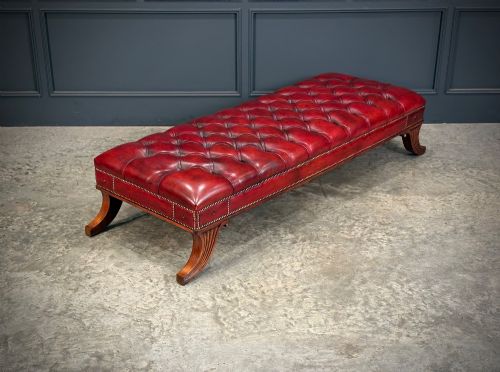
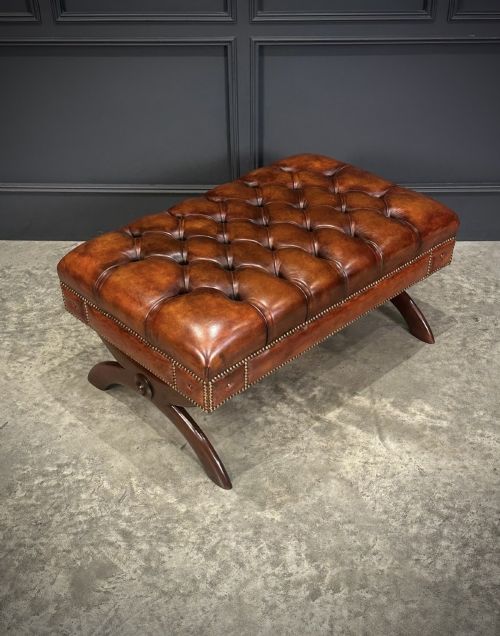
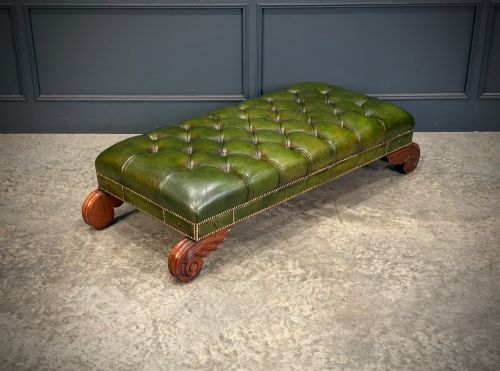
When you search for a tufted leather ottoman bench, you enter a field of low seating spanning the George III, Regency, and Victorian eras alongside later twentieth-century interpretations. These pieces combine upholstered leather surfaces with forms ranging from compact footstools to expansive country house long benches.
You are most likely to meet buttoned hide upholstery paired with mahogany, oak, or painted wood frames across this selection. The designs incorporate classic styles such as Chesterfield tradition and Louis XV revival, serving as functional footstools or window seats.
The objects listed display varied proportions, from modest footstools to long benches supported by fluted legs or brass studding. Every piece reflects traditional craftsmanship rooted in eighteenth and nineteenth-century furniture making.
Materials and construction methods
Frames rely on hardwoods such as mahogany and oak, often shaped with fluted legs or accented by brass-studded detailing. Painted wood and gilded finishes also appear among the structural timbers.
Upholstery centres on leather, sometimes hand dyed, secured through traditional buttoning techniques that create the characteristic tufted surface. Metal brass studs frequently edge the hide, marrying the leather directly to the wooden framework.
Tufted Leather Ottoman Bench Retail Price Guide 2026
Typical asking prices for tufted leather ottoman bench among the pieces listed under this phrase on Sellingantiques today, from the lower quarter to the upper quarter. They describe what is for sale here now, not the wider market.
Periods represented reach from George III and Regency to Victorian and nineteen-twenty.
Distinctions in quality
Quality rests in the harmony between the timber frame and the depth of the leather buttoning. Superior examples showcase dense hardwoods and carefully hand-dyed hides that retain suppleness.
The refinement of the woodwork, from plain painted surfaces to intricately shaped mahogany with fluted legs, defines the tier of the piece. Scale also plays a part, with large country house proportions demanding robust internal framing to support the expansive tufted top.
James Shoolbred
The Tufted Leather Ottoman Bench Glossary
- Buttoned
- An upholstery technique where indentations are pulled tight and secured with buttons to create a tufted diamond pattern. This method keeps the internal padding evenly distributed.
- Regency
- A British architectural and furniture style dating from the early nineteenth century, known for classical restraint and elegance. Pieces from this period often feature clean lines and refined timber turning.
- Ottoman
- A low upholstered seat or footstool without a back or arms, designed for resting feet or sitting. Larger versions function centrally within a room as secondary seating.
- Brass-studded
- A decorative finish where individual brass nails are driven into the frame to secure and edge leather upholstery. This detail adds both structural fastening and visual contrast.
Tufted Leather Ottoman Bench: Frequently Asked Questions
How do I use an ottoman bench?
These versatile pieces serve primarily as footstools, extra seating, or window seats in living spaces and bedrooms. Their sturdy upholstered tops also allow them to function as informal coffee tables when paired with a tray.
Positioning one at the foot of a bed or beneath a window provides both practical utility and a traditional focal point for the room.
What periods do these benches span?
The selection includes pieces originating from the George III and Regency eras, through the nineteenth century and Victorian periods, up to nineteen-twenty productions.
Each period imparts distinct characteristics to the woodwork and leather finishing, reflecting the prevailing design tastes of its time.
How do I care for antique leather?
Maintain the leather by keeping it away from direct sunlight and heat sources that can dry out the hide. Regular dusting and occasional conditioning will preserve its suppleness.
Avoid harsh chemical cleaners, relying instead on gentle, appropriate leather care products suited to older materials.
What is the difference between a stool and an ottoman?
Stools generally feature taller, more exposed wooden legs supporting a compact top, whereas ottomans often present a lower, more substantial upholstered body designed for heavy use.
Both forms overlap significantly in historical listings, frequently serving interchangeable roles as seating and footrests.