


Large Leather Coffee Table
These large leather coffee table pieces are substantial footstools, ottomans, and low tables upholstered in hide, prized for grounding a room with rich texture and surface utility.
Large Leather Coffee Table
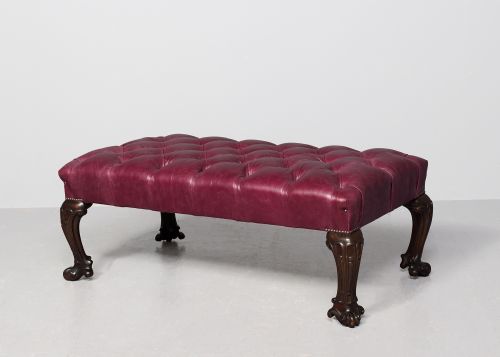
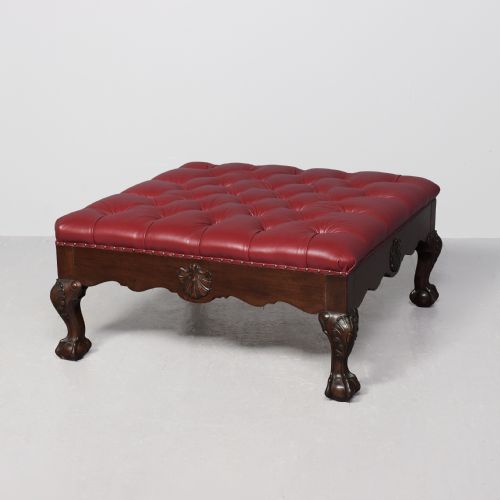
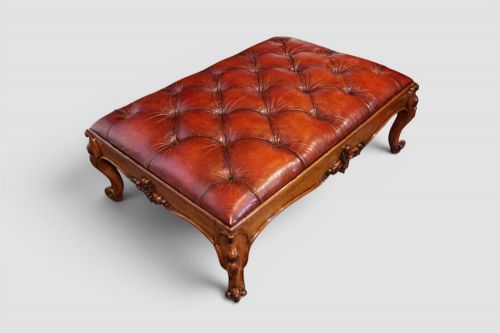
A large leather coffee table usually takes the form of a converted footstool, an ottoman, or a low-slung wooden table top finished with hide. You will most frequently meet Victorian and nineteenth-century examples upholstered in buttoned red or burgundy leather, often resting on mahogany or oak frames.
The category spans diverse stylistic revivals, including Georgian style, Chippendale revival, and Regency designs, alongside English country house pieces. Some inventory departs from standard British seating to encompass Chinese export trunks, lacquered temple drums, and pale oak low tables.
Makers and manufacturers occasionally left clues to origin, such as London-made stamps on sturdy frames. Whether deployed as impromptu seating or a stable surface for books and trays, these items combine utilitarian timber structures with tactile leather upper surfaces.
How they were made
Makers built the structural frames using dense hardwoods like mahogany, walnut, and oak, occasionally employing iron or lacquer for specialised or export items. These timber skeletons provided the weight and rigidity required for heavy daily use.
Upholsterers stretched leather hide over padding, frequently securing the surface with deep buttoning that required careful tensioning by hand. The leather was often hand-dyed in shades of red, burgundy, or black, developing a supple texture over decades of handling.
Among the stately mahogany frames sits a red lacquered temple drum and a pig skin chest, proving that historical storage took many surprising turns.
What varies in quality
Quality rests heavily on the depth and character of the timber frame, where dense mahogany or figured walnut outranks secondary softwoods in structural integrity. The selection of the hide itself dictates longevity, with thick, hand-dyed leather displaying natural grain variations rather than uniform synthetic coatings.
The execution of the joinery and upholstery work separates standard workshop production from exceptional pieces. Precise buttoning, tight framing, and well-balanced proportions indicate a maker who prioritised both aesthetic balance and physical endurance.
The Large Leather Coffee Table Glossary
- Buttoned leather
- Upholstery technique where the hide is pulled deep into the padding and secured with tufts or buttons, creating a geometric pattern of indentations. This method keeps internal stuffing firmly in place while adding tactile depth.
- Ottoman
- A low, upholstered seat or bench without a back or arms, frequently adapted to serve as a low table in domestic interiors. These pieces offer a broad upper surface well suited for resting trays.
- Chippendale revival
- A late nineteenth-century stylistic movement replicating the mid-eighteenth-century designs associated with Thomas Chippendale. Pieces in this style often feature carved mahogany frames and confident cabriole legs.
- Hide
- The natural skin of an animal, dressed and tanned for heavy upholstery use. In antique pieces, this material shows distinctive patination and wear accumulated over generations.
Large Leather Coffee Table: Frequently Asked Questions
Are these tables original or converted?
Many examples began life as substantial footstools or ottomans during the Victorian or nineteenth-century periods and were later adopted as low tables for modern domestic spaces.
Their sturdy timber frames and broad proportions make them naturally suited to this dual function without requiring structural alteration.
How do I care for antique leather?
Antique hide benefits from gentle cleaning and occasional application of traditional leather dressings to prevent the material from drying out or cracking.
Keeping these surfaces away from direct heat sources preserves the natural oils and the deep patination acquired over the decades.
What woods were used for the frames?
Cabinet makers predominantly utilised dense native and imported timbers, including mahogany, walnut, and various grades of oak.
These heavy woods ensured the frame remained rigid under the tension of buttoned upholstery and the weight of daily use.
How do I identify a Victorian piece?
Victorian examples frequently feature deep buttoned red or burgundy leather stretched over robust mahogany or oak frames, reflecting mid-to-late nineteenth-century taste.
Construction details, such as hand-cut joinery and the specific ageing of the hide, help distinguish these nineteenth-century items from later revivals.