




Tripod Pole Screen
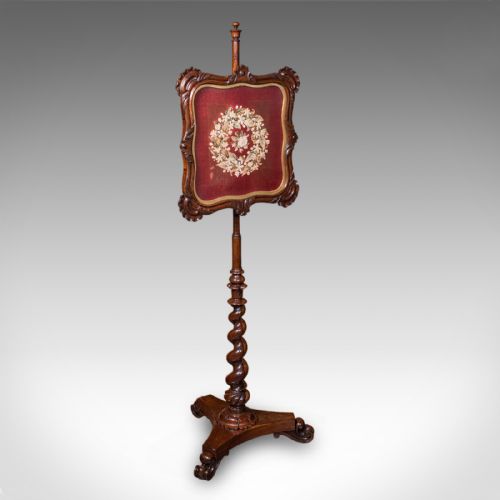
A tripod pole screen is a slender fireside essential that shelters your face from blazing heat while bringing refined height to a room.
Tripod Pole Screen
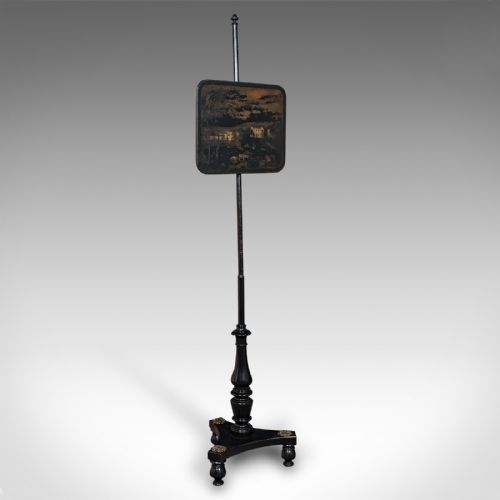
A tripod pole screen stands upon a three-legged base supporting a vertical shaft that carries an adjustable panel. When you search for a tripod pole screen, you will encounter examples primarily from the Georgian, Regency, and Victorian periods.
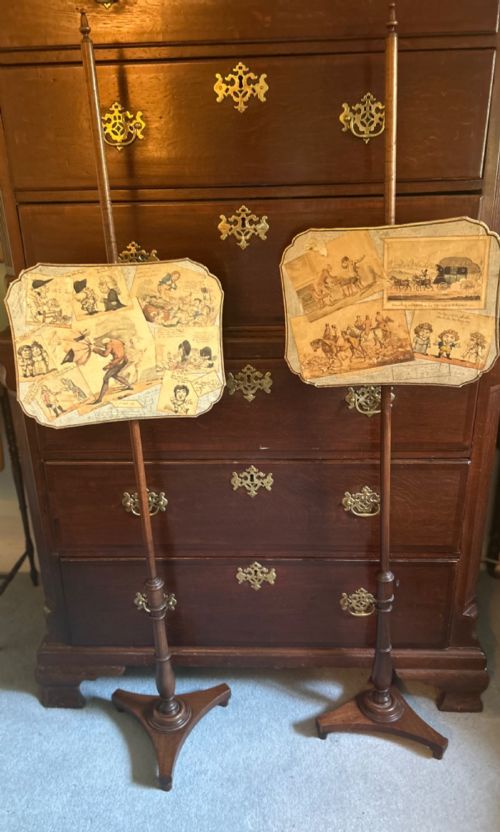
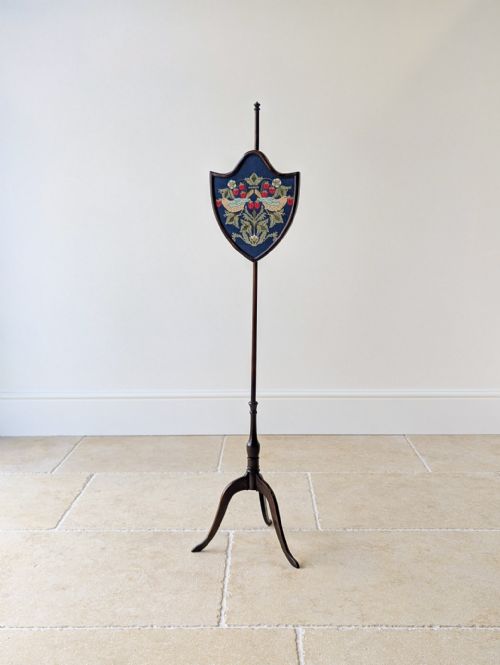
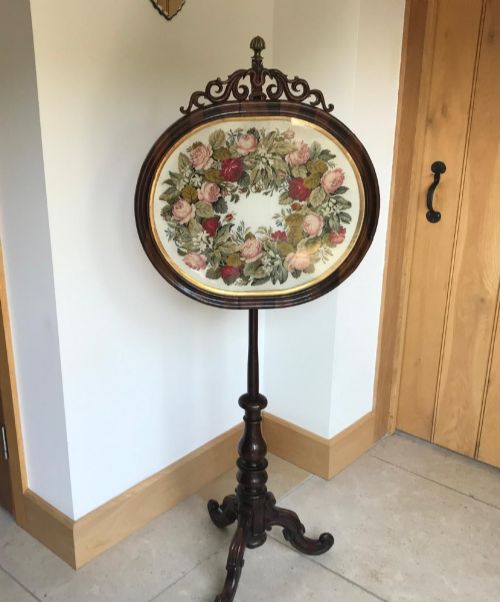
The vertical panels take diverse forms, including embroidered needlework, floral tapestry, satirical prints, and glass reflectors. These panels slide up and down the pole to block the intense glare and heat of an open hearth.
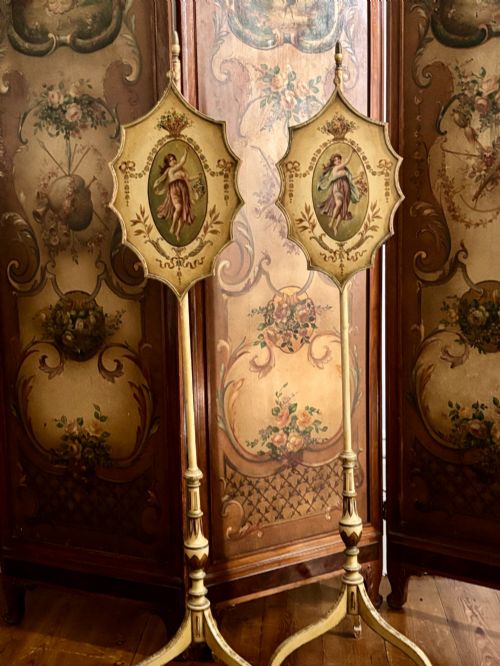
Most pieces seen here rely on rich timbers such as mahogany and rosewood, often elevated on delicate tripod supports with spade feet or carved details. Some specimens survive in pairs, offering a balanced arrangement for larger drawing rooms.
Materials and construction
Cabinetmakers utilised dense hardwoods like mahogany, rosewood, and walnut to turn the slender upright poles and fashion the stable tripod bases. Brass mechanisms and fittings allowed the central panel to slide smoothly and lock at the desired height.
The decorative panels required skilled needlework, employing wool and silk threads to create floral tapestries and embroidered scenes. In some instances, paper prints or glass panels served as the functional heat shield.
Carved ornament on the legs and bases ranged from simple restrained moulding to elaborate floral motifs and giltwood accents. Selected pieces feature inlaid details or sophisticated turning that demonstrate the maker's joinery skills.
Tripod Pole Screen Retail Price Guide 2026
Typical asking prices for tripod pole screen among the pieces listed under this phrase on Sellingantiques today, from the lower quarter to the upper quarter. They describe what is for sale here now, not the wider market.
Judging quality and proportion
Quality rests heavily on the elegance of the tripod base and the sharpness of any carved detail. Finer pieces maintain slender, well-proportioned legs that balance the weight of the screen without appearing clumsy.
The condition and execution of the needlework panel dictate much of the visual appeal. Original tapestries with tight, even stitches and vibrant wools elevate a piece far above one with a later replacement panel.
The ingenuity and smooth operation of the adjustable brass mechanism also mark the distinction between standard production and superior craftsmanship. A robust yet refined movement ensures the panel stays firmly in place.
The Tripod Pole Screen Glossary
- Pole screen
- A vertical fireside screen mounted on a tall wooden shaft with a tripod base. The sliding panel protected the face from fireplace heat.
- Tripod base
- A three-legged support structure designed to keep the tall slender shaft upright and stable on uneven floors.
- Needlework panel
- A decorative fabric insert worked in wool or silk threads, often featuring floral designs or historical scenes.
- Fireside reflector
- A glass or metal panel designed to bounce light and warmth back into the room while blocking direct flames.
- Spade foot
- A rectangular, slightly tapered foot found on furniture legs from the Georgian and Regency eras.
Tripod Pole Screen: Frequently Asked Questions
What is a tripod pole screen used for?
These screens were placed near fireplaces to shield a seated person's face from the intense radiant heat of an open coal or wood fire. The adjustable panel could be raised or lowered to suit the user's height and distance from the hearth.
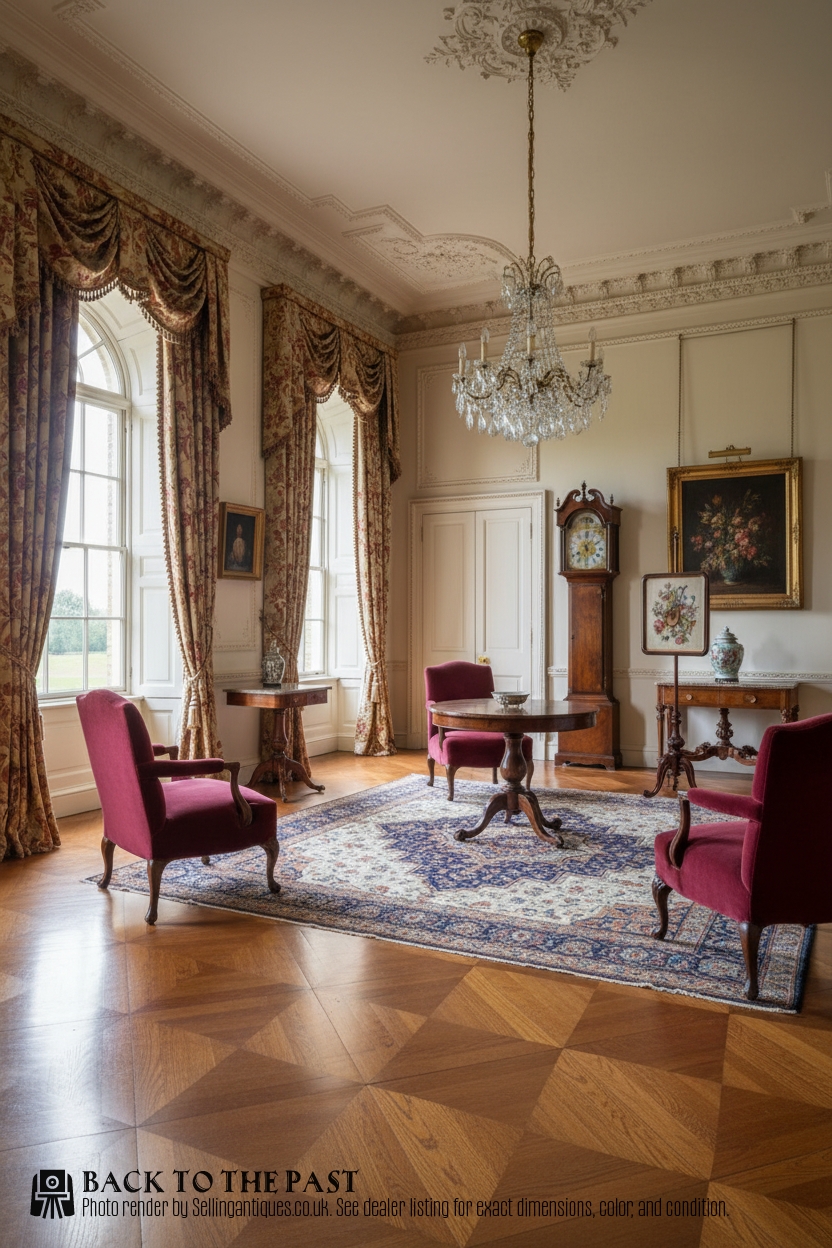
In modern interiors, they function as striking decorative accents in corners or beside armchairs, bringing vertical interest and historic textile art to a room.
How do I adjust the panel height?
Most antique examples utilise a small brass collar or thumbscrew at the back of the panel frame that tightens against the wooden pole. Loosening this mechanism allows the panel to slide freely up and down.
Care should be taken when adjusting older pieces to support the weight of the panel and avoid stressing the brass collar or scratching the timber shaft.
How do I tell a Georgian screen from a Victorian one?
Georgian and Regency pole screens typically display restrained classical proportions, featuring fine mahogany or rosewood, spade feet, and subtle carved details. The needlework tends to reflect neoclassical or restrained floral motifs.
Victorian iterations often embrace heavier carving, rosewood or walnut timbers, and more exuberant floral tapestries or rich satinwood veneers. The bases on Victorian examples can be noticeably heavier and more ornate.
Can I use a pole screen as a lamp?
Historical conversions do occur where the tall pole and stable tripod base are adapted to hold a light fixture instead of a flat screen. These converted lamp tables retain the historic silhouette while serving a new functional purpose.
Purists prefer untouched panels with their original needlework, but converted pieces offer a practical way to integrate antique woodwork into contemporary lighting schemes.