



Tribal Wool Saddlebag
A tribal wool saddlebag brings nomadic heritage into a room through rich vegetal dyes and expressive geometric weaving.
Tribal Wool Saddlebag
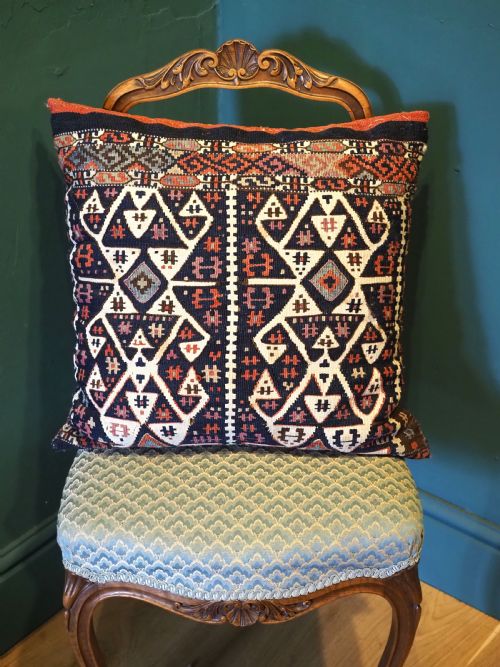
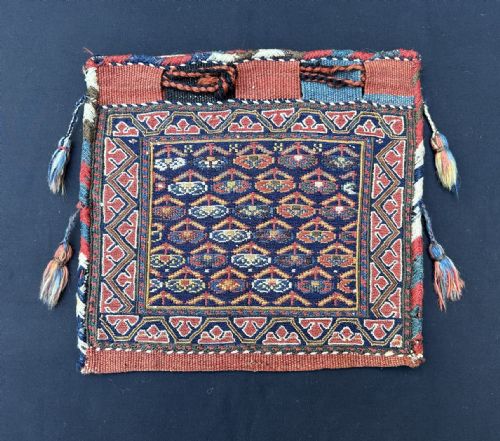
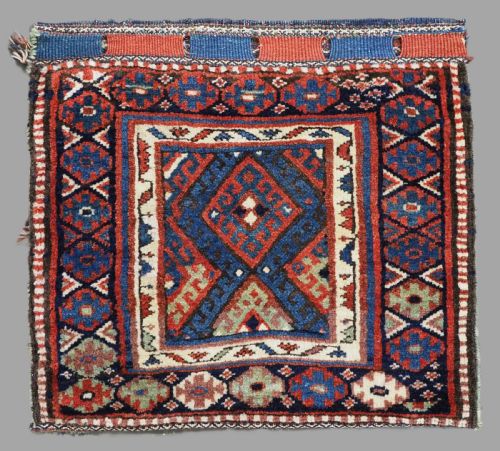
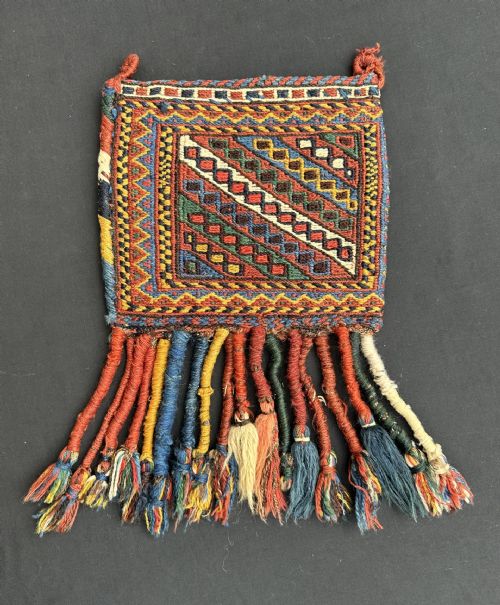
When searching for a tribal wool saddlebag, buyers encounter functional utilitarian items made by nomadic and village weavers across Persia, Anatolia, and the Caucasus. These pieces include complete double saddlebags, known as khorjin, alongside single bag faces and smaller vanity or storage bags.
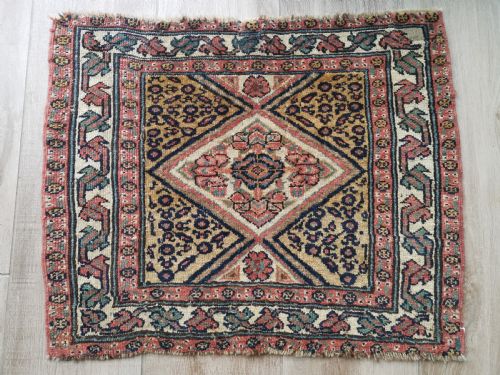
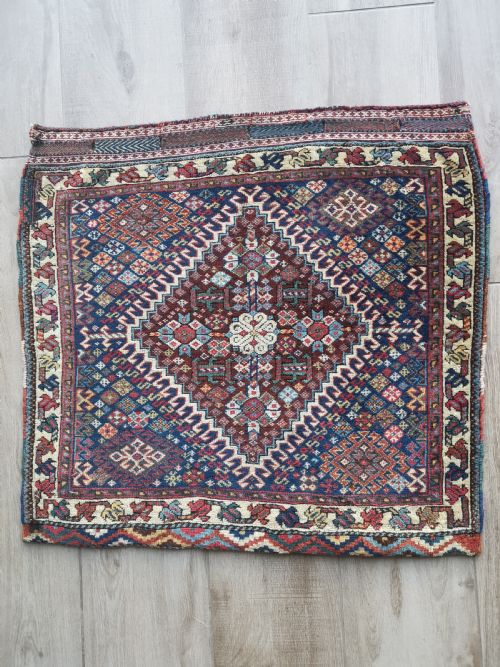
The selections available here originate from distinct tribal confederations such as the Qashqai, Shahsavan, Afshar, and Jaf Kurd. Many survive as isolated bag faces because the original plain-weave backs wore out from decades of attachment to pack animals.
Makers produced these containers to store household goods, bedding, and personal possessions during seasonal migrations. Collectors value them for their unpretentious tribal character and compressed design fields that concentrate full-sized rug motifs into portable formats.
Materials and construction
Weavers relied primarily on hand-spun wool for both the foundation warps and the plush pile, utilising natural dyes derived from plants, roots, and insects to achieve enduring depth of colour. Cotton frequently appears in subsidiary structural elements, while supplementary leather or metal details occasionally reinforce stress points.
Techniques varied between symmetrical or asymmetrical knotting for pile surfaces and flatwoven structures like sumac or kilim for structural backs and subsidiary panels. This combination of resilient fibre and dense knotting allowed the bags to endure harsh outdoor conditions while maintaining structural integrity.
Distinctions in quality
Quality rests upon the handled softness and natural lustre of the wool, which reflects the purity of the fleece and the skill of the dyer. High-grade examples display saturated, complex natural dye palettes that develop subtle abrash variations across the surface.
Structural precision also divides the standard from the exceptional, showing in the tightness of the knotting and the crispness of tribal motifs such as boteh or central medallions. Completeness matters greatly, as surviving original plain-weave backs or intact dual compartments elevate historical interest.
Shahsavan Nomads of Moghan·Lori-Bakhtiari Nomads·Afshar Nomads Kerman Province·Qashqa'i Tribes Fars Province·Jaf Kurd
The Tribal Wool Saddlebag Glossary
- Khorjin
- The traditional Persian term for a double-sided saddlebag used by nomadic groups for transport and storage. These paired pouches hung across the flanks of pack animals during seasonal migrations.
- Bagface
- The decorative front panel of a storage or saddle container that survived after the utilitarian rear portion was discarded. Collectors frame these panels or use them as small floor rugs.
- Sumac
- A warp-wrapping flatweave technique that creates a durable, textured surface resembling embroidery. This method often appears on storage bags produced by northern tribes.
- Abrash
- Subtle tonal variations and colour shifts within a single field of wool. These shifts occur naturally when dyers mix successive batches of plant-based dye.
- Boteh
- A traditional almond-shaped motif representing a stylized floral spray or cypress tree. It appears frequently in West Persian and Afshar weaving.
- Kilim
- A flatwoven textile produced without a pile by tightly interweaving warp and weft strands. Tribal makers used this technique for lightweight storage and bag backs.
Tribal Wool Saddlebag: Frequently Asked Questions
How were tribal wool saddlebags originally used?
Nomadic families used these containers lashed across the backs of horses, donkeys, or camels to transport personal belongings, grain, and household goods during seasonal migrations.
When the groups reached camp, the bags were unloaded and stacked inside tents to serve as interior storage chests and domestic dividers.
Why do so many pieces survive only as bag faces?
The plain-weave backs of these containers were subjected to constant friction against pack animals, causing them to wear out long before the thick pile fronts.
Weavers or later owners often separated the damaged rear sections, leaving behind the decorative face panels that survived in better condition.
How should I display a saddlebag face at home?
These textiles work effectively when mounted on a wall as fibre art or placed on low tables where foot traffic remains light.
Avoid placing them in direct sunlight to protect the natural dyes from fading over time.
How can I tell different tribal designs apart?
Weaving groups typically favoured distinct colour palettes, structural techniques, and recurring motifs passed down through generations.
For instance, Shahsavan pieces often feature crisp sumac work and geometric latch-hooks, whereas Afshar examples frequently display boteh motifs and rich blue fields.