
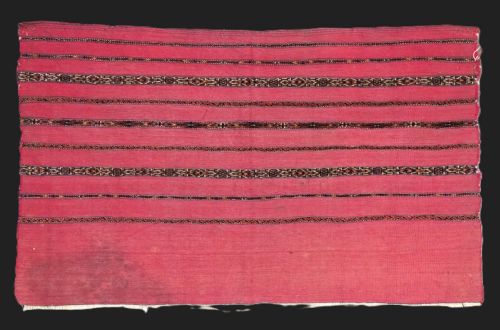


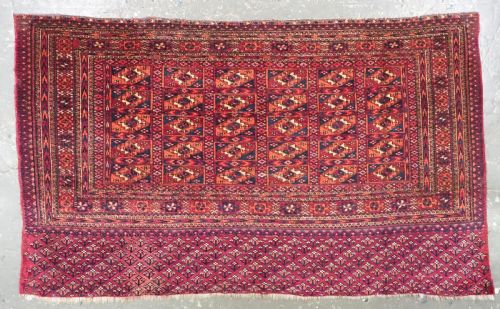


Tribal Wool Chuval Face
When you handle a tribal wool chuval face, you hold a piece of nomadic weaving intended for household storage.
Tribal Wool Chuval Face
A tribal wool chuval face is the decorated front panel of a large storage bag woven by Central Asian nomads, particularly Turkmen tribes such as the Tekke, Ersari, Yomut and Saryk. These panels were originally part of tent furnishings used to store bedding and household possessions. On this page, collectors primarily encounter surviving bag faces and fragments dating from the eighteenth to the early twentieth century.
The visual vocabulary relies heavily on repeated main motifs known as güls, alongside subsidiary patterns and lower border panels called elems. Many examples display precise repeating medallions, while others incorporate tree designs, banded layouts or ikat patterns. These textiles reflect the specific tribal weaving traditions of Turkmenistan and the wider Central Asian region.
Materials and construction
Weavers constructed these pieces using wool foundations and pile, often augmented with natural dyes to achieve deep reds, browns and oranges. Detail work occasionally incorporates white cotton or crimson silk accents to create contrast against the dark field. The handling of natural dyestuffs produces the varied hue depths seen across different pieces.
The structure relies on hand-knotting techniques executed with dense pile and fine weaves. Many surviving bag faces retain remnants of hanging loops or side attachments from their original utility as functional containers. Structural integrity depends on the tightness of the knotting and the quality of the wool fleece.
Listings span periods from the eighteenth century to the early twentieth century, featuring wool, cotton, silk and natural dyes.
Evaluating quality
Quality in these textiles rests upon knot density, the precision of the drawing and the clarity of the natural dyes. A very fine weave allows intricate rendering of subsidiary elements and secondary güls without distortion. The handling of colour transitions dictates visual balance across the field.
The Tribal Wool Chuval Face Glossary
- Chuval
- A large tent storage bag used by Turkmen nomads for household belongings. The face is the only portion usually preserved as a decorative textile.
- Gül
- A repeating primary medallion motif characteristic of Turkmen and Central Asian tribal carpets and bags. Each tribe utilised distinct Gül geometries to denote lineage.
- Torba
- A smaller storage bag than a chuval, utilised for specific domestic items within the nomad tent. These pieces share similar wool construction and knotting techniques.
- Mafrash
- A rectangular storage bag or panel often associated with bedding storage. Construction involves similar pile-woven techniques to bag faces.
Tribal Wool Chuval Face: Frequently Asked Questions
What is a chuval face?
A chuval face is the decorative knotted-pile front of a large nomadic storage bag from Central Asia. These panels were cut from their original backing sacks when the utility bags wore out.
Nomadic families utilised the complete containers for storing wool, clothing and bedding inside felt tents. Surviving fragments display the traditional designs woven by Turkmen tribes.
How were these bags used?
Nomads stacked these large storage sacks inside their tents as part of the domestic interior landscape. They served both functional containment and decorative display during tribal gatherings.
Over time, functional sacks were dismantled, leaving the durable pile-woven face panels to survive as decorative textiles. Many retain loops used for hanging or securing the bags within the dwelling.
How do I hang a textile?
Mounting a textile safely requires distributing the weight evenly along the top edge rather than piercing the fabric with nails. Conservation-grade Velcro systems or sleeved textile mounts provide secure support for wall display.
Keep the piece away from direct sunlight to protect the natural wool fibres and vegetable dyes from fading. Regular gentle rotation and inspection help maintain the condition of the weave.
How are different tribes identified?
Tribe attribution depends on the specific geometry of the primary güls, secondary motifs and colour palettes. Tekke, Ersari, Yomut and Saryk weavers each employed distinct structural traits and border arrangements.
Examining the knotting style and the composition of the elem panel further clarifies the regional origin. Central Asian tribal groups maintained strict visual traditions passed down through generations.