



Tribal Flatweave Kilim
These tribal flatweave kilim pieces are flat-woven nomad textiles and rugs prized for geometric patterns and authentic wool textures.
Tribal Flatweave Kilim
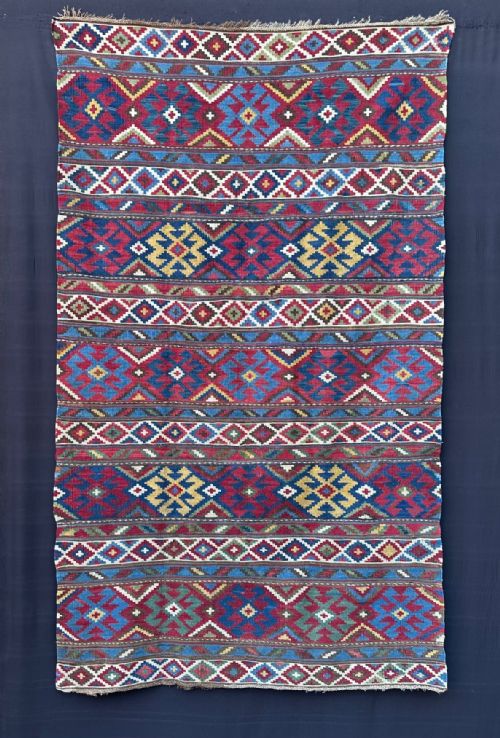
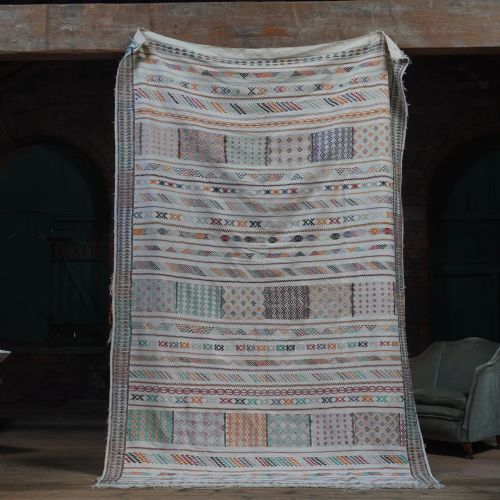
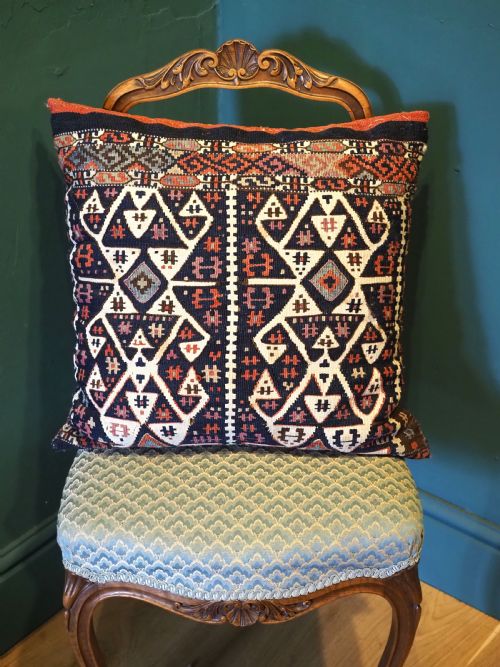
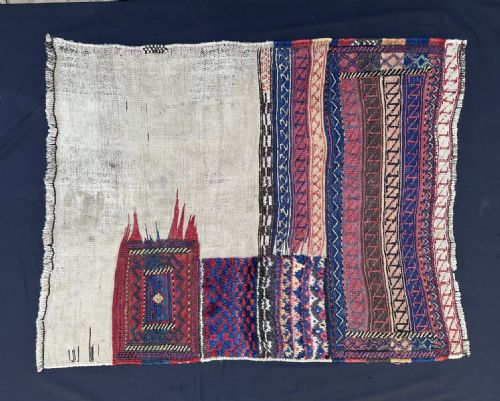
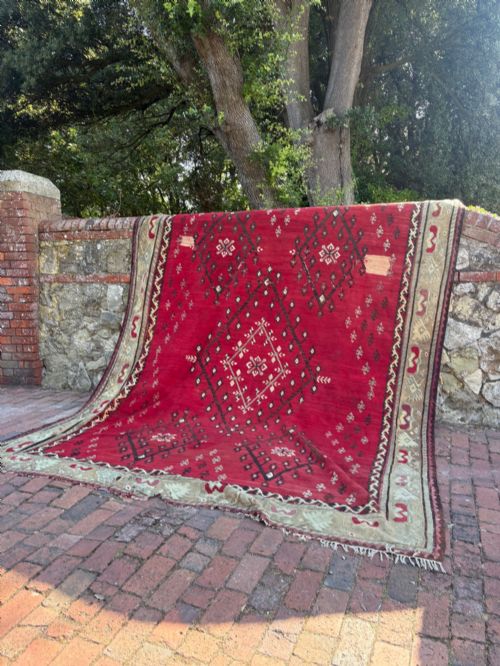
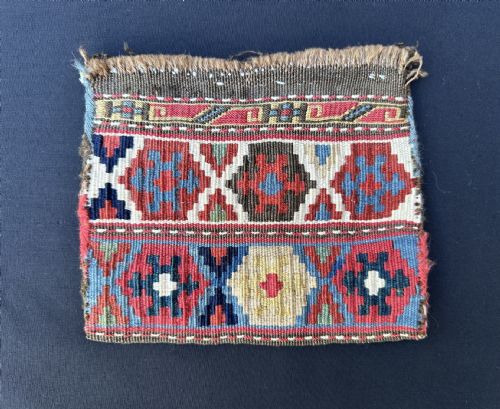
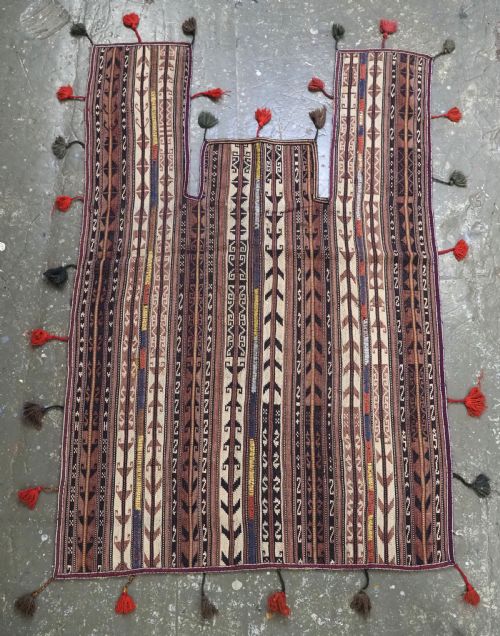
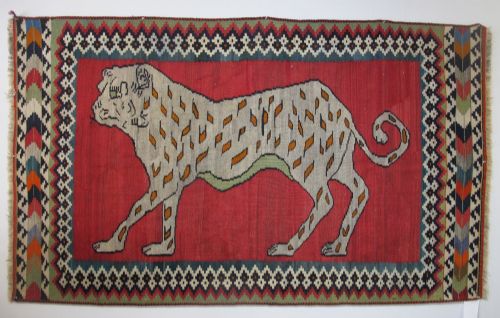
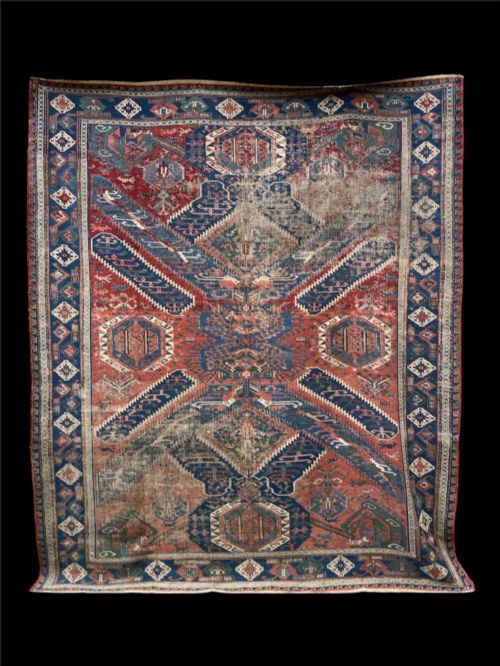
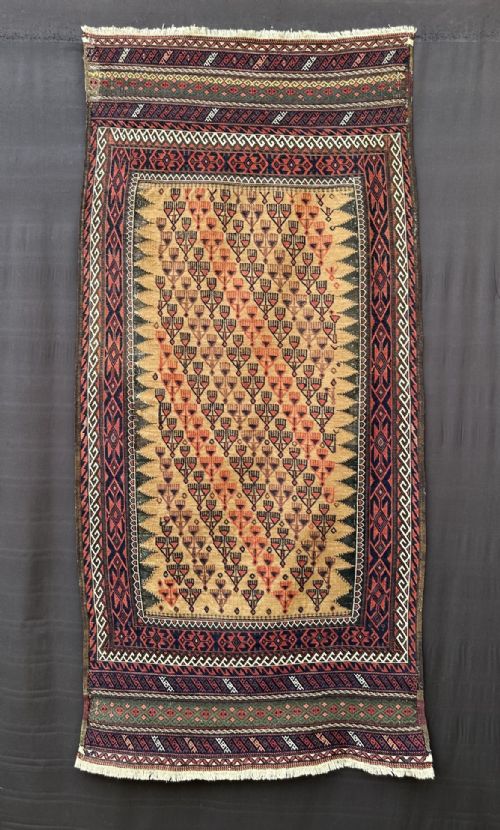
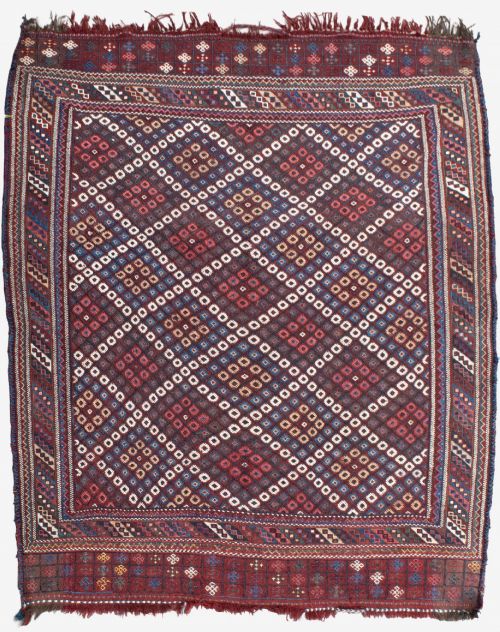
A tribal flatweave kilim represents the weaving traditions of nomadic and village groups from Persia, Anatolia, the Caucasus, and Central Asia. These items encompass functional household objects such as bread sofreh, saddle bags, vanity bags, horse blankets, and floor carpets. The pieces available here date predominantly from the nineteenth and early twentieth centuries, reflecting traditional regional motifs.
Nomadic weavers created these textiles without pile, utilising slit-tapestry and other flat-weaving techniques to produce crisp geometric designs and striped banded patterns. Forms range from small square cushions and utilitarian grain bags to large room-sized carpets and long runners. Each region developed distinct colour palettes and structural characteristics tied to specific tribal groups.
Materials and Construction
Weavers relied primarily on hand-spun wool and cotton, occasionally incorporating goat hair for structural durability or exotic fibres such as sabra cactus silk in Moroccan examples. Natural dyes provided the rich reds, blues, and earth tones seen across Persian, Caucasian, and Anatolian pieces. The absence of a knotted pile creates a lightweight, durable textile suitable for both floor use and decorative display.
The construction involves passing the coloured woof threads tightly across the warp threads to build up the pattern block by block. Slit-tapestry weaving creates small vertical gaps where different colour areas meet, which weavers often secured with interlocking techniques. This direct method allows sharp diagonals and stepped geometric medallions to emerge clearly on both sides of the fabric.
Listings feature flatweaves spanning the nineteenth and twentieth centuries, utilising hand-spun wool, cotton, and natural dyes across Persian, Caucasian, and Anatolian traditions.
Assessing Quality and Execution
Quality in these flatweaves rests on the tightness of the weave, the precision of the geometric layout, and the depth of the natural dye palette. Tighter packing of the weft threads creates a firmer, more resilient handle that distinguishes superior examples from looser, more pliable utilities. Finer work often reveals intricate detailing in small tribal symbols and complex banded layouts.
The condition of the wool and the integrity of the original selvedges also influence the character of each piece. While age brings natural fading and timeworn repairs to many surviving examples, the strength of the foundational weave determines its longevity. Greater artistry appears in pieces where the weaver balanced traditional tribal symbolism with harmonious colour transitions.
The Tribal Flatweave Kilim Glossary
- Sofreh
- A spreading cloth used for dining, kneading dough, or wrapping bread within nomadic households. These textiles often feature restrained geometric fields framed by narrow borders.
- Sumak
- A wrapping technique where extra decorative weft threads are wound around the warp threads before the next row is woven. This method adds structural weight and a textured, embroidered appearance to the surface.
- Mafrash
- A large rectangular storage bag face or side panel used by Turkmen and other nomadic groups for bedding and household goods. They frequently display strong banded geometric designs.
- Slit-tapestry
- A flat-weaving method where the weft threads return at the edge of a colour area without looping around a common warp, leaving a small slit. Weavers utilise this to produce sharp linear transitions in geometric patterns.
Tribal Flatweave Kilim: Frequently Asked Questions
What is a kilim?
A kilim is a flat-woven textile produced without a knotted pile by nomadic and village weavers across the Middle East, Caucasus, and North Africa. They served diverse practical functions in daily camp life, from floor coverings to storage containers.
Unlike traditional piled carpets, kilims are constructed by tightly interweaving the coloured weft threads across the vertical warp threads. This technique results in a lighter, flexible fabric characterised by crisp geometric motifs and flat surfaces.
How were sofreh used?
Sofreh were essential utilitarian cloths used by nomadic families primarily for culinary purposes, such as preparing dough or spreading meals on the ground. Their dimensions and flatweave structures were tailored to catch flour or contain food during daily use.
Over time, these textiles became canvases for traditional tribal designs unique to specific regions and confederacies. They are now appreciated as independent works of folk art reflecting the domestic life of their makers.
How do I care for a flatweave?
Maintaining a flatweave textile involves gentle vacuuming without a rotating brush to prevent snagging the tight wool or cotton foundation. Keeping the piece out of direct sunlight preserves the stability of natural dyes over the years.
Using a breathable underlay helps prevent slipping and reduces friction against hard flooring surfaces. Professional textile cleaning is recommended when deeper maintenance becomes necessary.