
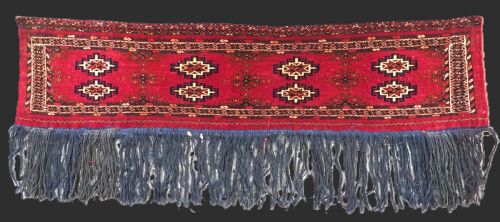


Tribal Tent Bag
When you search for tribal tent bag, you enter the nomadic world of Central Asian weaving where utilitarian storage pieces double as tribal art.
Tribal Tent Bag
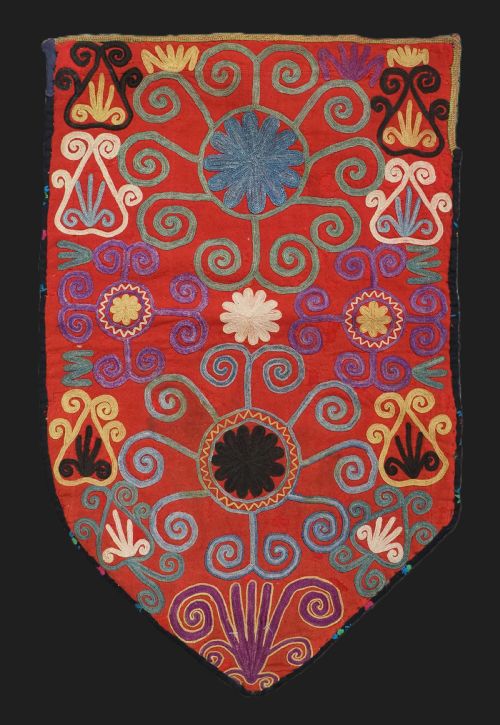
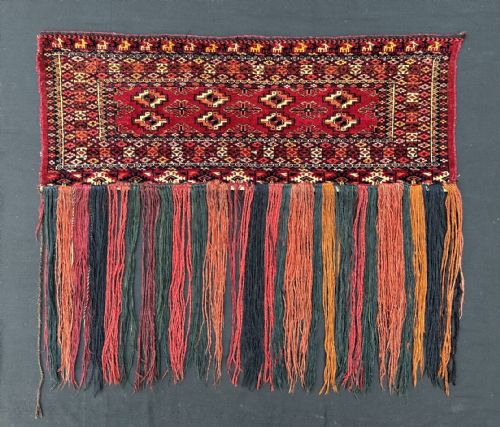
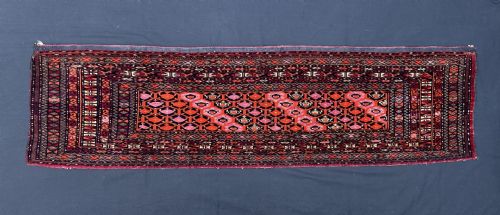
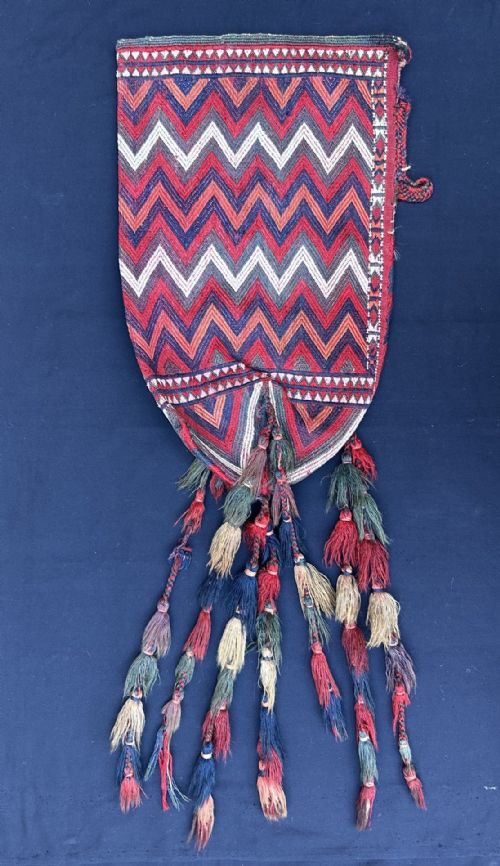
A tribal tent bag is a woven textile created by nomadic groups across Central Asia, principally designed to hold belongings inside a yurt or tent. The selection on this page centres heavily on pieces made by Turkmen tribes such as the Tekke, Yomut, Ersari, and Saryk, alongside Uzbek Lakai examples. These textiles take specific functional forms including torbas, chuvals, jollags, and uk bash tent pole bags.
Most items appearing here survive as bag faces rather than complete sacks, though examples complete with original backs and tassels occasionally occur. The periods represented stretch from the eighteenth century into the early twentieth century, capturing decades of traditional nomadic craftsmanship. Collectors find these items utilised as wall hangings and decorative interior focal points today.
Materials and Construction
Weavers relied primarily on hand-spun wool for the foundational structure of these textiles, combining it with natural dyes to create deep reds, browns, and ivory grounds. Cotton frequently appears for white highlights, while silk is utilised to add luminous contrast to specific tribal motifs. Flat weave techniques and pile knotting dominate the construction methods recorded across the inventory.
The wool and dye combinations yield durable fabrics designed to withstand the rigours of nomadic life. Artisans incorporated intricate structural elements such as flat-woven backs, tassels, and reinforced edges to maintain the integrity of each storage piece. Natural colour variation remains visible across the surfaces due to the use of organic dye baths.
Nomads wove these portable wardrobes to keep possessions organised while moving across Central Asian steppes.
Quality Variations
The distinction between standard examples and the finest pieces rests upon knot density and the precision of the weave. Finer weaves allow for sharper definition within complex tribal motifs like gul patterns, kepse designs, and curled leaves. Greater technical skill translates into crisper geometric layouts and more balanced proportions across the textile face.
Material selection and colour distribution further divide the range. The inclusion of silk highlights and well-preserved natural dye palettes elevates certain pieces above standard wool-only variants. The presence of complete backs, original tassels, and structural integrity enhances the standing of any individual item.
The Tribal Tent Bag Glossary
- Torba
- A small horizontal storage bag used inside a nomadic tent. These pieces were traditionally hung on the lattice walls for domestic organisation.
- Chuval
- A large tent storage bag designed for bedding and household goods. They typically feature repeating major guls across the primary field.
- Gul
- A medallion motif repeated across Central Asian carpets and bags. Each tribal group utilised distinct gul variations to signal lineage and identity.
- Jollar
- A rectangular hanging bag used for personal possessions. They display dense pile weaving and regional tribal iconography.
Tribal Tent Bag: Frequently Asked Questions
What is a tribal tent bag?
A tribal tent bag is a woven storage container made by nomadic peoples in Central Asia to organise possessions inside a yurt. These textiles served practical domestic functions while displaying traditional tribal patterns.
They encompass various forms such as torbas, chuvals, and uk bash bags. Today, collectors preserve these functional items as decorative wall hangings.
How were these bags used?
Nomadic families hung these containers from the interior lattice framework of their tents to keep clothing, bedding, and utensils off the ground. Their specific shapes corresponded directly to the items they stored.
Larger sacks held heavy blankets, whilst smaller variants secured smaller personal items. This method maximised space within portable dwellings.
How do I identify tribal designs?
Tribal designs are categorized by specific medallion motifs known as guls, which identify the producing tribe such as Tekke, Yomut, or Ersari. Each group employed distinct colour palettes and geometric structures.
Examining the weave density and material highlights helps pinpoint the origin. Regional design traditions remained consistent across generations of weavers.
How do I care for a textile?
Keep these textiles away from direct sunlight to protect natural dyes from fading over time. Gentle vacuuming through a mesh screen helps remove dust without damaging the wool pile.
Avoid hanging heavy pieces by a single point to prevent structural distortion. Professional textile conservationists should handle any deep cleaning requirements.