




Tribal Lattice Pattern Rug
These tribal lattice pattern rug examples are woven floor coverings featuring geometric or floral grids, prized for their rich local character.
Tribal Lattice Pattern Rug
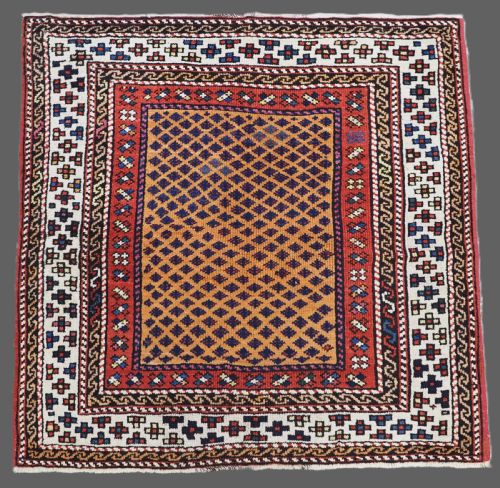
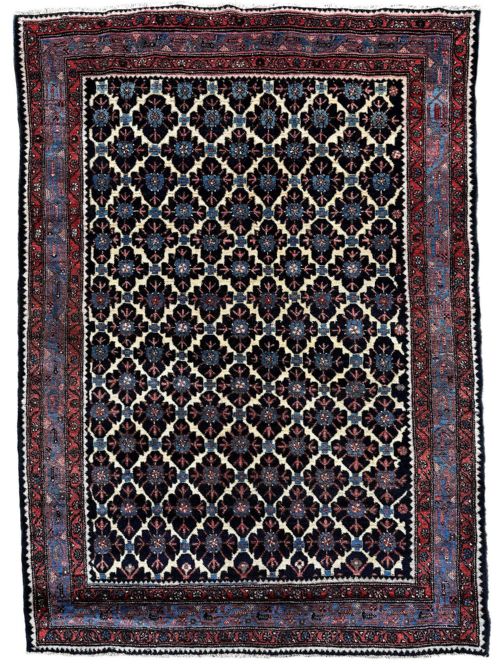
A tribal lattice pattern rug brings structured geometric charm to an interior through repeating grid designs. When you search for a tribal lattice pattern rug, you encounter woven pieces originating from Caucasian, Persian, Anatolian, and Turkmen weaving traditions.
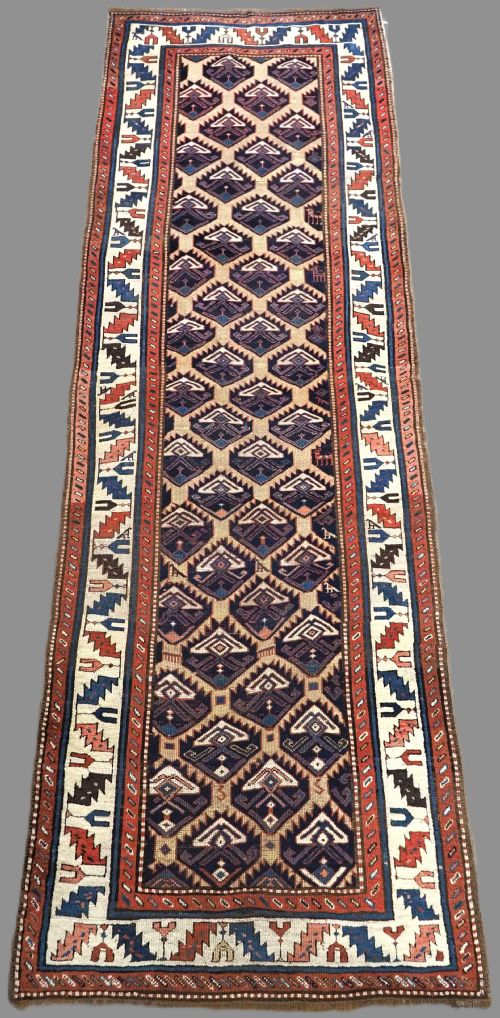
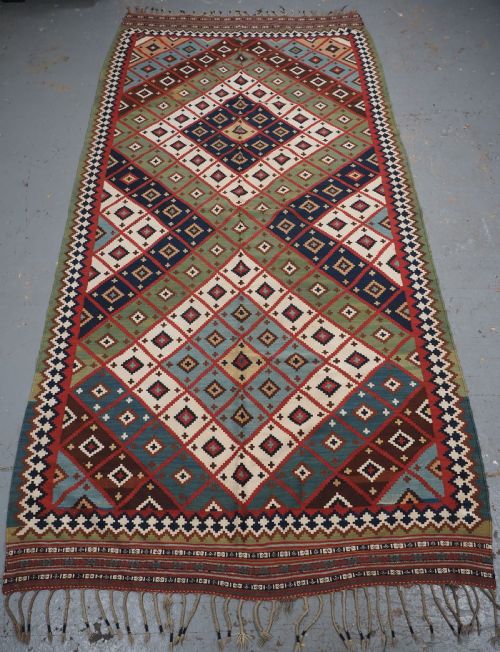
The selections span from the mid-nineteenth century through the early twentieth century, encompassing smaller square formats, hallway runners, and longer area rugs. Common regional styles include Baluch, Shirvan, Gendje, and Yomut pieces featuring diamond or square lattices.
Makers utilised traditional nomadic and village looms to produce these floor coverings, incorporating distinctive motifs such as the Mina Khani design or star and lattice arrangements. Each surviving textile reflects the specific aesthetic of its geographic origin.
Assessing quality in weaving
Quality rests in the precision of the grid geometry, the clarity of the repeat lattice, and the depth of the natural dyes. Superior examples display tightly packed knots and balanced proportions that enhance the overall visual harmony.
Condition and colour saturation further distinguish the finer rugs from standard village work. Strong, vibrant hues and intact borders elevate a piece, whereas uneven wear or muddy dye saturation places an example lower down the scale.
Some weavers cleverly hid tiny intentional irregularities in their repeating lattices to ward off the evil eye.
The Tribal Lattice Pattern Rug Glossary
- Mina Khani
- A repeating floral lattice pattern often found on Persian and Baluch rugs. It typically links stylized blossoms within a continuous geometric network.
- Kilim
- A flat-woven carpet or rug produced without a pile. These pieces rely entirely on the warp and weft threads to form crisp geometric designs.
- Runner
- A long, narrow carpet format suited for hallways and corridors. Surviving examples frequently employ repeating lattice motifs to guide the eye along the length.
- Prayer rug
- A small rug featuring a mihrab or niche design used for daily devotions. Many historical pieces incorporate floral lattice elements within the field.
- Warp
- The vertical threads stretched lengthwise on a loom before weaving begins. The pile knots are tied around these foundational cords.
Tribal Lattice Pattern Rug: Frequently Asked Questions
How do I clean a tribal lattice pattern rug?
Gentle surface brushing and professional specialist washing help preserve the natural wool fibres and dyes. Avoid harsh chemical treatments that damage historical textiles.
Regular low-suction vacuuming without a rotating beater bar prevents dust accumulation within the pile.
Where should I place a runner?
Narrow formats fit well in hallways, entryways, and corridors where linear floor space benefits from geometric repetition. Their dimensions suit transitional spaces rather than large open rooms.
Placing a quality underlay beneath the textile prevents slipping and reduces friction against hard flooring.
How do I distinguish regional styles?
Caucasian pieces often display crisp geometric precision and distinct ivory grounds, while Baluch and Turkmen rugs tend toward deeper, more subdued tones. Examining the palette and border motifs clarifies the geographic origin.
Weaving structures and wool characteristics also provide reliable clues for attribution.