

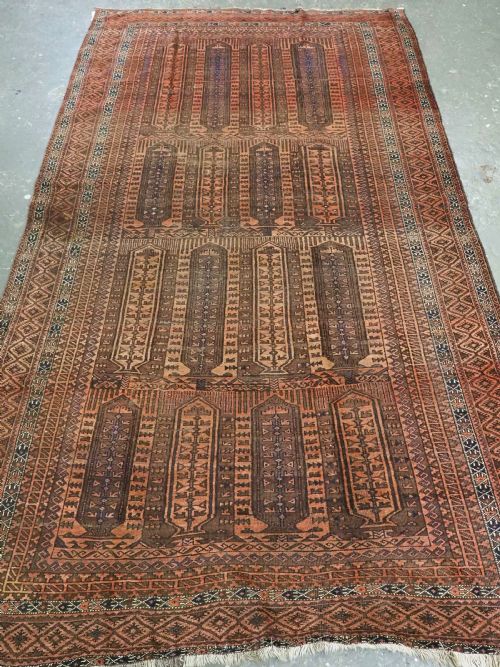
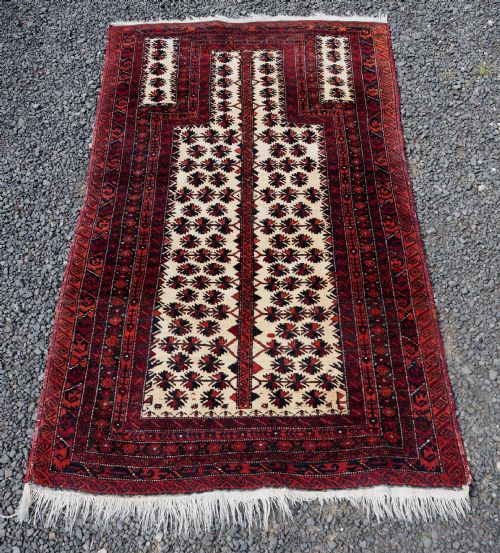
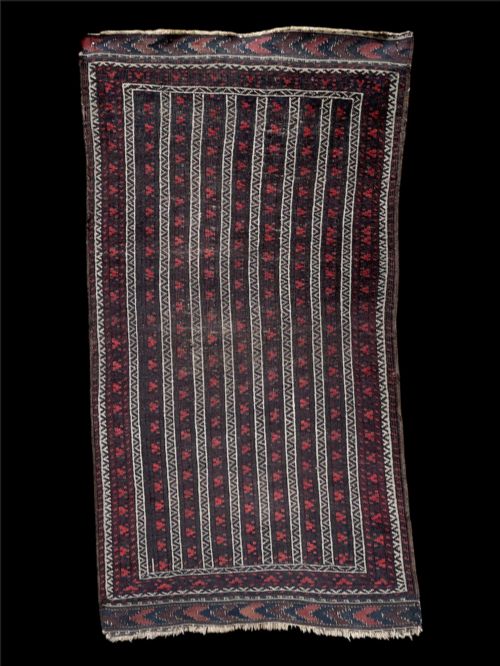


Tribal Baluchi Carpet
These tribal baluchi carpet examples are enduring hand-woven floor coverings offering rich geometric patterns and authentic nomadic character.
Tribal Baluchi Carpet
A tribal baluchi carpet represents the rich weaving heritage of nomadic and village groups originating from regions spanning Persia, Afghanistan, and Khorasan. Buyers searching for a tribal baluchi carpet will encounter various formats, from standard area rugs and prayer rugs to specialised items such as eating cloths and main carpets.
The pieces listed on this page span from the late nineteenth century into the early twentieth century, capturing decades of traditional craftsmanship. Persian tribal designs, Baluch styles, and Western Afghan influences dominate the visual repertoire of these floor coverings.
Makers utilised traditional motifs including repeat small octagons, Kalam Donneheh patterns, and occasionally uncommon human figures. These floor coverings bring distinct historical depth and tactile warmth to interiors through centuries-old nomadic weaving traditions.
Materials and Technique
Every tribal baluchi carpet relies on hand-woven wool construction executed by skilled artisans. The natural resilience of this animal fibre ensures the pile and flatweave structures withstand daily use while maintaining their structural integrity.
Natural dyes provide the characteristic palette seen across these floor coverings. Artisans extracted these colourants from plants and minerals, resulting in rich, deep hues that mature gracefully over time.
Tribal Baluchi Carpet Retail Price Guide 2026
Typical asking prices for tribal baluchi carpet among the pieces listed under this phrase on Sellingantiques today, from the lower quarter to the upper quarter. They describe what is for sale here now, not the wider market.
Geographic origins represented across the inventory include the Khorasan region, Ferdows province, and Western Afghanistan.
Factors of Quality
Quality in a tribal baluchi carpet rests upon the tightness of the weave and the precision of the geometric design execution. Finer knots and carefully balanced compositions distinguish master weaver output from standard utilitarian production.
The clarity and depth of natural dyes further separate exceptional examples from ordinary ones. Well-preserved wool pile and intact borders complete the distinction between average village pieces and superior collector specimens.
The Tribal Baluchi Carpet Glossary
- Prayer rug
- A small format rug featuring a mihrab or arch design, traditionally used for daily Islamic prayers. These pieces often display specific devotional motifs.
- Sofreh
- A woven cloth utilised for domestic purposes such as food preparation or serving communal meals. In Baluch weaving, these textiles feature distinctive flatweave or pile construction.
- Main carpet
- A large floor covering intended for principal rooms within a dwelling. These substantial textiles demand considerable time and planning from the weaver.
- Flatweave
- A textile constructed without a knotted pile, created by interweaving warp and weft threads directly. This technique yields a lighter, durable fabric with pattern visible on both sides.
- Khorasan region
- A historical territory encompassing parts of modern-day Iran, known for distinctive village and nomadic textile production. Weavings from this area display unique regional colour palettes and motifs.
Tribal Baluchi Carpet: Frequently Asked Questions
How are tribal baluchi carpets traditionally used?
These textiles served practical functions within nomadic and village life, acting as floor coverings, seating areas, or specialised eating cloths. Prayer variants provided a clean surface for daily devotion.
In modern interiors, collectors place them as accent floor coverings in studies, hallways, or living spaces. Their durable wool construction handles moderate foot traffic well.
What periods do these carpets come from?
The available selection primarily dates from the late nineteenth century through the early decades of the twentieth century. Pieces from the eighteen-eighties and nineties represent mature nomadic weaving traditions.
Items from the nineteen-twenties and thirties reflect continuing village production methods. Each era maintains traditional motifs passed down through generations.
How do I identify different regional types?
Regional attribution relies on examining specific design elements, border arrangements, and structural characteristics. Khorasan and Western Afghan pieces often feature distinct colour combinations and structural nuances.
Consulting the specific motifs, such as repeat octagons or Kalam Donneheh patterns, helps narrow down the probable origin. Comparing edge finishes provides further clues to the specific tribal group.
Are natural dyes standard in these pieces?
Traditional Baluch textiles were produced using natural dye sources extracted from plants and minerals. These colorants create harmonious, complex tones that age with considerable character.
Examining the wool under natural light reveals subtle variations in shade known as abash. This characteristic variation confirms the traditional dyeing techniques employed by the makers.