

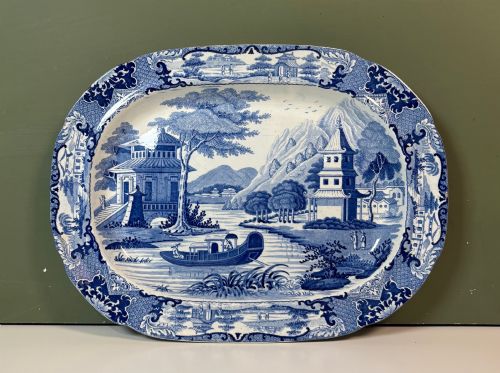
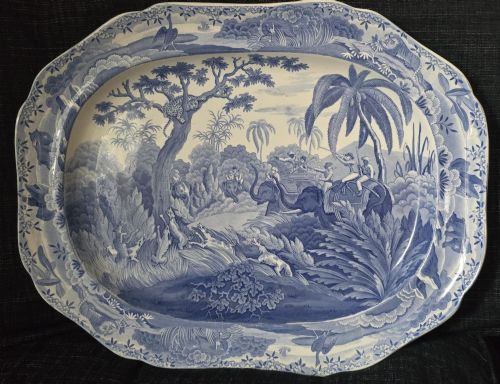
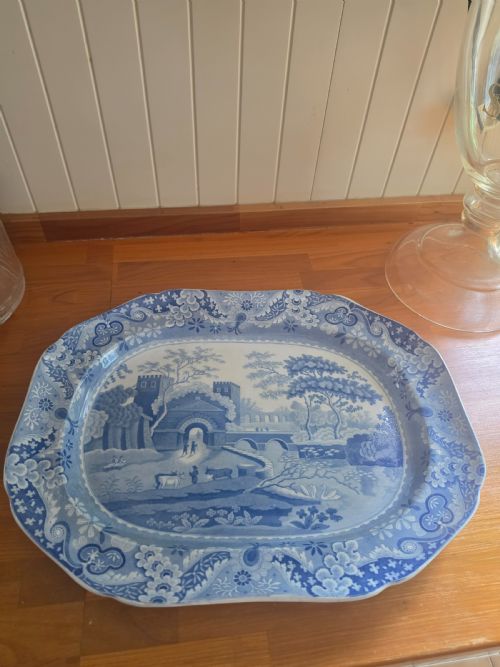
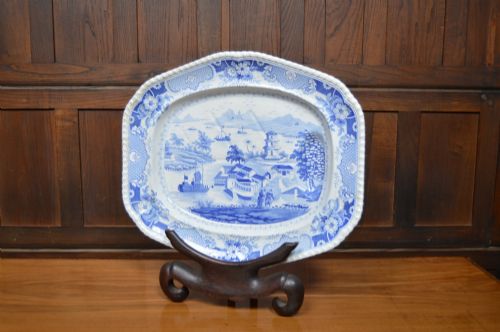
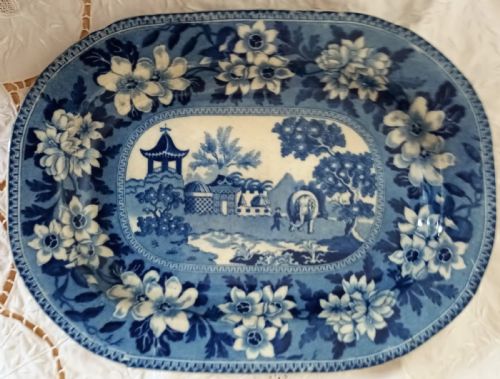
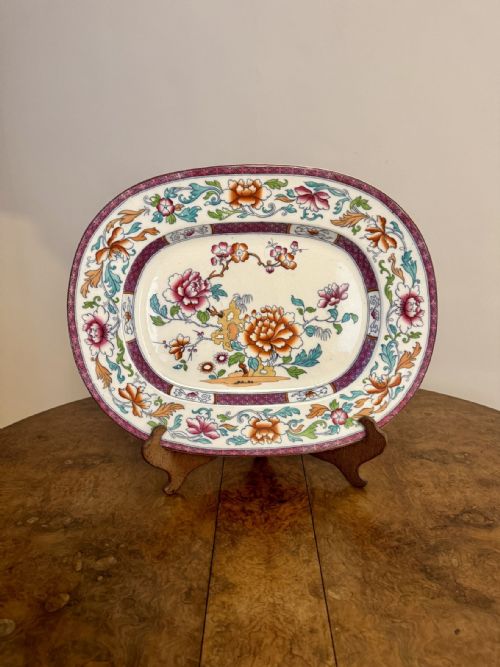
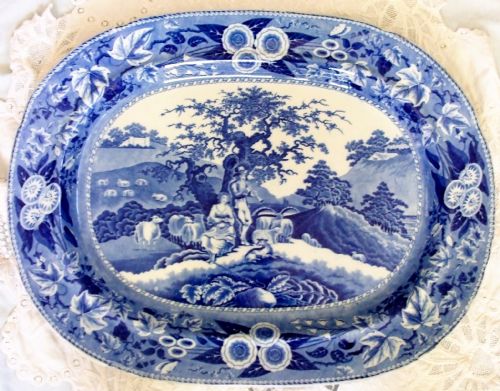


Transferware Meat Dish
A transferware meat dish brings depth and narrative to a table, combining utilitarian scale with intricate printed imagery.
Transferware Meat Dish
A transferware meat dish is a large ceramic platter designed for serving joints of meat at the dining table, often featuring expansive pictorial scenes printed onto the surface. These pieces span the Georgian, Regency, and Victorian periods, reflecting shifting tastes in domestic dining.
Makers across Staffordshire and beyond produced these serving dishes in series, applying printed patterns that ranged from classical ruins and British landmarks to fanciful Chinoiserie landscapes. The results served as both functional tableware and visual centerpieces for formal meals.
Materials and production
Potters utilised earthenware, pearlware, and ironstone as the ceramic body for these large platters, applying a smooth glaze to seal the porous clay. Cobalt pigment supplied the deep blue colour characteristic of the dominant transfer-printed patterns.
The transfer printing technique involved engraving a copper plate, inking it with pigment, and transferring the design onto tissue paper. Craftsmen then pressed this paper onto the biscuity ceramic surface before glazing and firing the piece in a kiln.
Transferware Meat Dish Retail Price Guide 2026
Typical asking prices for transferware meat dish among the pieces listed under this phrase on Sellingantiques today, from the lower quarter to the upper quarter. They describe what is for sale here now, not the wider market.
Listings feature earthenware, pearlware, and ironstone decorated with cobalt pigment under a clear glaze across the nineteenth century.
Assessing the craftsmanship
Quality rests in the crispness of the transfer print and the stability of the glaze, where sharp lines indicate a fresh copper plate while blurred edges reveal worn engraving. The weight and balance of the ceramic body also signal superior production.
Artistic ambition separates standard regional output from exceptional factory production, visible in complex multi-figure scenes and detailed borders. The inclusion of functional additions such as an integrated gravy well or original matching drainer elevates the utility and interest of a piece.
Spode·John Rogers and Son·Copeland and Garrett·Thomas Lakin·Don Pottery·Elkin Knight and Bridgwood·Mason
The Transferware Meat Dish Glossary
- Transferware
- Pottery decorated by applying a printed design from an engraved copper plate using a paper tissue intermediary. This process allowed complex pictorial scenes to be replicated consistently across large dinner services.
- Pearlware
- A refined earthenware body developed in the late eighteenth century, featuring a subtle bluish glaze that pooled in recesses to mimic Chinese porcelain. It provides a smooth white ground for transfer printing.
- Ironstone
- A dense, durable type of ceramic patented in the early nineteenth century to rival true porcelain. It withstands heavy use, making it ideal for large serving vessels.
- Chinoiserie
- A European artistic style reflecting imaginative interpretations of Chinese and East Asian motifs. It appears frequently on early nineteenth-century platters in pagoda and garden scenes.
- Gravy well
- A recessed channel or depression built into the surface of a platter to collect meat juices during carving. It helps keep the joint elevated and prevents pooling across the decorative scene.
Transferware Meat Dish: Frequently Asked Questions
What is a transferware meat dish?
A transferware meat dish is a large ceramic serving platter decorated with a printed design applied from a copper plate. These items formed part of large nineteenth-century dinner services.
Potters utilised earthenware and ironstone to support heavy joints of meat at the table. The printed scenes provided a decorative backdrop during formal meals.
How do I care for an antique meat dish?
Antique ceramics require gentle hand washing in lukewarm water with mild detergent to protect the historic glaze and body. Harsh mechanical dishwashers can craze the surface and dull the pigment.
Displaying the platter safely on sturdy plate hangers or flat surfaces prevents accidental drops. Avoid exposing the piece to sudden thermal shocks.
How do I tell Georgian platters from Victorian ones?
Georgian and Regency platters often exhibit softer pearlware bodies with deep cobalt blue printing and romantic pastoral or classical subjects. The borders tend to feature delicate floral or shell motifs.
Victorian pieces frequently employ heavier ironstone bodies with brighter white glazes and denser industrial transfer techniques. Subject matter expanded to include railway views, gothic architecture, and elaborate Chinoiserie.