


Regency Blue White Tableware
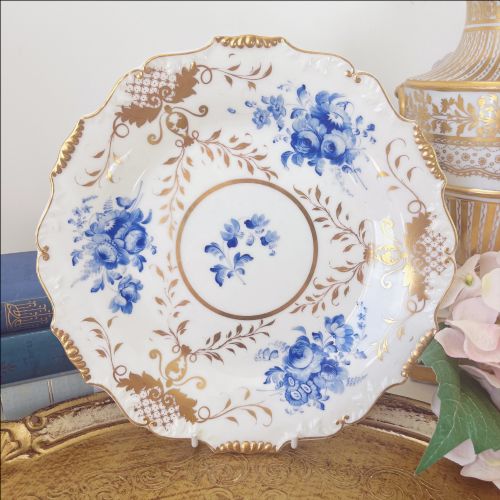
Regency blue white tableware brings striking monochrome transfer-printed ceramics to the dining table, offering robust earthenwares and porcelains that collectors prize for their crisp contrast.
Regency Blue White Tableware
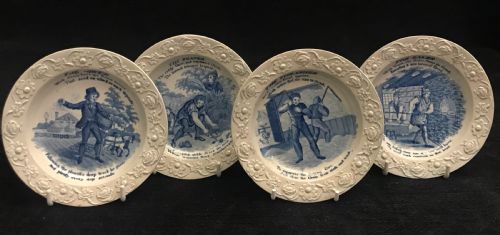
When buyers search for regency blue white tableware, they encounter practical dining and serving pieces spanning the Georgian, Regency, and early Victorian periods, including tea plates, serving platters, sauceboats, and egg cups.
The items most frequently met on this page range from individual egg cups and tea plates to larger garnishes such as supper set tureens, custard sets, and meat dishes with gravy wells.
Originating predominantly from English potteries, these pieces demonstrate the era's shift toward accessible yet highly decorative ceramics for daily and formal dining.
How these pieces were made
Potters utilised earthenware, pearlware, and porcelain as foundational bodies, often finishing surfaces with clear glazes to seal the ceramic and enhance the depth of the blue pigment.
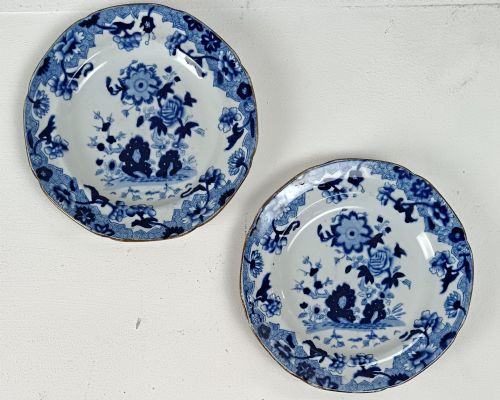
Decoration relied primarily on transfer printing techniques, applying intricate patterns like the zebra pattern, London Bridge, Hibiscus, The Peacock, and Water Dog directly onto the clay before firing.
Listings feature items from the Georgian, Regency, and early 19th-century periods, utilising earthenware, pearlware, porcelain, and enamel.
What varies in quality
The clarity and registration of the transfer print dictate visual appeal, separating sharply defined patterns from blurred or smudged applications.
The refinement of the ceramic body itself, whether a heavy ironstone-style 'New Stone' or a delicate pearlware, influences the overall weight and durability of the tableware.
Spode·Wedgwood
The Regency Blue White Tableware Glossary
- Pearlware
- A refined earthenware developed in the late eighteenth century with a bluish-white glaze that pooled in recesses. This glaze sat over a fine white body to mimic Chinese porcelain.
- Transfer printing
- A mechanical decoration technique developed in the eighteenth century. It involved pulling an engraved copperplate design onto tissue paper and pressing it onto unglazed or biscuit ceramic.
- New Stone
- A durable feldspathic stoneware introduced in the early nineteenth century. It offered increased strength for heavy-use items like plates and platters.
- Tureen
- A deep covered vessel designed for serving soups, sauces, or stews at the table. Regency examples often paired with matching stands or platters.
Regency Blue White Tableware: Frequently Asked Questions
What pieces are included?
Regency blue white tableware encompasses a variety of dining and serving items from the early nineteenth century.
Collectors typically find tea plates, serving platters, sauceboats, egg cups, tureens, and complete custard or supper sets.
How were they used?
These ceramics served practical functions in both formal dining and everyday domestic life during the Georgian and Regency eras.
Pieces like meat dishes with gravy wells and sauceboats assisted in serving courses, while tea plates and egg cups catered to lighter meals.
How do I date them?
Dating relies on identifying the ceramic body, such as pearlware versus later stone bodies, alongside stylistic clues in the transfer-printed patterns.
Many pieces date precisely to the first three decades of the nineteenth century based on documented factory periods and named patterns.
How do I care for them?
These antique ceramics require gentle hand washing in warm water with mild soap to protect the historic glaze and ironstone or earthenware body.
Harsh detergents, modern dishwashers, and abrasive scrubbers should be avoided entirely to preserve the transfer-printed decoration.