
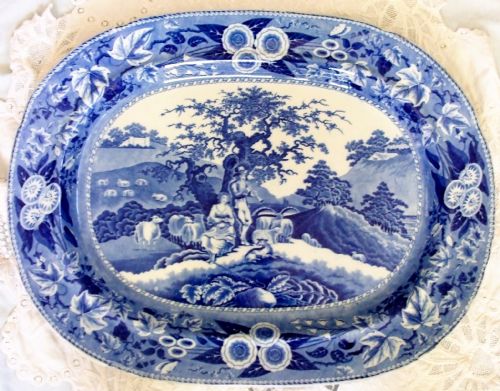


Georgian Transfer Printed Platter
These georgian transfer printed platter pieces are historic ceramic serving dishes decorated with blue and white designs, prized for their rich landscape scenes and practical utility.
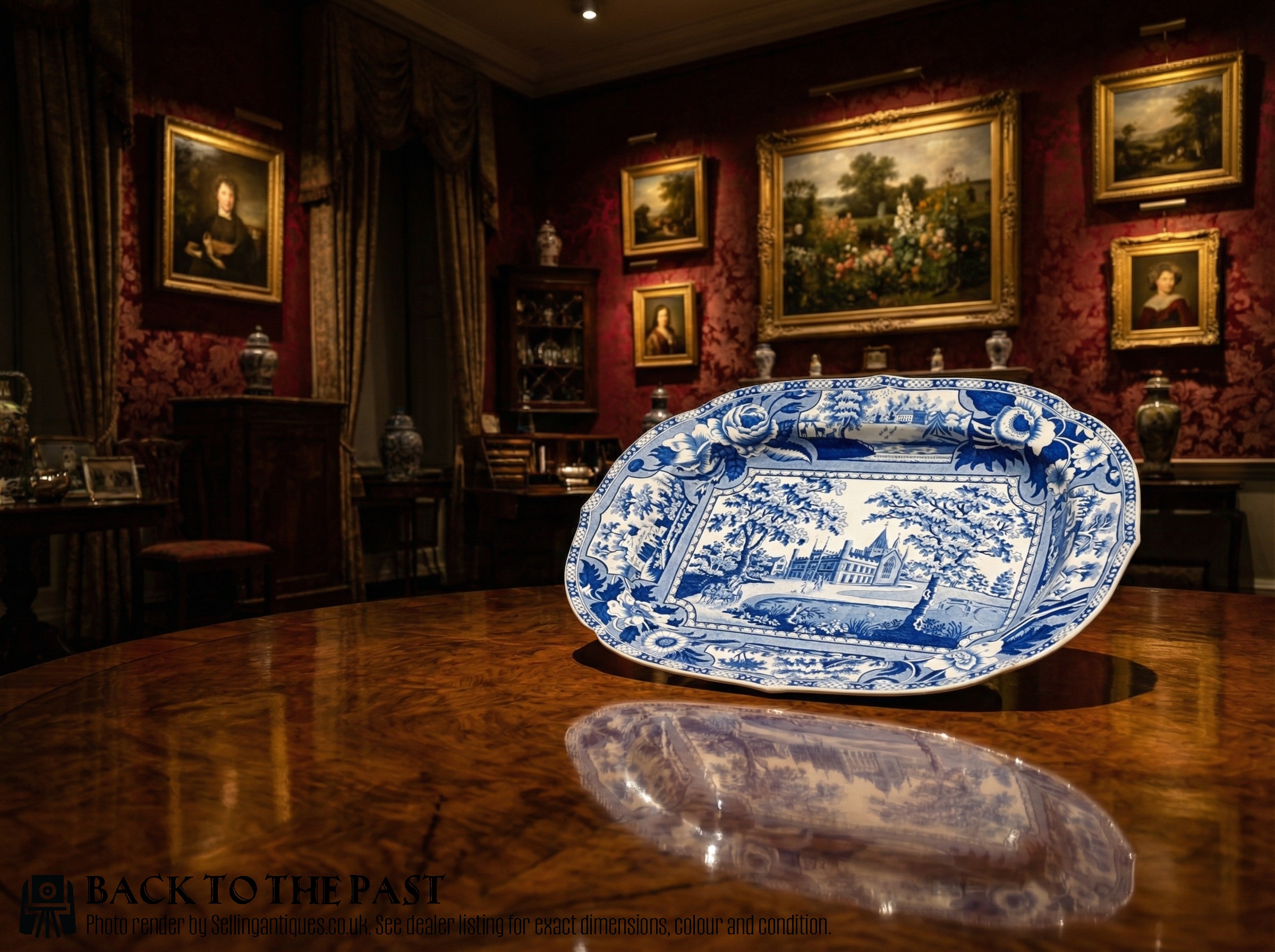
Georgian Transfer Printed Platter
When you search for a georgian transfer printed platter, you are looking at large ceramic serving dishes and plates produced during the Georgian and nineteenth century periods. These pieces include notable patterns such as the Piping Shepherd, London Bridge, and Bridge of Lucano.
The serving platters and dishes on this page originate primarily from British makers working in earthenware and pearlware. Forms range from meat dishes with gravy wells to buffalo bread stands and asparagus dishes.
Most examples display blue and white transfer printing techniques developed by Staffordshire potteries. Collectors encounter various scenic motifs, including classical ruins, pastoral subjects, and topographical views.
How they were made
Potters formed these earthenware and pearlware bodies before applying finely engraved copperplate designs using cobalt pigment. The printed paper transferred the inked pattern onto the ceramic surface prior to glazing.
A lead glaze sealed the ceramic and pigment before firing in a kiln, producing the characteristic glossy finish and deep blue tones. Specialised forms like meat dishes incorporated integral gravy wells during the initial shaping process.
Some platters include clever drainage wells specifically designed to pool runaway meat juices away from the Sunday joint.
What varies in quality
The clarity of the transfer print distinguishes finer examples from simpler production, with sharp lines showing the precision of the original copperplate engraving. Richness in the cobalt pigment application also determines the depth of the blue colour.
Subtleties in ceramic body preparation, such as the whiteness of pearlware versus standard earthenware, influence the visual appeal of the final dish. The complexity of the specific pattern, from pastoral scenes to architectural ruins, reflects the ambition of the maker.
Thomas Lakin·Brameld & Co.·Mason·John Rogers & Son·Spode
The Georgian Transfer Printed Platter Glossary
- Transferware
- A pottery type decorated by transferring a printed design from an engraved copper plate onto the ceramic body. This technique allowed intricate pictorial scenes to be produced consistently on serving dishes.
- Pearlware
- A refined earthenware body developed in the late eighteenth century featuring a subtle bluish glaze that pooled in recesses. It served as an improved canvas for blue and white printed patterns.
- Cobalt Pigment
- The metallic oxide used to create the deep blue colour in underglaze decoration. It withstands high kiln temperatures without losing its intensity.
- Gravy Well
- A recessed depression moulded into the surface of a meat platter to collect juices during carving. This practical feature helped keep food presentation tidy at the dining table.
- Earthenware
- A porous ceramic fired at lower temperatures than stoneware or porcelain. It formed the robust structural base for the majority of these historic platters.
Georgian Transfer Printed Platter: Frequently Asked Questions
How are these platters cleaned safely?
Historic ceramics require gentle hand washing in warm water using mild soap.
Harsh detergents and automatic dishwashers can damage the fragile lead glaze and historical earthenware body over time.
Can these platters still hold food?
Many people continue to use antique serving dishes for dry foods or display purposes.
Crazing in the glaze from age means certain pieces absorb liquids more readily than modern ceramics.
What caused the blue colour variation?
Variations in cobalt pigment concentration and kiln temperature created different shades of blue.
Individual engraving styles on copper plates also changed how much ink transferred to each piece.
How do I identify a Georgian piece?
Look at the ceramic body composition, weight, and the characteristic depth of the blue transfer print.
Pearlware glazes and specific Staffordshire patterns often provide strong clues to the period of manufacture.