
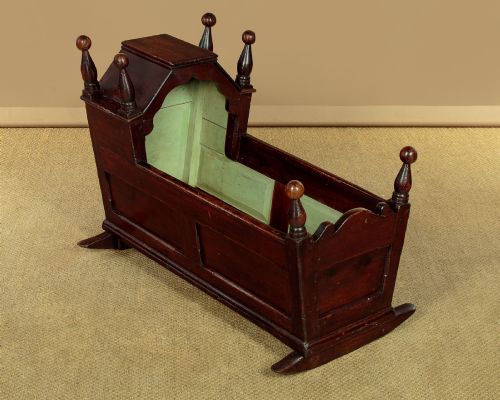


Traditional Wooden Rocking Cradle
These traditional wooden rocking cradle designs combine centuries of domestic history with solid timbers, offering a tangible link to past generations.
Traditional Wooden Rocking Cradle
A traditional wooden rocking cradle brings historic domestic craftsmanship into modern spaces, typically taking the form of a low enclosed bed mounted on curved rockers. These pieces originate from various eras, including the seventeenth, eighteenth, and nineteenth centuries, reflecting domestic life across different regions.
The versions most commonly met on this page are constructed from oak or pine, often featuring panelled sides or painted finishes. Examples range from simple utilitarian country pieces to more formal styles like William and Mary or Victorian designs.
Builders shaped these functional objects for daily use in family homes, incorporating hoods, canopies, or upholstered interiors depending on the period and local custom. Today, buyers encounter them as decorative items or historic focal points for interiors.
Materials and construction methods
Carpenters relied primarily on oak and pine, shaping sturdy boards into panelled sides and securing them with traditional joinery. Many surfaces retain original paintwork or display the rich grain of untreated hardwoods.
Makers integrated curved wooden rockers at the base to allow smooth movement, while some iterations included hoods or iron hardware to reinforce the structure. Upholstery and metal elements appear selectively in later nineteenth-century examples.
Listings span multiple centuries, uniting heavy seventeenth-century oak panelling with painted nineteenth-century pine from Welsh and Scandinavian workshops.
Distinguishing quality in construction and finish
Quality rests in the integrity of the timber, the depth of the panelling, and the survival of original finishes like early blue paint. Superior examples exhibit precise joinery and balanced proportions that speak to the skill of the original maker.
Wear indicates genuine period use rather than a lack of craftsmanship, though alterations to rockers or panels affect historical authenticity. The presence of original surface treatments elevates the piece above standard utilitarian survivals.
The Traditional Wooden Rocking Cradle Glossary
- Panelled crib
- A sleeping vessel constructed with framed wooden panels inserted into a structural skeleton, common in seventeenth and eighteenth-century examples.
- Rockers
- The curved wooden runners attached to the base of the cradle that permit a gentle back-and-forth motion.
- Hood
- A protective canopy or cover integrated into one end of the cradle to shield the occupant from draughts.
- Pine
- A softwood commonly utilised in regional and nineteenth-century country pieces, often found with painted surfaces.
Traditional Wooden Rocking Cradle: Frequently Asked Questions
How were these cradles used historically?
These pieces served as infant beds placed near hearths or bedsides, where parents could gently rock children to sleep using the curved base runners.
Over generations, their domestic role shifted as nursery furniture evolved, leaving them today primarily as decorative historic items.
Can these traditional cradles still be used for infants?
While historic pieces were built for infant care, modern safety standards for nursery furniture differ significantly from past centuries.
Most contemporary buyers choose to utilise them for display, storage, or decorative plant holders rather than modern sleeping use.
How do I identify the period of a wooden cradle?
Dating relies on examining the timber species, joinery techniques, and stylistic markers such as William and Mary panelling or Victorian upholstery.
Earlier examples from the seventeenth and eighteenth centuries typically feature heavier oak construction, whilst nineteenth-century pieces often utilise painted pine or mahogany.
What is the difference between oak and pine cradles?
Oak pieces generally originate from earlier periods, displaying dense hardwood grain and sophisticated panel construction associated with seventeenth and eighteenth-century workshops.
Pine versions tend to date from the nineteenth century and frequently showcase regional painted finishes or softer country aesthetics.