
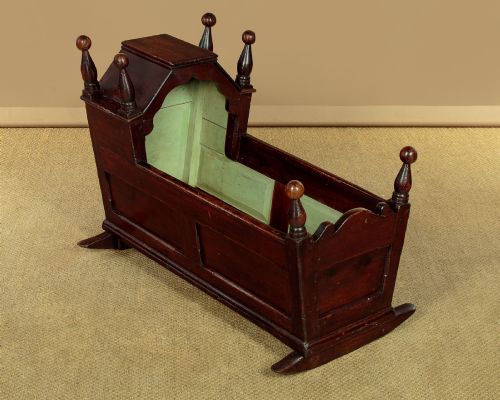


Brown Wooden Baby Crib
These brown wooden baby crib pieces are timeless sleeping vessels in oak, pine, and mahogany, chosen for their historic warmth and craftsmanship.
Brown Wooden Baby Crib
When searching for a brown wooden baby crib, buyers encounter historical cradles and rocking cribs spanning the sixteenth century through the Victorian era. These pieces serve as functional infant beds or decorative centrepieces, predominantly constructed in substantial timber.
The selections available here range from austere Elizabethan panelled oak cradles with hoods to refined William and Mary panelled rocking cribs. Buyers frequently meet nineteenth century examples, including painted pine canopy top cradles and cane and mahogany designs.
Many variants incorporate rockers to soothe infants, reflecting domestic traditions across different centuries. From rustic oak to sophisticated mahogany, each brown wooden baby crib demonstrates the distinct aesthetic priorities of its period.
Materials and construction methods
Construction relies heavily on sturdy native and imported hardwoods like oak and mahogany, alongside pine and flexible elements such as rattan and cane. Joinery techniques vary from early panelled framework to steam-bent rockers and delicate caned inserts.
Surface finishes include historical paint layers on pine and polished mahogany or oak surfaces that highlight natural wood grain. Hoods and canopies, where present, require precise carpentry to join curved framework securely to the main body.
Early babies enjoyed surprisingly architectural slumber beneath elaborate wooden hoods.
Distinguishing quality across examples
Quality rests upon the integrity of the timber selection, the sophistication of the panel work, and the original retention of components like hoods and rockers. Earlier sixteenth and seventeenth-century pieces rely on sculptural joinery and depth of oak panelling.
Later Victorian and William IV examples demonstrate refinement through polished mahogany surfaces, intricate rattan caning, and documented retail provenance. Lesser pieces show utilitarian pine construction, whereas superior specimens exhibit meticulous carving and balanced proportions.
Heals and son
The Brown Wooden Baby Crib Glossary
- Cradle
- A low bed for an infant, typically mounted on rockers to allow swaying movement. Early versions frequently incorporate protective wooden hoods.
- Panelling
- Flat sections of wood framed within stiles and rails, commonly utilised in sixteenth and seventeenth-century oak furniture to prevent warping. This technique adds structural rigidity.
- Caning
- Material woven from rattan split into thin strips, utilised for ventilation and decorative lightness in bed and seating panels during the nineteenth century.
- Rocker
- Curved pieces of wood attached to the base of a crib, enabling the cradle to sway smoothly back and forth.
Brown Wooden Baby Crib: Frequently Asked Questions
What periods do these cribs cover?
The pieces span multiple centuries, ranging from sixteenth-century Elizabethan designs to nineteenth-century Victorian examples.
Buyers encounter various stylistic phases including William and Mary, Georgian, and William IV across the selection.
How were these cribs used?
These vessels functioned as infant beds designed to soothe babies through integrated rocking mechanisms.
Many incorporated hoods or canopy tops to shelter infants from draughts in historical domestic settings.
What materials are most common?
Oak is the predominant timber in earlier examples, particularly alongside pine, mahogany, and glass elements.
Later pieces frequently introduce flexible materials such as cane and rattan into their construction.
How do I identify a panelled oak crib?
Panelling involves fitted wooden boards held within a structural frame of stiles and rails.
This technique is characteristic of seventeenth and sixteenth-century English joinery.