


19th Century Rocking Cradle
A 19th century rocking cradle is a timber infant bed built for motion, offering tactile domestic history and traditional craftsmanship.
19th Century Rocking Cradle
A 19th century rocking cradle is a traditional infant bed designed to soothe children through gentle movement. The pieces listed span simple country workshops to formal houses, representing domestic life across the decades.
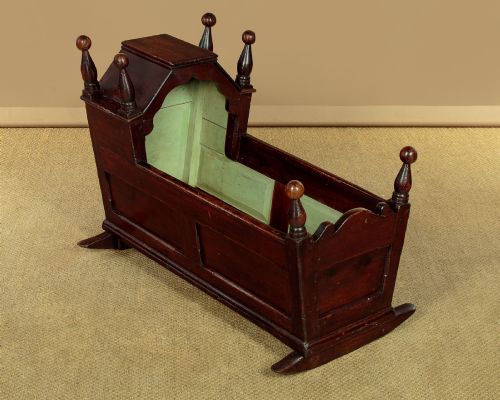
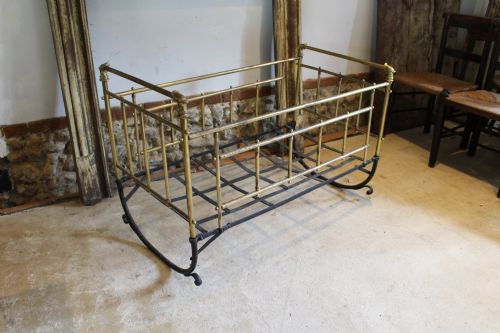
Most examples found here date from the Victorian era and the mid-19th century, constructed from native timbers such as pine, oak, and mahogany. Buyers encounter forms ranging from panelled pine boxes on rockers to carved Scandinavian country pieces and brass-accented cribs.
Regional variations appear clearly, from Swedish painted pine to British oak and mahogany. Some retain their original paint, while others show polished hardwood surfaces or canopy tops.
How they were made
Makers utilised solid timbers like oak, pine, and mahogany, shaping panels and framing with traditional joinery. Structures often rely on pegged joints, dovetails, or panelled construction to withstand constant motion.
Surface treatments vary from clear polish on mahogany and oak to applied paint on pine examples. Metal elements such as brass fittings and wrought iron provide structural support or decorative contrast.
Cane work appears on specific models, woven into frames to provide lighter sides. Carving decorates select pieces, particularly on Scandinavian pine and revival styles.
Swedish country pieces show distinctive carved pine and painted finishes alongside British oak examples.
What varies in quality
Quality rests upon the selection of timber and the integrity of the joinery rather than mere age. Denser woods like mahogany and well-figured oak denote higher workshop standards, whereas utilitarian pine pieces prioritise domestic utility.
The sophistication of the rocker mechanism and the crispness of any carved or panelled detailing dictate the level of craftsmanship. Original painted surfaces or untouched brass and glass components elevate the integrity of a piece.
The 19th Century Rocking Cradle Glossary
- Canopy top
- A framework extending above the cradle to support fabric drapes. This feature sheltered the infant from drafts in cooler rooms.
- Rocking cradle
- A child's bed mounted on curved wooden rockers. It allowed parents to soothe an infant without lifting the bed.
- Panelled construction
- A method where flat wooden panels fit into grooved framing. This technique accommodates wood shrinkage as temperatures change.
- Cane
- Strips of rattan woven into a mesh pattern. It provides lightweight, breathable sides on select refined beds.
19th Century Rocking Cradle: Frequently Asked Questions
How do I clean a wooden cradle?
Dust timber surfaces regularly with a dry cloth to prevent grit accumulation. Avoid modern liquid polishes that can soften old finishes.
Feed dry hardwoods occasionally with traditional beeswax to nourish the grain. Keep painted pieces away from direct moisture to protect the pigment.
Were these cradles used daily?
Families used these beds continuously in nurseries and parent's bedrooms throughout infancy. The rocking action formed a central part of putting children to sleep.
Heavier wood and robust joinery ensured the beds survived generations of domestic service. Many remained within the same family for decades.
Can I use an antique cradle today?
These historical pieces serve well as decorative items or for holding blankets and toys. Modern safety standards for infant sleep differ significantly from nineteenth-century practices.
Collectors generally appreciate them as historical woodwork and sculpture rather than functional nursery furniture. Stability varies across individual pieces.
How do I identify pine from mahogany?
Pine is a softwood with a lighter colour, prominent grain lines, and visible knots. It was commonly painted or left in a natural pale state in country workshops.
Mahogany is a dense hardwood featuring a deep reddish-brown tone and fine, interlocking grain patterns. It typically received a polished finish for formal interiors.