


Antique Baby Crib
An antique baby crib brings centuries of domestic history into a modern room, offering solid timber construction and traditional rocking movement for daily use.
Antique Baby Crib
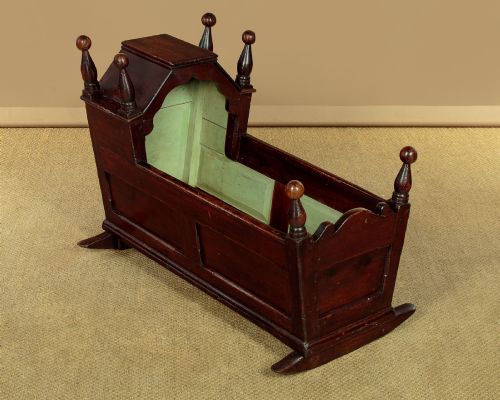
An antique baby crib encompasses a range of traditional sleeping vessels including hooded cradles, rocking cots, and panelled box frames. Buyers seeking an authentic period piece will find formats spanning several centuries of British and European domestic woodwork.
The selection on this page relies heavily on sturdy floor-standing models designed with curved rockers at the base. Oak, mahogany, and pine dominate the forms, reflecting the enduring materials chosen by makers across the seventeenth, eighteenth, and nineteenth centuries.
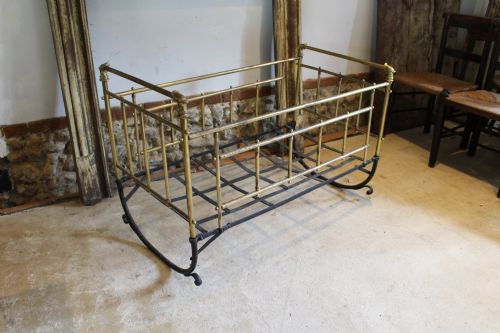
Domestic pieces from the Victorian era and the Georgian period frequently appear alongside earlier seventeenth-century interpretations. These earlier designs often feature heavy field panelling or William and Mary styling, while later examples introduce bent cane and wrought iron.
Materials and construction methods
Cabinetmakers built these pieces using dense hardwoods like oak and mahogany, alongside softer structural timbers such as pine and fruitwood. Carpenters joined structural panels with traditional joinery, creating rigid enclosures designed to withstand constant motion.
Makers added functional movement by mounting wooden frames upon curved rocking feet or integrating suspended metal structures. Surface treatments range from exposed timber grain finished with wax to original painted finishes and applied rattan cane.
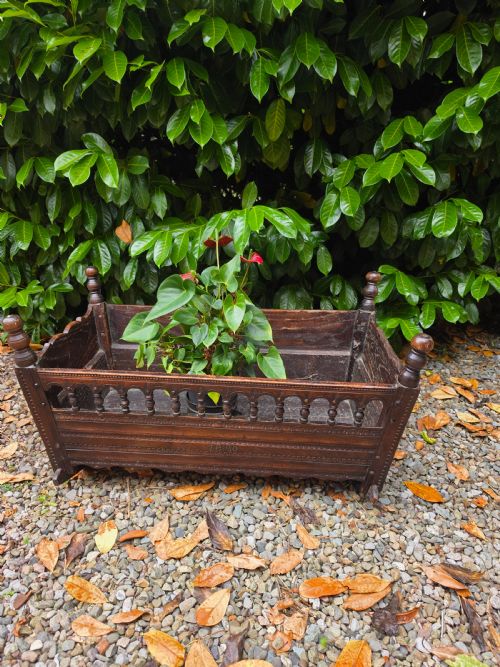
One versatile Victorian oak rocking cradle carries a candid suggestion to repurpose the historic infant bed as a fireside log basket.
Distinguishing quality in period cribs
Superior examples demonstrate careful selection of timber figure, particularly in quarter-sawn oak panels and rich mahogany grains. The depth of hand-carving and the precision of the joinery distinguish workshops of high skill from utilitarian farmyard carpentry.
Original surface treatments and untouched hardware define the integrity of a survivor. Pieces retaining their early painted coats, cane webbing, or operational rocking mechanisms command greater attention from collectors.
The Antique Baby Crib Glossary
- Cradle
- A low bed for an infant, typically mounted on rockers to allow gentle movement. These enclosed wooden structures kept drafts away from sleeping children.
- Field panelling
- A method of framing wooden boards with a raised central field surrounded by a bevelled edge. This technique allowed timber panels to expand and contract safely with humidity changes.
- Rattan cane
- Thin pliable palm strips woven into open mesh patterns to form breathable side panels. This material appears frequently on refined Victorian designs.
- Hood
- A protective canopy extension arching over the head of the infant enclosure. It sheltered the child from cold air in draughty historic rooms.
Antique Baby Crib: Frequently Asked Questions
Can I use an antique baby crib today?
Many buyers successfully integrate these historic frames into modern nurseries by fitting custom contemporary mattresses. Safety standards have changed significantly, so parents often use them primarily for daytime placement or decorative display.
Checking the structural stability of the rocking base and side joints remains essential before placing an infant inside. Professional restoration can reinforce historical timbers without damaging the original surface patina.
How do I date an oak crib?
Examining the joinery methods and the tooling marks left on the timber reveals the approximate period of manufacture. Seventeenth-century examples often display heavy hand-riven oak boards and peg joinery, whereas later nineteenth-century pieces show more uniform machine-sawn components.
Stylistic motifs such as William and Mary panel layouts or Victorian carved details provide further chronological markers. Comparing the timber shrinkage and hardware types helps confirm the age of the structure.
What is the difference between a cradle and a cot?
Traditional cradles are lower enclosed wooden boxes specifically designed to rock from side to side on curved runners. Cots generally stand higher off the floor on fixed legs and offer a more open slatted or panelled boundary.
Cradles date predominantly to earlier centuries when floor-level warmth and rocking motion were primary requirements. Victorian manufacturers often blurred these categories by producing larger rocking cots.
How should I clean antique pine furniture?
Maintenance requires gentle dusting with a soft dry cloth to prevent abrasive particle build-up on the timber surface. Avoid harsh chemical cleaners or modern polishes that can degrade historical wax finishes and original paint.
Applying a traditional beeswax feed periodically helps nourish dry pine and maintains a protective barrier against moisture. Keeping the timber away from direct heat sources prevents warping and splitting.