



Victorian Rocking Cradle
These Victorian rocking cradle pieces are timber and metal beds built to soothe infants, offering tangible history and domestic charm to collectors.
Victorian Rocking Cradle
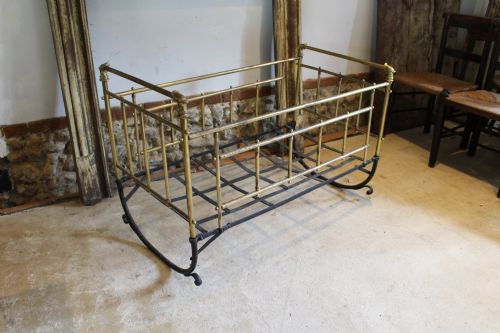
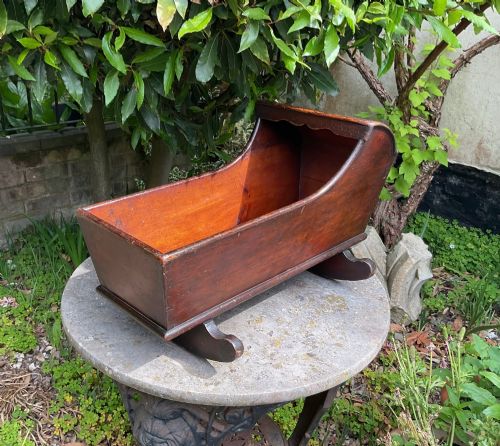
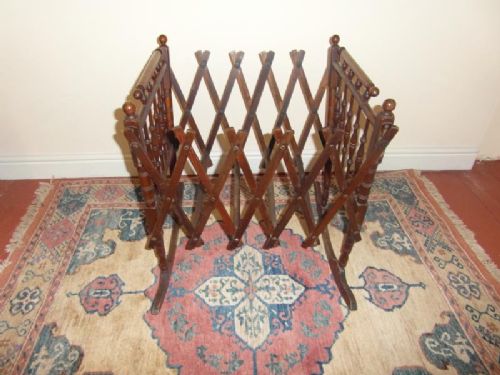
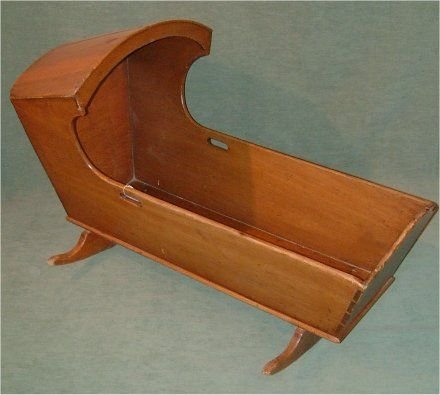
A victorian rocking cradle is a nursery furnishing designed to sway an infant to sleep using curved rockers or a pivoting mechanism. You will encounter various forms on this page, ranging from standard infant beds to miniature doll furniture and adaptable metamorphic designs.
The majority of pieces seen here originate from the Victorian era, alongside examples from the Georgian period, the seventeenth century, and the Edwardian era. Makers constructed these beds in regional styles such as rustic country, Gothic revival, and Jacobean revival.
Materials span sturdy hardwoods like oak and mahogany, softer timbers such as pine and beechwood, and alternative structures incorporating brass, wrought iron, and cane. Certain pieces feature applied decoration like carved woodwork or canopy tops designed to hold drapery.
Materials and construction
Cabinetmakers utilised solid timbers such as mahogany, oak, and pine to build the primary bodies of these cradles, often employing panelled construction for strength. Turned components and detailed carving frequently adorn the framework of formal examples.
Alternative models incorporate woven cane panels, brass tubing, or forged wrought iron to create lighter or more decorative structures. Metal fittings secure the pivoting mechanisms and rocking joints that allow the cradle to sway smoothly.
Listings feature pieces spanning the seventeenth century, the Georgian period, the Victorian era, and the Edwardian period.
Distinctions in quality
Quality rests upon the selection of materials and the integration of structural joinery, where dense hardwoods and precise panel assembly distinguish finer examples from utility pieces. The presence of secondary details, such as carved ornamentation or retail provenance, elevates the standard of a piece.
Preservation of original surfaces, whether polished mahogany, painted pine, or aged metalwork, defines the integrity of surviving specimens. Alterations to the rocking mechanism or replaced structural members alter the original character of the object.
Heals and son
The Victorian Rocking Cradle Glossary
- Rocker
- The curved wooden base attached to the bottom of a cradle that allows it to sway back and forth. These may be integrated directly into the frame or attached as separate curved runners.
- Canopy top
- An overhead framework designed to support fabric drapes or curtains above the sleeping infant. This feature helped shield the child from drafts in older domestic interiors.
- Metamorphic
- A piece of furniture engineered to transform into another form, such as a cot converting into a standard bed or bench. This versatility was valued in nineteenth-century nurseries.
- Panelling
- Woodwork constructed from framed sections fitted into grooves to form solid walls. This technique provides structural stability to the sides of oak and pine cradles.
Victorian Rocking Cradle: Frequently Asked Questions
What is a Victorian rocking cradle?
A Victorian rocking cradle is a small infant bed mounted on curved wooden rockers or pivots to facilitate gentle movement. These pieces were standard nursery furnishings throughout the nineteenth century.
They reflect the domestic carpentry standards of their period, utilising local timbers and regional design motifs. Today, collectors acquire them for decorative display or historical interest.
How were these cradles used?
Historical cradles served primarily to hold infants during sleep while allowing parents to rock the bed without lifting it. The gentle motion was intended to soothe the child.
In modern settings, owners often repurpose larger wooden examples for alternative domestic storage, such as holding logs or blankets.
What woods were used for cradles?
Cabinetmakers constructed cradles from a range of available hardwoods and softwoods depending on the workshop and region. Mahogany and oak appear frequently in formal domestic pieces.
Pine and beechwood served as common materials for simpler or regional items, sometimes finished with paint or left in a natural state.
How do I identify the period?
Dating relies upon examining construction methods, timber selection, and stylistic details such as Gothic revival motifs or Jacobean panelling. Secondary evidence like retail stamps or traditional joinery helps narrow the timeline.
Comparing the hardware and overall form against documented nineteenth-century standards provides further historical context.