


Antique Rocking Crib
An antique rocking crib brings centuries of domestic history into the home, offering solid timber construction and gentle motion for practical use or display.
Antique Rocking Crib
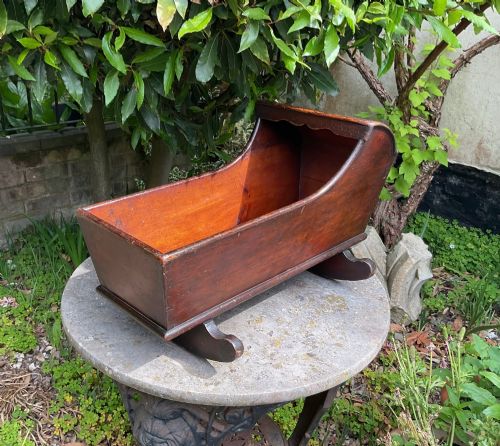
When you search for an antique rocking crib, you enter a field spanning from the seventeenth century through the Edwardian era, taking in both full-sized infant beds and smaller doll pieces. These pieces range from robust country pine and panelled oak down to refined mahogany and decorative brass variants.
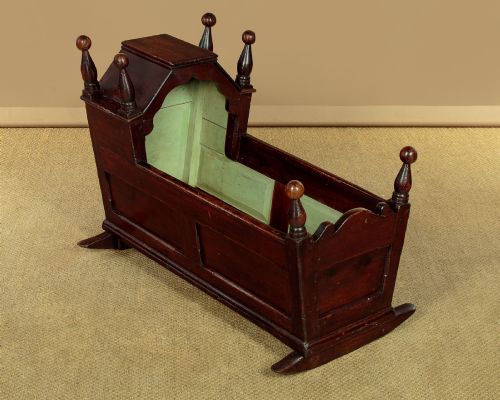
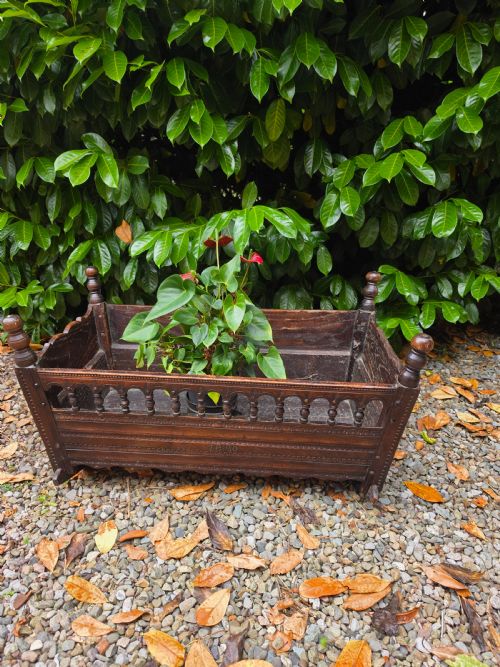
The most common examples on this page are nineteenth century pine and oak cribs mounted on curved rocking feet, often featuring traditional panel construction. Alongside these domestic child beds appear regional variations such as Swedish painted pine models and Welsh blue-painted examples.
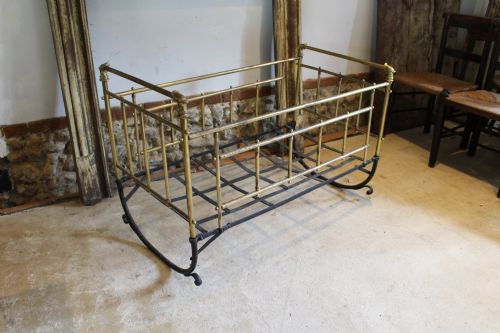
Early pieces include seventeenth century styles with pegged joints and carved details, while later Victorian versions introduce cane, brass, and metamorphic designs. Each variation reflects the prevailing domestic standards and joinery methods of its specific period.
How they were made
Makers relied primarily on native timbers such as oak, pine, and mahogany, shaped using traditional joinery like panel-and-frame construction. Surfaces were left plain, finished with early paint layers, or polished to display the natural grain.
Structural movement relied on integrated wooden rockers or curved bases attached to the main body, allowing the crib to sway smoothly. Later Victorian examples incorporated metal elements like brass and wrought iron, alongside cane panels and upholstered sections.
Listings feature pieces spanning from the 16th century through the Edwardian era, built in oak, pine, mahogany, brass, and wrought iron.
What varies in quality
Quality rests on the integrity of the timber and the sophistication of the original construction, distinguishing sturdy vernacular pieces from finer formal furniture. Early joined oak work with intact panels and original surface finishes sits at the higher end of the scale.
The survival of original paint, such as early blue surfaces on pine, adds significantly to the character and interest of vernacular pieces. Simpler pine or utility pieces from later periods show more straightforward construction suited to everyday domestic use.
The Antique Rocking Crib Glossary
- Panelled crib
- A bed constructed with wooden panels fitted into grooved frames to prevent warping. This traditional joinery method provides structural strength.
- Rockers
- Curved wooden feet attached to the base of the crib to allow side-to-side motion. They are often integrated into the primary frame.
- Cane
- Woven rattan material used for ventilation and decoration in the sides of later cribs. It appears frequently in Victorian examples.
- Metamorphic cot
- A convertible piece of furniture designed to transform between different configurations, such as a crib and a standard cot. These are typical of the nineteenth century.
- Hood
- A protective canopy or cover integrated over the head of early cribs to block draughts. They are found on seventeenth century and Victorian panelled examples.
Antique Rocking Crib: Frequently Asked Questions
How do I date an antique rocking crib?
Dating relies on examining the timber species, joinery methods, and hardware used in the construction. Seventeenth and eighteenth-century examples typically feature pegged oak joinery and hand-cut panels.
Later nineteenth-century models often incorporate machine-cut elements, pine, mahogany, or alternative materials like brass and iron. Comparing these physical traits to known period styles clarifies the timeline.
Were these cribs used for everyday sleeping?
Yes, these pieces served as standard infant beds in homes ranging from country cottages to larger town residences. The rocking mechanism was designed to soothe infants by allowing parents to sway the bed.
Today, safety standards for infant sleep have changed, meaning many buyers repurpose these cribs for display, storage, or alternative uses such as holding logs.
What is the difference between oak and pine cribs?
Oak cribs are generally associated with earlier periods, such as the seventeenth and eighteenth centuries, and utilise heavy, durable hardwood construction. They often feature detailed panelling and pegged joints.
Pine cribs frequently date from the Georgian and Victorian eras, offering a lighter, softer wood that was often painted or left in its natural state. Regional pieces like Swedish pine versions showcase distinct painted finishes.
Can I use an antique crib for a modern baby?
Modern safety regulations regarding slat spacing, mattress firmness, and side heights differ significantly from historical manufacturing standards. Consequently, most buyers use antique cribs for decorative purposes, toy storage, or interior styling rather than active infant sleeping.