




Antique Mahogany Cradle
An antique mahogany cradle brings rich timber grain and classic craftsmanship to your home, holding centuries of history in its polished form.
Antique Mahogany Cradle
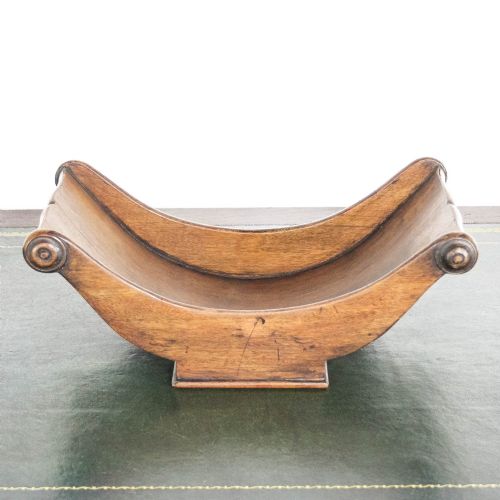
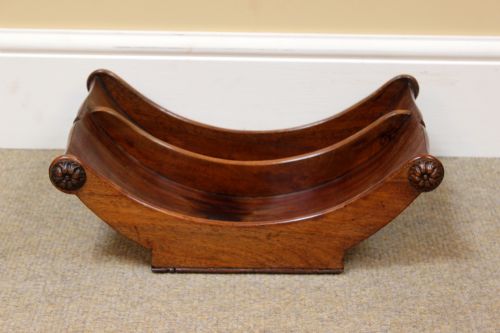
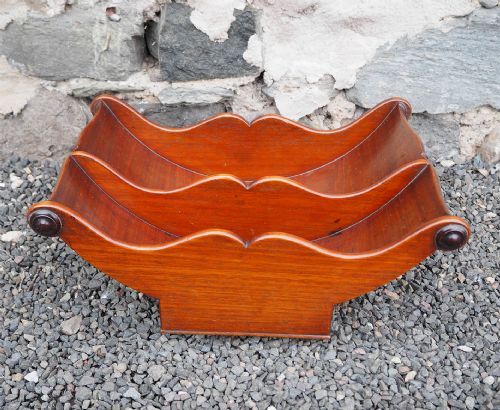
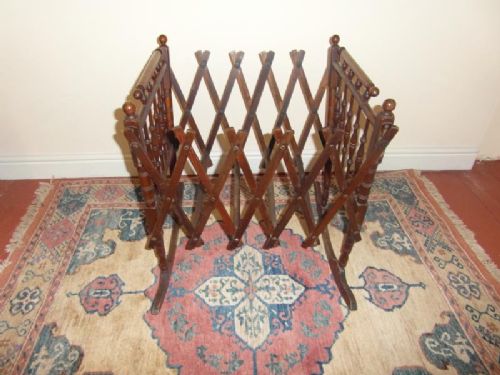
When you search for an antique mahogany cradle, you encounter a surprisingly varied selection of objects ranging from infant beds to dining table accessories. The items listed on this page span several distinct periods, including Georgian, Regency, William IV, Victorian, and Edwardian eras. While some entries are indeed rocking cribs and cots designed for nurseries, a significant portion are actually table pieces such as cheese coasters and bottle holders.
The larger sleeping forms include Victorian and Edwardian rocking cribs alongside metamorphic cots, often featuring cane, rattan, or upholstered elements. By contrast, the smaller serving pieces utilise the same rich timber to create table coasters and champagne pourer cradles that glide along dining surfaces. This dual nature reflects how cabinetmakers applied fine furniture timbers to both domestic nurseries and formal dining rooms across the eighteenth and nineteenth centuries.
Materials and construction methods
The primary material across these pieces is solid mahogany, selected for its deep colour and durability, occasionally accompanied by secondary woods like fruitwood. Artisans combined this dense timber with brass castors and metal hardware to allow smooth movement, whether for sliding a cheese coaster along a mahogany dining table or rocking a crib.
Caning and rattan panels appear frequently in the sides of Victorian and Edwardian cribs, woven tightly to create breathable enclosures for infants. These techniques demonstrate a reliance on traditional joinery and natural materials, uniting heavy hardwoods with lighter woven elements.
Materials recorded across the inventory include solid mahogany, brass, fruitwood, iron, cane, and rattan.
Distinguishing quality in these pieces
Quality in these items is revealed through the selection of the timber and the precision of the joinery rather than ornamentation. Superior examples display rich grain patterns and careful construction that withstands the physical demands of rocking mechanisms or table use.
The integration of secondary materials, such as finely turned brass fittings or tightly woven cane panels, separates standard production from exceptional work. In table coasters and bottle holders, the smoothness of the turning and the condition of the base timber dictate the overall standard.
The Antique Mahogany Cradle Glossary
- Cheese coaster
- A small trolley or stand designed to hold a wedge of cheese, typically shaped in a semicircle or crescent to fit the curve of a dining table. These pieces often feature small wheels or castors so they can be passed easily among guests.
- Truckle
- A small wheel or castor attached to the underside of furniture, allowing heavy items to roll smoothly across floors or tabletops. In the context of cheese stands, these enabled the low-slung wooden frames to glide between diners.
- Metamorphic
- Descriptive of furniture designed to transform from one form or function into another. In nineteenth-century cots, this involved folding or adjusting mechanisms to alter the piece's configuration.
- Cane
- Woven material derived from the peeled bark of rattan palms, utilised for the flexible, breathable sides of cribs. It provides a lightweight alternative to solid timber panels while maintaining structural integrity.
- Fruitwood
- A generic term for timber sourced from fruit-bearing trees such as pear, apple, or cherry, employed by cabinetmakers as a dense alternative to mahogany. It appears in older dining accessories for its fine grain and pale warmth.
Antique Mahogany Cradle: Frequently Asked Questions
What is a cheese coaster?
A cheese coaster is a small, low-profile wooden trolley designed to hold a block of cheese at the dining table. They frequently feature small metal wheels or castors to allow smooth movement among guests.
These pieces were popular during the Georgian and Victorian periods, matching the main dining furniture. Their distinctive crescent or curved shapes allowed them to nestle neatly against other table accessories.
How were rocking cribs used?
Rocking cribs provided a secure sleeping space for infants, utilising curved wooden rockers attached to the base to soothe babies to sleep. They sat in family chambers or nurseries during the Victorian and Edwardian eras.
Many examples incorporated woven cane or upholstered panels to create a lighter structure. The inclusion of sturdy frames ensured stability during movement.
Are all these items for babies?
No, searching for this phrase yields both infant furniture and formal dining accessories. The results include full-sized rocking cribs alongside miniature bottle holders and cheese coasters.
Cabinetmakers utilised mahogany for both nursery furniture and dining room novelties. This overlap means buyers must examine dimensions and object types closely.
How do I date a mahogany piece?
Dating relies on stylistic markers, construction techniques, and the specific materials associated with known design periods. Georgian and Regency items often display restrained classical lines, while Victorian pieces feature heavier proportions and mixed media like cane.
Hardware such as brass castors and the depth of the mahogany patina further indicate the era of manufacture. Examining the interior joinery reveals the hand methods of the period.