


Rustic Wooden Crib
A rustic wooden crib is a nursery piece built for sleep, offering sturdy pine and oak construction with honest country character.
Rustic Wooden Crib
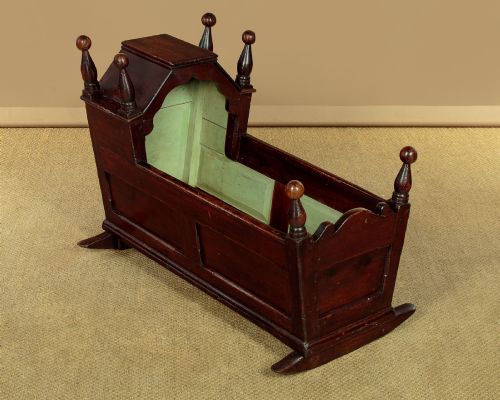
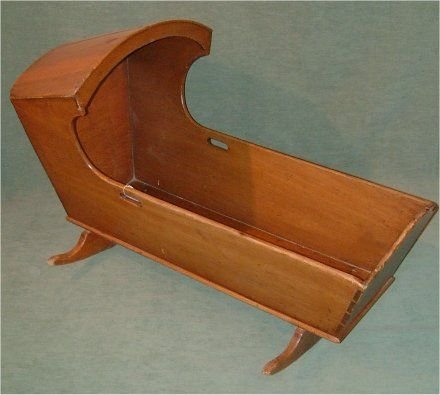
A rustic wooden crib is typically found in forms spanning the seventeenth, eighteenth, and nineteenth centuries, including simple rocking cradles and child's beds. These pieces reflect regional country traditions, drawing on Scandinavian country and Victorian country styles.
The most common examples on this page are pine and oak cradles fitted with rockers or canopy tops. They demonstrate functional domestic design intended for everyday use rather than formal display.
Materials and construction methods
Makers utilised solid timbers such as pine and oak, often shaped by hand into panels and fitted with curved wooden rockers. Surfaces show traces of original or later paint finishes alongside plain wood grains.
Joinery techniques relied on traditional pegging and panel construction to withstand constant movement. Metal and glass appear occasionally as minor structural or decorative components.
The documented forms include rocking cradles, child's beds and canopy top designs rooted in Georgian and Victorian traditions.
Judging quality and character
Quality rests in the balance of proportions and the integrity of the original timber. Pieces retaining an authentic surface patina stand apart from those stripped or overly restored.
The sophistication of carved details or the presence of a canopy top distinguishes standard utilitarian versions from more ambitious regional examples.
The Rustic Wooden Crib Glossary
- Rockers
- Curved wooden feet attached to the base of a cradle to allow smooth motion. They are shaped to provide a gentle sway for a resting child.
- Canopy top
- An overhead framework fitted to certain cradles for suspending fabric covers. This feature provided protection from draughts in older homes.
- Panelled construction
- A method where flat boards are set within a surrounding wooden frame to prevent warping. It allows the timber to expand and contract naturally with changes in humidity.
- Patina
- The surface sheen and colour developed by wood through age, handling and exposure to light. It serves as a primary indicator of historical authenticity.
Rustic Wooden Crib: Frequently Asked Questions
How do I date a wooden cradle?
Dating relies on observing construction marks, timber types and joinery styles consistent with periods like the Georgian era or the nineteenth century.
Changes in hardware, surface treatments and tool marks further help place a piece within its historical context.
Were these cribs used daily?
These pieces served as practical infant beds in domestic households, built to withstand regular rocking and movement.
Their robust construction in pine or oak reflects a purely utilitarian purpose in historical rural homes.
Can I use an antique crib today?
Modern safety standards differ significantly from historical manufacturing practices, meaning antique cribs are generally unsuited for unsupervised infant sleep.
Collectors typically appreciate them as decorative objects, toy displays or historical textile storage.
What is Scandinavian country style?
This aesthetic emphasises functional forms, carved details and pale painted finishes typical of northern European vernacular design.
Pieces from this tradition often feature bright pine construction and straightforward geometric decoration.