




Traditional Walnut Bedstead
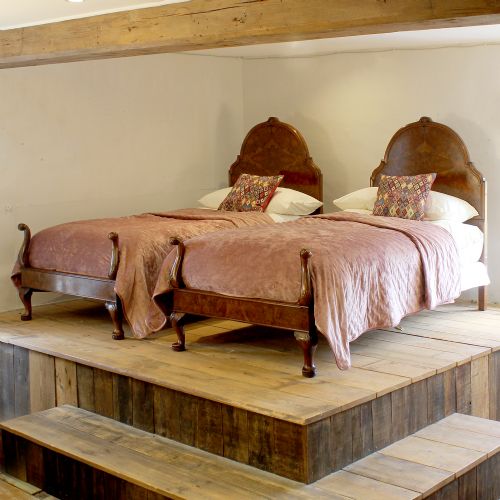
These traditional walnut bedstead examples bring warmth and rich timber grain to a bedroom, offering sturdy frames shaped in classic revival styles.
Traditional Walnut Bedstead
A traditional walnut bedstead brings together warm timber frames and classic decorative styles, appearing across single, double, king, and emperor sizes. When searching for a traditional walnut bedstead, buyers encounter pieces originating from the nineteenth century, the Victorian era, the Edwardian period, and the 1920s.
How they were made
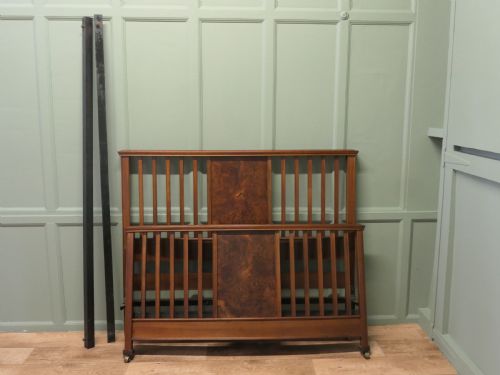
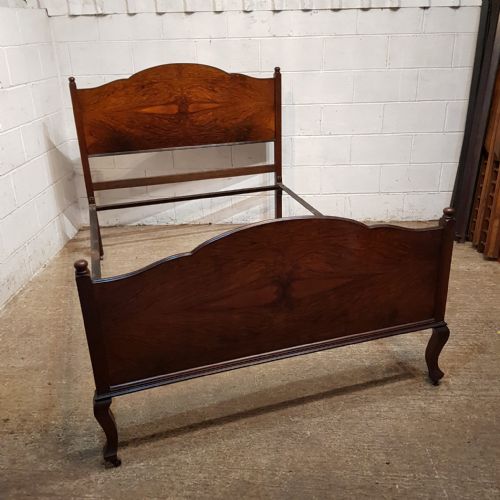
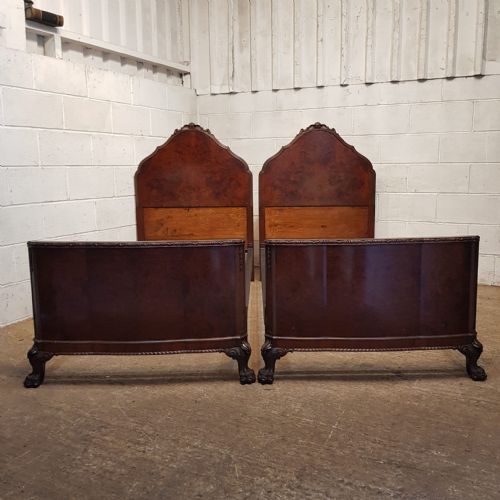
Cabinet makers utilised solid walnut, burr walnut, and general wood timber to construct these heavy frames, often incorporating contrasting grain patterns across the headboards and footboards. Supporting hardware and structural elements frequently relied on iron and brass components.
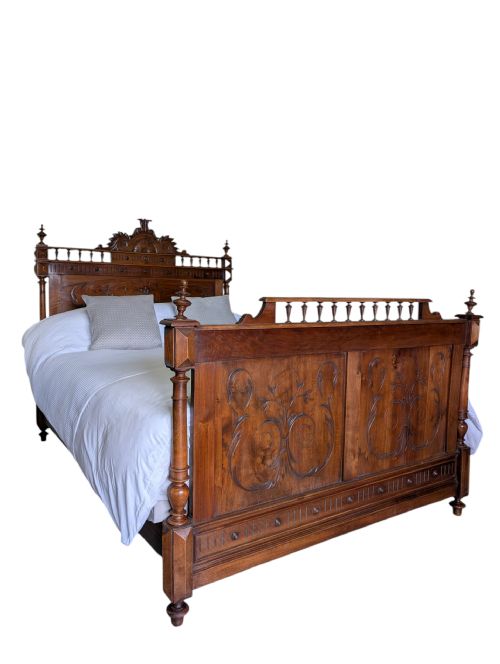
Many frames display carved ornamentation, while upholstered elements introduce fabric sections into French styles. Workshops combined traditional joinery with decorative carving to finish the timber surfaces.
Materials recorded across the inventory include solid walnut, burr walnut, iron, brass, and fabric upholstery.
What varies in quality
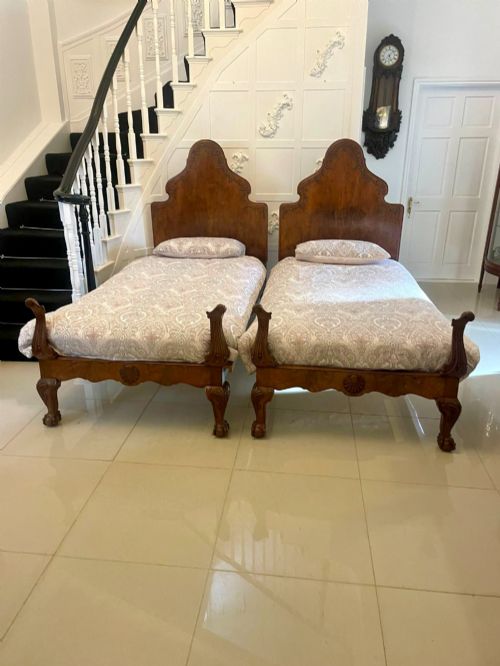
The distinction between standard examples and superior pieces rests on the choice of wood veneer and the depth of carved detail on the timber. Burr walnut selections display intricate, swirling grain patterns that require greater skill in matching and application than plain timber.
Proportion and style adherence also separate the ordinary from the exceptional, particularly in revival pieces that emulate Queen Anne or French chateau aesthetics. The crispness of carved mouldings and the soundness of the underlying construction define the upper tier of these frames.
The Traditional Walnut Bedstead Glossary
- Burr walnut
- A prized timber harvested from tree growths, yielding intricate swirling patterns across furniture panels.
- Half tester bed
- A bed featuring a partial canopy extending from the headboard over the top of the sleeping area.
- Queen Anne style
- A design movement characterised by curved lines, cabriole legs, and understated elegance originating in the early eighteenth century and revived later.
- Bedstead
- The framework of a bed consisting of headboard, footboard, and side rails designed to support a mattress.
Traditional Walnut Bedstead: Frequently Asked Questions
What sizes do these beds come in?
The listings span single, double, king-sized, and emperor dimensions to accommodate different room proportions. Pairs of single beds also appear frequently.
Buyers find dimensions ranging from compact single frames up to large imperial and king sizes suitable for spacious master bedrooms.
How do I identify the period?
Period identification relies on observing stylistic markers such as Victorian massing, Edwardian simpler lines, or 1920s revival interpretations. Materials like burr walnut appear heavily in Edwardian and 1920s examples.
Construction methods and specific revival motifs help narrow down whether a piece belongs to the nineteenth century or the early decades of the twentieth century.
What styles are most common?
Queen Anne style and French influences dominate the aesthetic range across these listings, alongside Victorian and Edwardian interpretations. Carved details and figured burr timber feature prominently in these designs.
French chateau and Henri II aesthetic choices also appear among the larger emperor and king-sized frames.