



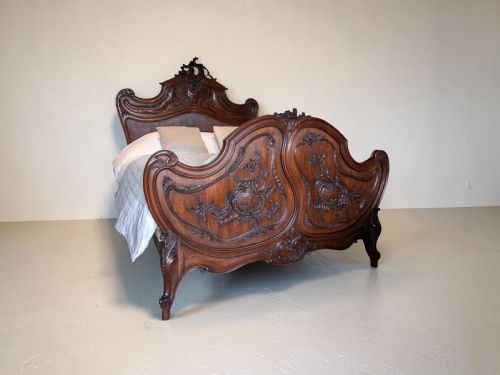
French Carved Wooden Bed
A french carved wooden bed anchors a bedroom with substantial presence, bringing tactile warmth and period detail through carved timber and upholstered panels.
French Carved Wooden Bed
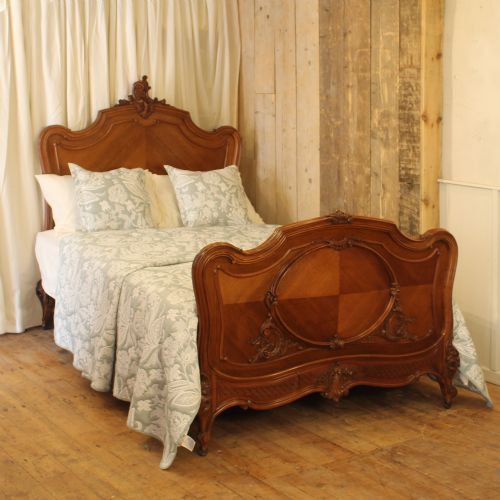
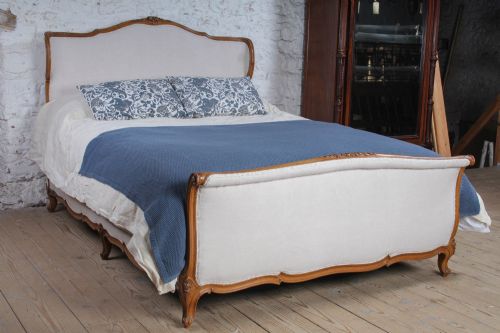
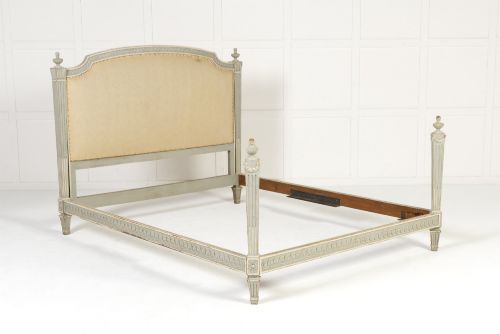
A french carved wooden bed typically appears as a double, king size, or superking bedstead originating from the nineteenth century up through the nineteen-twenties. These pieces encompass styles ranging from French Provincial and French Chateau to Louis XVI and Rococo Revival, alongside associated forms like bed canopies and window seats.
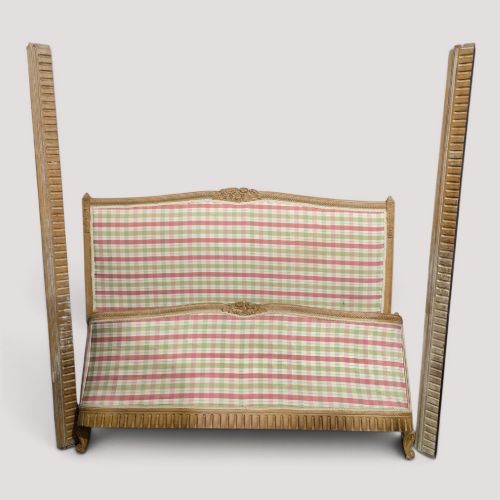
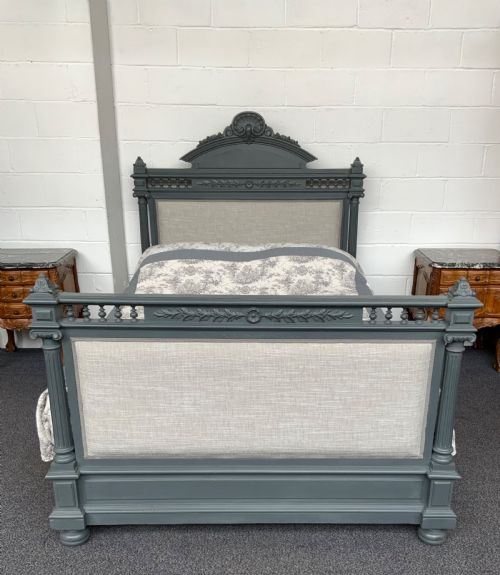
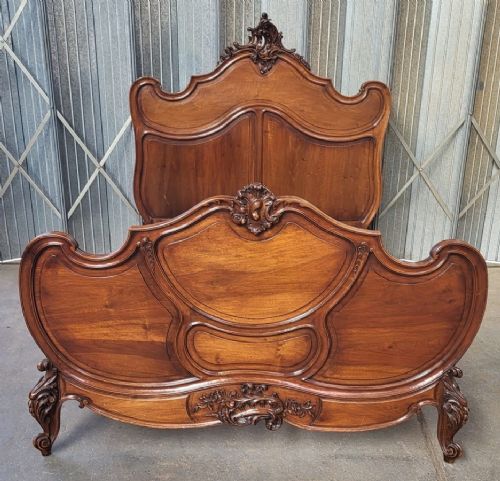
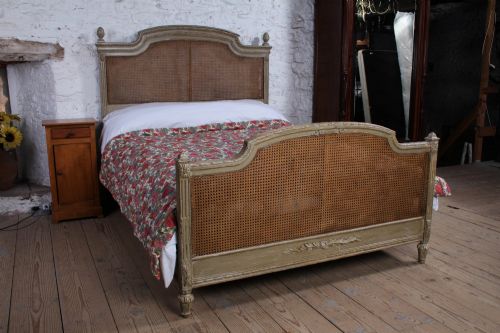
Makers utilised timber and paint to create architectural frames, often incorporating fabric upholstery or canework into headboards and footboards. Buyers encounter both painted finishes with floral panels and polished hardwoods such as walnut and mahogany.
Materials and construction
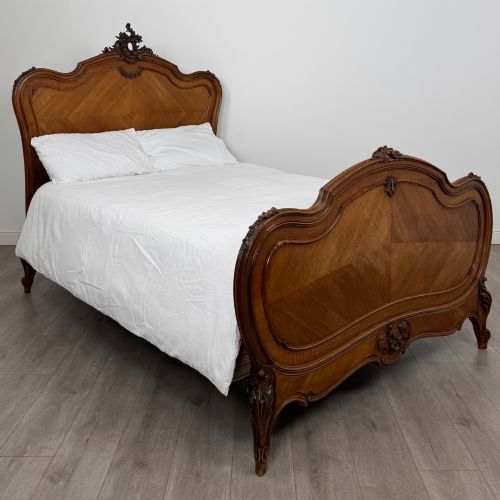
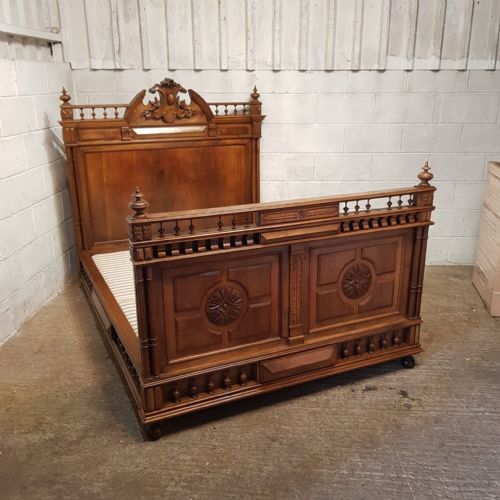
Cabinet makers built these bedframes using solid timbers like walnut, oak, and mahogany, frequently applying quarter veneering and hand-carved ornamentation to headboards and footboards. Structural integrity relied on traditional joinery methods that accommodated large dimensions and heavy carved crests.
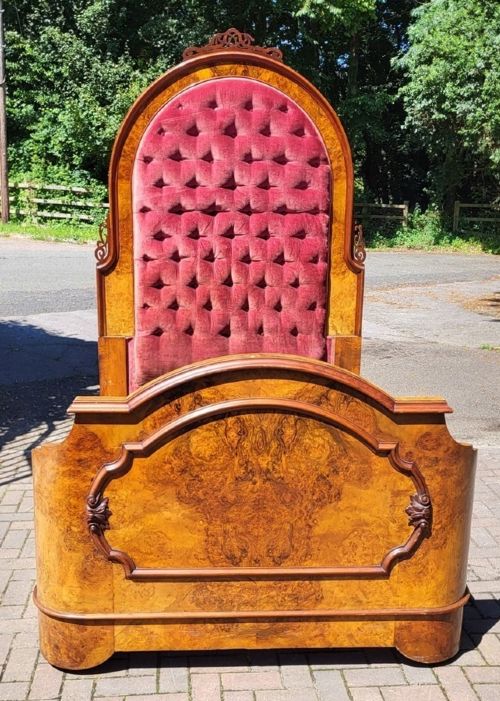
Surface treatments included hand-painting, liming, and faux bamboo effects, while decorative elements featured brass detailing, parquetry, and caning. Upholstered sections utilised fabric coverings with button-backed detailing.
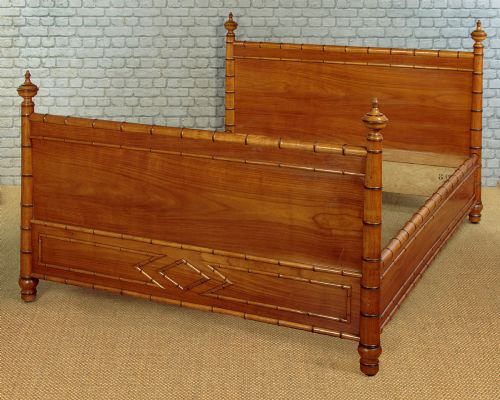
Several beds embrace botanical whimsy through carved faux bamboo turnings that imitate tropical grasses in solid timber.
Judging quality
The distinction between tiers rests upon the crispness of the hand-carving and the depth of the timber selection, such as figured walnut or quarter-veneered surfaces. Superior examples demonstrate harmonious proportions across large scales, where architectural mouldings and brass detailing integrate seamlessly into the bedstead design.
Finishes also dictate worth, distinguishing between original hand-painted floral panels or aged patinated timber and later, unsympathetic alterations. Construction robustness in joints and footboards ensures the frame maintains stability.
The French Carved Wooden Bed Glossary
- Bedstead
- A framework of a bed consisting of headboard, footboard, and rails designed to support a mattress. These structures often display extensive carved woodwork or upholstery.
- Parquetry
- Geometric mosaic woodwork used for decorative effect on furniture surfaces. This technique appears on fine mahogany and walnut bed frames.
- Canework
- Woven cane or rattan material utilised for ventilation and lightness in headboards and footboards. It provides a textural contrast to solid timber frames.
- Quarter Veneer
- Wood veneer sliced in quarters and arranged to create symmetrical grain patterns. This decorative method highlights the natural figure of walnut.
- Faux Bamboo
- Wood turned and carved to imitate the segmented stalks of bamboo. This decorative style gained popularity in late nineteenth-century bed design.
French Carved Wooden Bed: Frequently Asked Questions
How do I fit a modern mattress?
Many historical bedframes accommodate standard modern mattress sizes with slight adjustments or custom support slats. Consult dealer specifications regarding internal dimensions before purchasing.
Traditional side rails can sometimes require discreet timber extensions or modern slat systems to ensure proper support for contemporary mattress depths.
Are these beds easy to assemble?
Most antique bedframes utilise traditional bolt-in iron brackets or mortise and tenon joinery for the side rails. Two people can assemble the headboard, footboard, and rails using basic tools.
Care must be taken with heavy carved walnut or oak components to protect protruding mouldings and decorative crests during the setup process.
What styles are available?
The selection includes Louis XVI, Louis XV, French Provincial, and Rococo Revival styles from the nineteenth and early twentieth centuries. Each style offers distinct carved motifs and structural lines.
Finishes range from polished walnut and mahogany to painted wood, faux bamboo, and limed timber surfaces with upholstered panels.
How do I care for the wood?
Maintain wooden surfaces by dusting regularly with a soft, dry cloth and avoiding direct sunlight or excessive heat sources. Wax polishes help preserve polished walnut and mahogany.
Painted and faux bamboo surfaces require gentle cleaning without harsh chemicals to protect the original decorative layer and hand-painted floral details.