



Vintage French Double Bedstead
A vintage french double bedstead brings continental grace into the bedroom, offering carved wood or gleaming brass to anchor a sleeping space.
Vintage French Double Bedstead
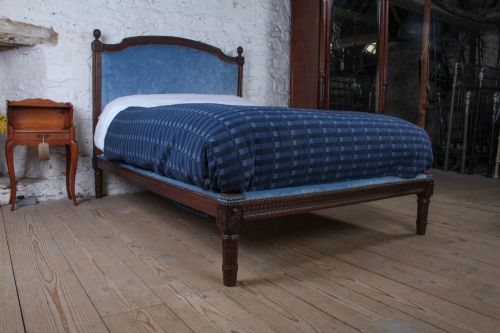
When searching for a vintage french double bedstead, buyers encounter substantial sleeping furniture originating across the nineteenth and twentieth centuries. These frames span periods from Victorian and Edwardian eras up through Art Deco and nineteen-thirties designs, reflecting evolving continental tastes.
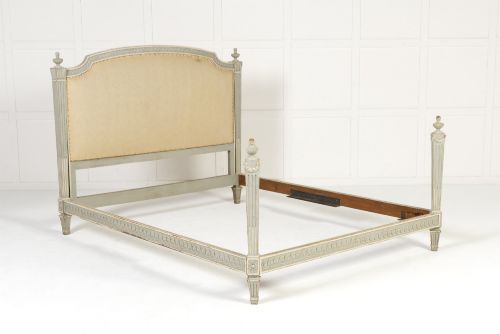
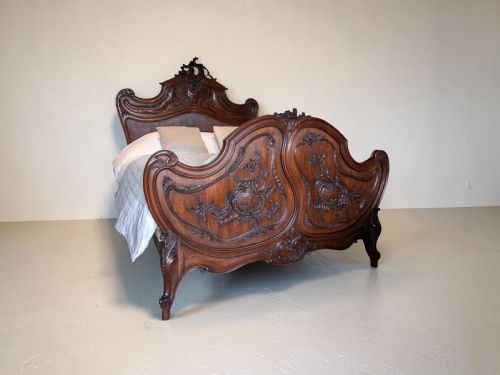
The selection on this page centres on double and larger proportions, including standard double sizes alongside king and emperor dimensions. Frameworks display distinct regional aesthetics such as Louis XVI style, French provincial, rococo revival, and neoclassical influences.
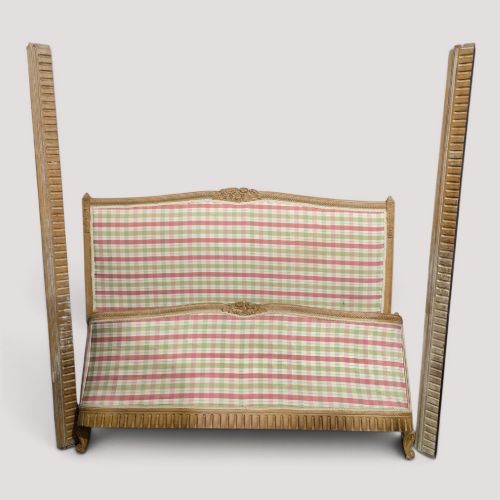
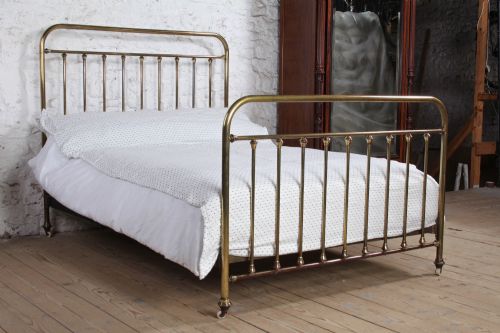
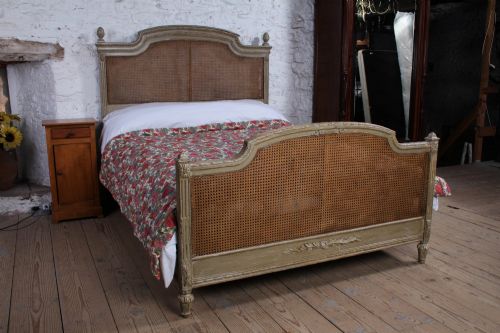
Wooden constructions dominate the selection, accompanied by notable examples in brass, painted finishes, and iron. Buyers frequently find headboards and footboards featuring caning, upholstery, or elaborate carved detailing characteristic of continental workshops.
Materials and construction
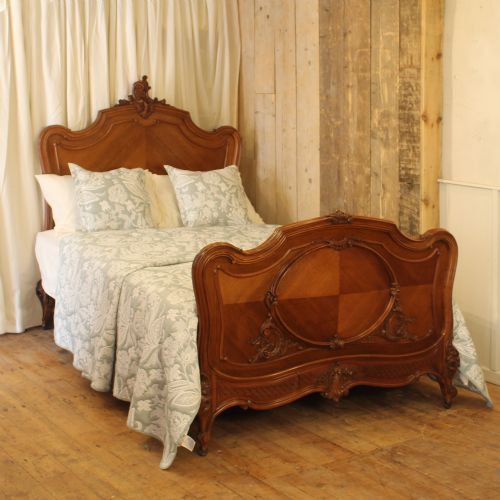
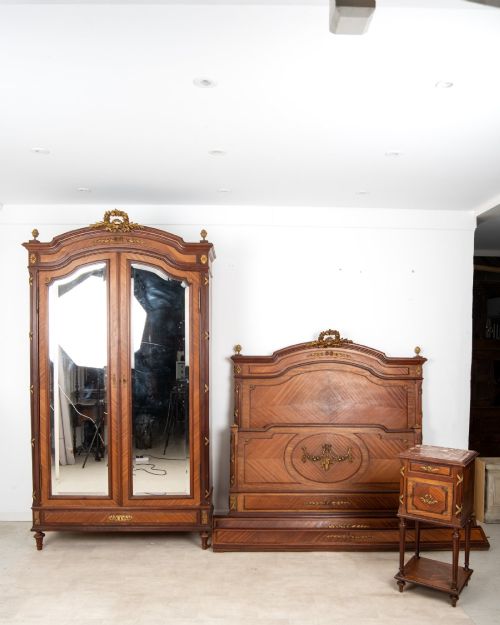
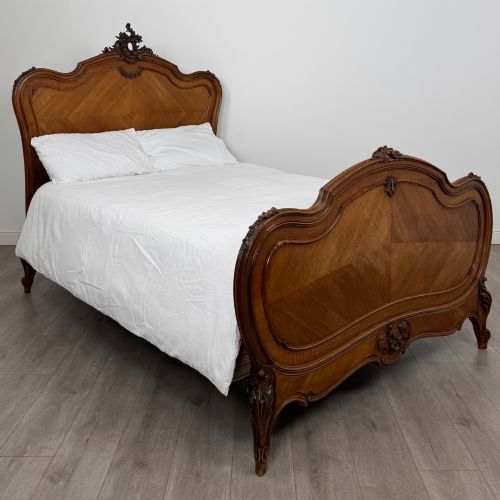
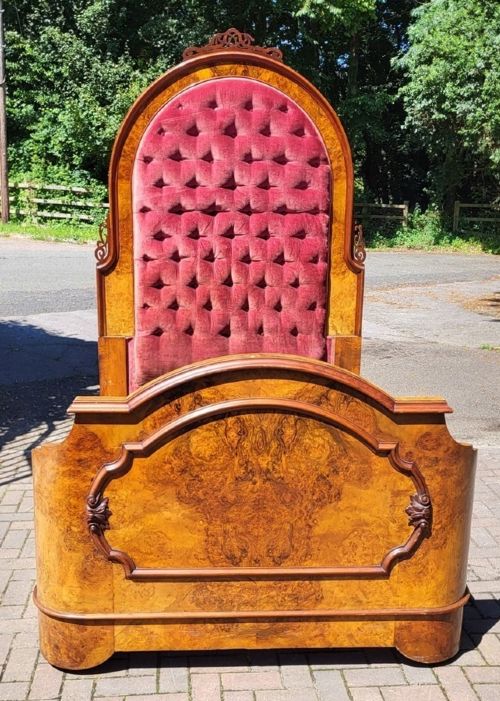
Cabinetmakers utilised rich timber varieties including walnut, burr walnut, mahogany, and oak to build robust structural frames. These woods were often carved with classical motifs or arranged in decorative parquetry patterns.
Metal alternatives relied on solid brass or forged iron, sometimes incorporating brass embellishments onto painted wooden surfaces. Paint and parcel gilt finishes provided alternative decorative treatments across various stylistic periods.
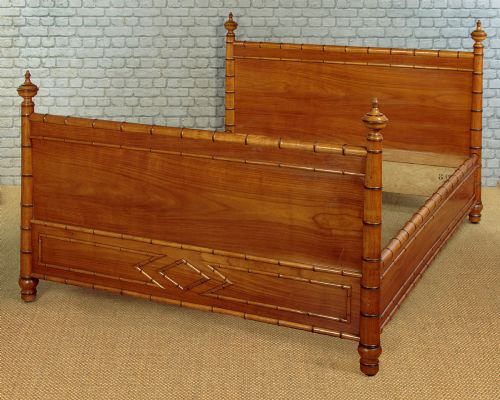
Faux bamboo makes a surprise appearance alongside grand chateau walnut.
The measure of quality
Quality reveals itself in the crispness of hand-carved wooden details and the structural integrity of the joints. Finer pieces demonstrate superior timber selection, such as figured burr walnut or plum pudding mahogany, matched with careful proportion.
The refinement of applied brass mounts, original painted decoration, and integrated caning distinguishes standard production from exceptional examples. A successful design balances decorative flourish with robust daily utility.
The Vintage French Double Bedstead Glossary
- Louis XVI Style
- A neoclassical design aesthetic characterised by straight lines, symmetrical proportions, and classical motifs such as fluting and ribbon twists. This style appears frequently across nineteenth-century framework.
- Caning
- Woven rattan material used to create open, textured panels within headboards and footboards. It provides lightweight visual relief to heavy wooden frames.
- Ormolu
- Gilded bronze ornamentation applied to furniture pieces for decorative emphasis. It brings metallic contrast to rich timber surfaces.
- Parquetry
- Geometric wood veneer patterns arranged in precise geometric designs. This technique decorates the flat surfaces of finer bed frames.
- Parcel Gilt
- A surface treatment where specific carved details or highlights are partially gilded with gold leaf. It accentuates architectural mouldings against painted or stained wood.
Vintage French Double Bedstead: Frequently Asked Questions
Will a vintage double bed take a modern mattress?
Many continental antique frames vary slightly from contemporary standard dimensions. Checking the exact internal width and length before sourcing a mattress ensures a proper fit.
Custom mattress makers can also supply bespoke sizes to suit older bedstead dimensions perfectly.
How do I assemble an antique bedstead?
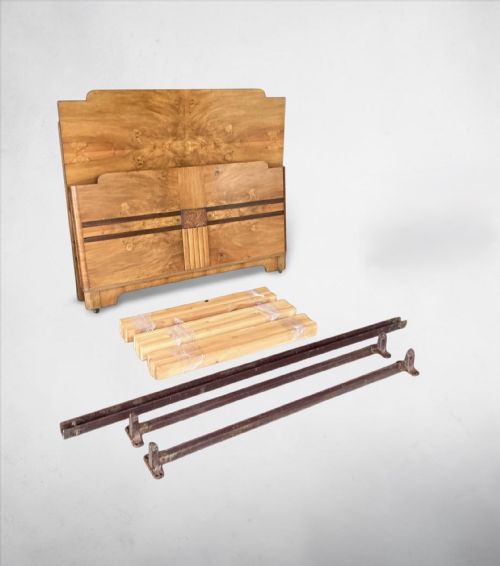
Most traditional frames utilise iron side rails that slot directly into corner brackets on the headboard and footboard. A firm tap with a wooden mallet often secures these wedge joints.
Modern wooden slats can be added across the rails to provide correct support for contemporary mattresses.
Are painted finishes original on these beds?
Some pieces retain their historic painted or parcel gilt surfaces, while others have been decorated during later restoration work. Original paint often exhibits natural craquelure and gentle wear over time.
Examining the underlying wood and paint layers helps determine the age of the decorative surface.
How do I care for polished walnut wood?
Regular dusting with a soft, dry cloth prevents the accumulation of grit on carved surfaces. Applying traditional beeswax periodically maintains the lustre of the timber.
Keeping the bedstead away from direct heat sources prevents the wood from drying out and cracking.