

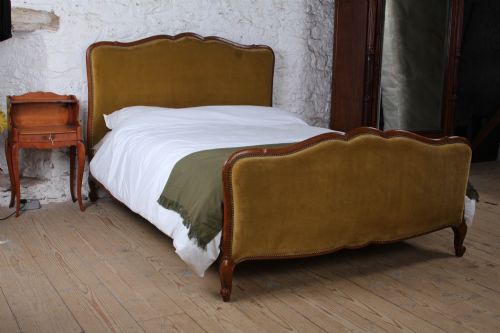
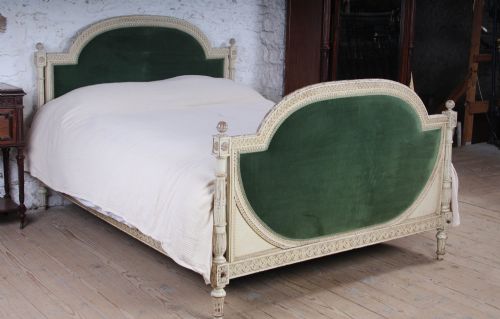


Upholstered French Bed Frame
An upholstered french bed frame brings architectural grace and tactile softness to a bedroom, combining carved woodwork with generous padded textiles.
Upholstered French Bed Frame
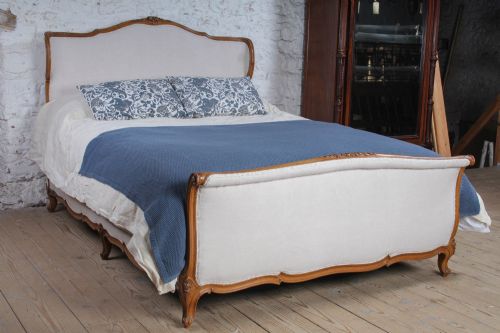
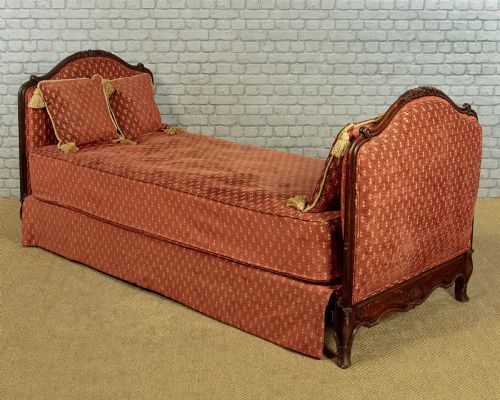
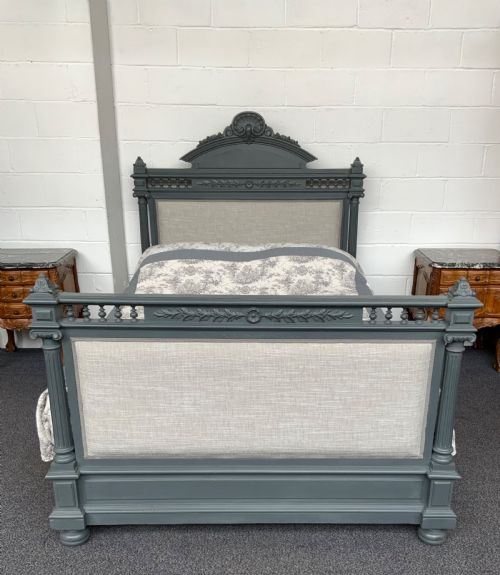
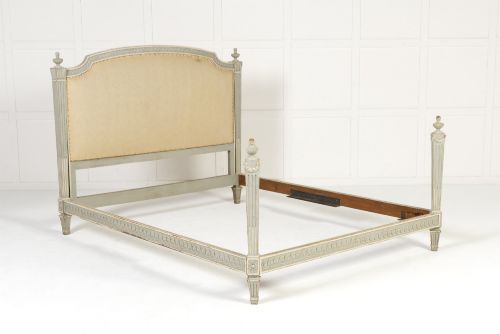
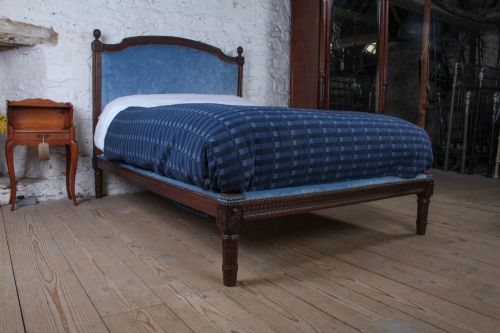
When you search for an upholstered french bed frame, you find substantial sleeping furniture built across the nineteenth and early twentieth centuries, drawing heavily upon continental court aesthetics. These pieces include double and king size frames, daybeds, and single bedsteads designed with sculptural wooden surrounds.
The most common versions met on this page date from the decades around nineteen hundred, manifesting in Louis styles with curved woodwork, painted finishes, and newly applied fabrics. Alongside these French forms, related daybeds and Empire style pieces appear, sharing the same fundamental union of timber and upholstery.
Materials and construction
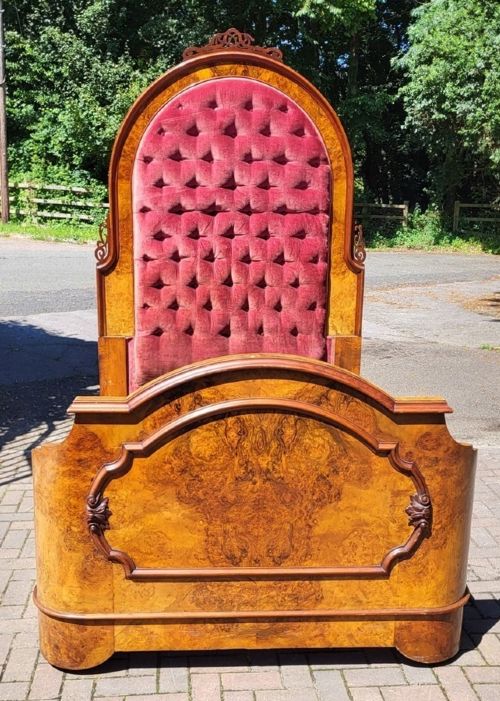
Makers shaped these frames from solid timbers including walnut, oak, mahogany, and pine, frequently applying paint, gilt decoration, or limed finishes to the exposed wood. Carved details such as floral motifs, scrolls, and moulding define the structural frames, requiring accomplished joinery to support the mattress and headboard.
Textiles form the primary visual contrast against the timber, utilising linen, velvet, and various modern or original fabrics secured to padded panels. Buttoning and detailed trimming often complete the headboards and footboards, anchoring the soft upholstery firmly within the rigid wooden skeleton.
One listed bed holds a cinematic pedigree, having appeared in series two of the television drama The Great.
Distinctions in quality
Quality rests significantly upon the crispness of the wood carving and the weight of the timber frame, distinguishing workshop-produced pieces from simpler utilitarian carpentry. Deeply sculpted rails and refined proportions indicate a higher tier of design origin.
The integration of the upholstery also dictates the standard of the piece, with sympathetic fabric choices and careful hand-tethered padding elevating the overall execution. Frames retaining coherent original finishes or substantial hardwood foundations stand apart from lighter, purely decorative alternatives.
The Upholstered French Bed Frame Glossary
- Louis XV Style
- A design vocabulary characterised by asymmetrical curves, cabriole legs, and naturalistic carved foliage typical of eighteenth-century revivals. It provides the dominant flowing silhouette seen on many continental bed frames.
- Louis XVI Style
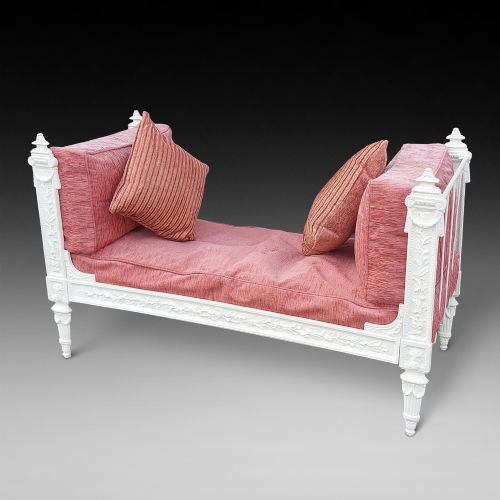
- A neoclassical aesthetic defined by straight lines, fluted columns, and geometric symmetry that replaced earlier curves. This style lends a more architectural rigidity to bed frames and headboards.
- Daybed
- A multipurpose piece of furniture functioning as a seat by day and a bed by night, often featuring a raised backrest or end panels. These frequently incorporate upholstered surfaces similar to standard bed frames.
- Daybed
- A multipurpose piece of furniture functioning as a seat by day and a bed by night, often featuring a raised backrest or end panels. These frequently incorporate upholstered surfaces similar to standard bed frames.
Upholstered French Bed Frame: Frequently Asked Questions
How do I date an upholstered french bed frame?
Dating relies heavily on the stylistic clues within the woodwork and the construction methods visible in the joints and timber preparation. Pieces from the nineteenth century often display heavier hand-carved elements, whereas early twentieth-century examples frequently adopt lighter proportions and specific revival idioms.
Examining the underlying frame materials and any surviving hardware helps narrow the decade of production. Stylistic markers corresponding to Victorian, Edwardian, or specific continental reigns provide further chronological boundaries.
Are these beds standard modern sizes?
Antique continental bed frames frequently deviate from contemporary metric standards, often requiring custom mattress solutions or slight frame adjustments. Double and king size designations in older pieces can vary by several inches compared to modern retail equivalents.
Checking the internal dimensions of the wooden rails before acquiring a mattress ensures a correct fit. Many buyers choose bespoke mattresses to accommodate the exact internal measurements of these historic frames.
How should I care for the upholstered panels?
Maintenance involves regular, gentle vacuuming with a soft brush attachment to prevent dust accumulation within the fabric weave and padding. Avoiding direct sunlight protects both textile colours and underlying wooden finishes from fading over time.
Professional cleaning is recommended for heavier fabrics like velvet or linen if spots occur. Keeping the room environment stable prevents excessive moisture from affecting the wooden frame and internal stuffing.
Can I dismantle these bed frames for transport?
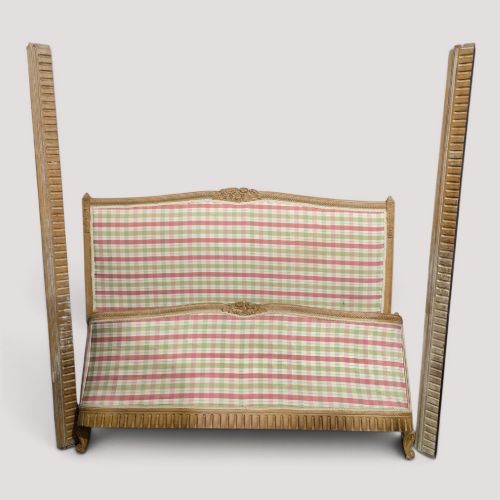
Most antique wooden bed frames utilise traditional knock-down fixings, metal bolts, or slot-in side rails designed for straightforward dismantling. This modular construction allowed nineteenth-century households to move bulky furniture between rooms or properties with relative ease.
Care must be taken with painted or gilt surfaces during assembly and disassembly to avoid chipping the finish. Securing the original brackets and bolts properly ensures the frame remains rigid and square when reassembled.