


Large Bed Frame
Choosing a large antique bed frame means balancing generous proportions with period character, from cast iron framing to carved walnut.
Large Bed Frame
A large antique bed frame encompasses substantial nineteenth and early twentieth-century sleeping furniture designed to anchor a room.
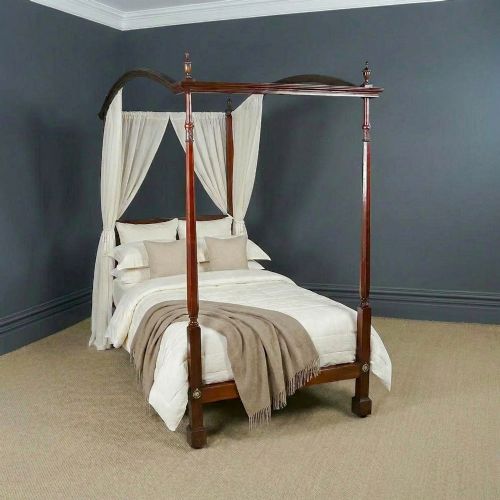
The selections span proportions from single sizes up to king, emperor, and four-poster configurations.
Victorian and Edwardian metal bedsteads appear frequently alongside French walnut and painted wooden frames.
Materials and Construction
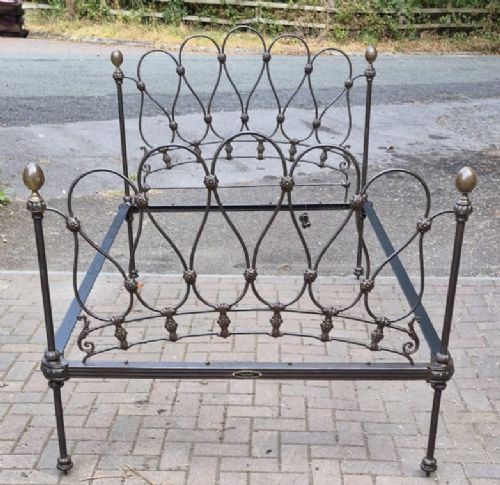
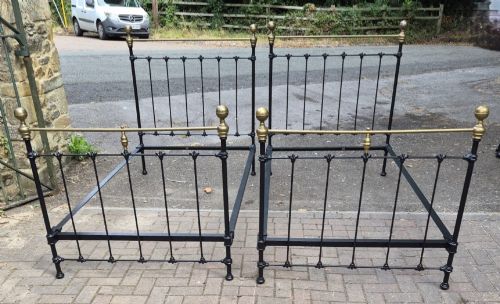
Makers constructed metal frames using durable combinations of brass and cast or wrought iron, often incorporating ornate cast details.
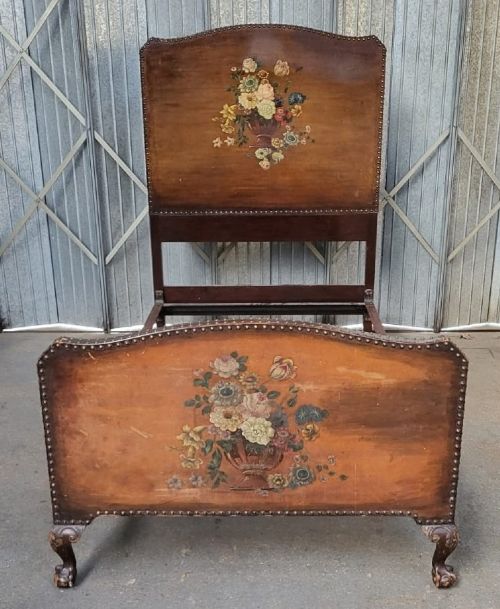
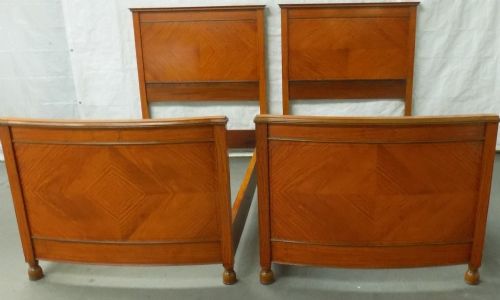
Wooden examples utilise solid timber such as walnut, mahogany, maple, and fruitwood, sometimes finished with inlay, parquetry, or paint.
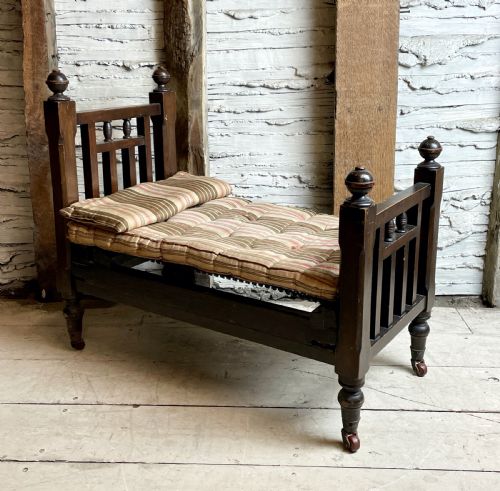
Miniature doll's beds demonstrate that master craftsmen took the exact same care with scaled-down proportions as they did for full-sized furniture.
Evaluating Quality
Quality rests upon the integrity of the original construction, whether the precision of metal castings or the depth of hand-carved woodwork.
Makers known for exceptional production bring distinct distinction to a frame through refined proportions and branded craftsmanship.
Heals of London·R W Winfield·Maple and Co
The Large Bed Frame Glossary
- Bedstead
- The framework of a bed consisting of headboard, footboard, and rails. It supports the mattress and base.
- Four Poster
- A bed with four vertical columns supporting an upper canopy or tester. This form provides a commanding architectural presence.
- Parquetry
- Geometric wood mosaic work used for decorative surface patterns. It appears frequently on panelled headboards and footboards.
- Gesso
- A plaster mix applied to wood surfaces as a base for painting or gilding. It provides a smooth ground for decorative finishes.
- Aesthetic Movement
- A late nineteenth-century design style emphasising visual beauty over narrative content. It produced striking brass and iron metalwork.
Large Bed Frame: Frequently Asked Questions
Will an antique bed fit modern mattresses?
Many large antique bed frames were built to historical dimensions rather than standard modern sizes. Custom mattress solutions are frequently necessary for older timber and metal frames.
Checking precise interior dimensions before purchase ensures proper alignment with contemporary bases and mattresses.
How are metal and wood frames cleaned?
Brass and iron elements benefit from gentle dusting and appropriate metal cleaners that preserve patination without stripping original finishes. Solid wood surfaces require simple dry wiping and occasional waxing to maintain the grain.
Harsh chemical solvents should be avoided entirely to protect historic patinas and painted details.
Are these beds easy to assemble?
Most antique bedsteads utilise traditional iron side-rail bolts and wedge fixings that allow straightforward assembly and disassembly. Two people are typically required to manage the heavy components safely.
Care must be taken not to over-tighten historical threaded joints during the installation process.
How do I identify the period of a bed?
Period identification relies on observing characteristic decorative styles, such as Victorian aesthetic metalwork or Edwardian inlaid satinwood. Maker stamps and structural fasteners also provide reliable chronological evidence.
Comparing construction techniques against established historical timelines helps confirm the date of manufacture.