


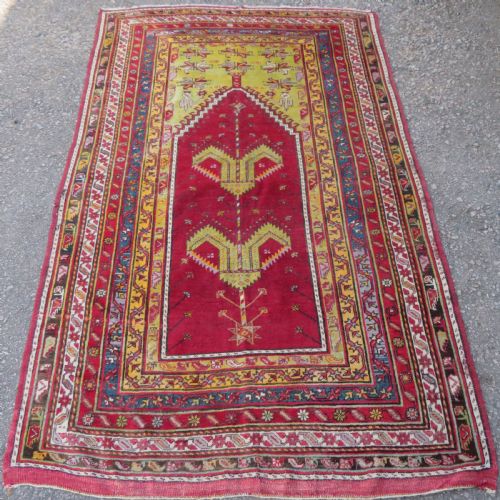
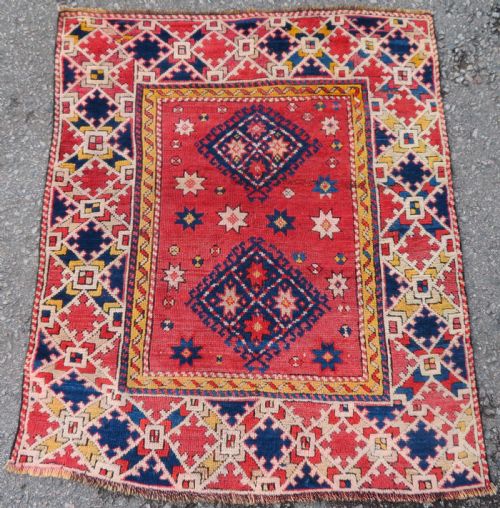
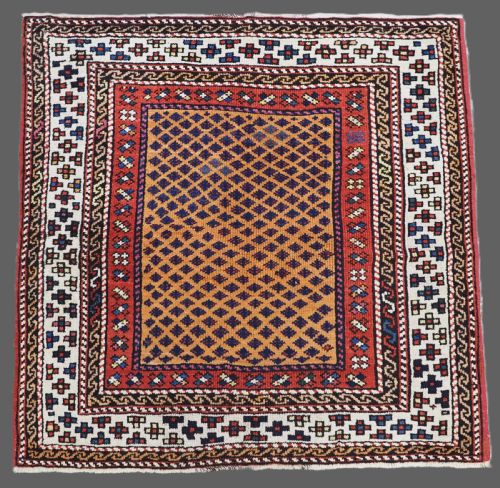


Traditional Turkish Area Mat
These traditional turkish area mat selections bring tactile history into a room, offering distinct village weaves and prayer formats.
Traditional Turkish Area Mat
A traditional turkish area mat encompasses regional village and town weaving traditions originating across Anatolia. Buyers encounter pieces spanning from the eighteenth century through to the early decades of the twentieth century, reflecting diverse local aesthetics.
Originating from specific weaving centres and nomadic groups, these textiles serve both functional floor covering roles and decorative focal points. Village examples display robust rustic character while town workshops produce refined compositions.
How they were made
Weavers utilised natural materials, predominantly wool, cotton, and silk, often employing hand-spun wool for foundation and pile yarns. These fibres absorb natural dyestuffs to create rich, varied surface tones.
The construction relies on traditional hand-knotting techniques executed on vertical looms, producing dense pile structures designed for durability. Foundation warps andwefts commonly alternate between wool and cotton depending on the regional provenance.
Traditional Turkish Area Mat Retail Price Guide 2026
Typical asking prices for traditional turkish area mat among the pieces listed under this phrase on Sellingantiques today, from the lower quarter to the upper quarter. They describe what is for sale here now, not the wider market.
Several village pieces throw in deliberately mismatched borders, proving that weavers enjoyed hiding secret asymmetrical puzzles inside strict geometric layouts.
What varies in quality
Quality rests upon the precision of the knotting and the integrity of the wool foundation. Finer structural density allows intricate geometric and floral motifs to hold sharp definition.
The depth and harmony of the dyestuffs dictate visual success. Superior examples exhibit subtle tonal shifts across the pile, stemming from individual dye lots rather than uniform industrial colour application.
Kirsehir·Bergama·Ghiordes·Ladik·Milas·Kayseri·Ushak Oushak
The Traditional Turkish Area Mat Glossary
- Prayer rug
- A small format textile defined by a central mihrab or architectural arch motif indicating the direction of prayer. These pieces were utilised for personal devotion.
- Mihrab
- The arched niche design element positioned at one end of a prayer rug, representing the direction of Mecca. Weavers adapt this focal point according to regional stylistic traditions.
- Warp
- The longitudinal threads stretched vertically on the loom that form the structural skeleton of the rug. Fringe ends typically display these visible parallel foundation cords.
- Weft
- The horizontal threads passed across the warp strands between rows of knots to secure the pile. This interweaving creates the stable grid underpinning the entire textile.
- Pile
- The vertical tufts of wool, silk, or cotton knotted onto the foundation warps and clipped to form the soft surface. Pile density directly affects how the design reads from a distance.
Traditional Turkish Area Mat: Frequently Asked Questions
How do I identify a prayer rug?
Look for the distinctive pointed arch or mihrab design at one end of the textile. This architectural feature frames the central field and directs the visual flow toward the top.
Such formats were traditionally used for personal devotional practices in homes and regional communities.
Where were these rugs made?
The pieces originate from various towns, villages, and nomadic regions across Anatolia. Specific centres like Bergama, Kirsehir, and Ladik developed distinct local patterns and colour palettes.
Town workshops often produced finer floral compositions, whereas village weavers favoured bold geometric layouts.
How do I care for antique wool rugs?
Place the textile in low-traffic areas and use a breathable underlay to prevent sliding and friction. Vacuum gently with suction only, avoiding rotating brush attachments that pull at the wool fibres.
Professional specialist cleaning remains essential for addressing deep dust accumulation or soil without damaging the historical foundations.
What materials make up the pile?
The pile consists primarily of sheep wool, with occasional pieces utilising hand-spun wool for enhanced texture. Finer town pieces incorporate silk fibres to achieve a lustrous surface finish.
Cotton appears frequently in the foundation structures, particularly for the warp and weft threads supporting the knotted pile.
How do I date these textiles?
Dating relies on stylistic analysis, structural characteristics, and the nature of the dyestuffs used in the wool. Earlier pieces from the eighteenth and early nineteenth centuries often display more organic dye variations and looser structural counts.
Comparative study with documented regional examples helps narrow down the period of production.