


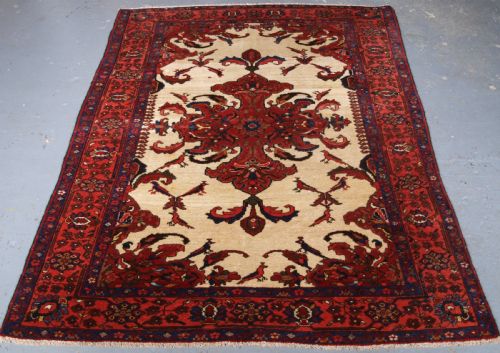


Cream Wool Village Rug
These cream wool village rugs are woven textiles offering traditional patterns and durable foundations for daily interior use.
Cream Wool Village Rug
A cream wool village rug represents a woven floor covering originating from Anatolian and Persian weaving communities during the nineteenth and early twentieth centuries. These pieces typically display traditional village motifs, tribal layouts, or prayer designs rooted in specific regional traditions.
Buyers encountering this selection will predominantly find antique examples from Turkish and Persian centres, including Milas, Kirsehir, Kula, Malayer, Bakhtiar, and Hamadan regions. Production dates span from the mid-nineteenth century through to the nineteen-thirties, reflecting diverse regional aesthetics and tribal customs.
The prevalent format is the domestic floor rug or prayer rug, created by regional weavers using durable materials suited to practical household placement. Such textiles bring historical character and neutral cream grounds to contemporary living spaces.
Distinctions in quality
Quality in these textiles rests upon the fineness of the knotting, the integrity of the wool foundation, and the clarity of the regional design. Finer knot counts allow more intricate rendering of motifs such as floral medallions, birds, or boteh patterns.
The handling of the wool and the depth of the palette significantly influence the visual success of each piece. Superior examples display harmonious colour interactions and well-preserved borders that anchor the central field design.
Cream Wool Village Rug Retail Price Guide 2026
Typical asking prices for cream wool village rug among the pieces listed under this phrase on Sellingantiques today, from the lower quarter to the upper quarter. They describe what is for sale here now, not the wider market.
Listings feature wool, cotton, and hand-spun wool materials across periods spanning the nineteenth century through the nineteen-thirties.
The Cream Wool Village Rug Glossary
- Boteh
- A stylised almond or pear-shaped motif representing a vegetal or floral form. This ancient symbol appears frequently in Persian village weaving.
- Prayer rug
- A small format rug featuring a mihrab or niche design used historically for daily prayer. These pieces often direct the eye toward a central focal point.
- Medallion
- A symmetrical central ornament placed in the field of a rug. Regional weavers arrange surrounding motifs in relation to this central focal geometry.
- Warp
- The vertical foundation threads stretched tightly on the loom before knotting begins. The visible fringes of a rug are typically the extended ends of these structural threads.
- Weft
- The horizontal threads passed across the warp threads between rows of knots to secure the pile. This structural element contributes to the overall stability of the textile.
Cream Wool Village Rug: Frequently Asked Questions
What is a village rug?
A village rug is a hand-knotted textile produced in a rural community rather than a city workshop. These pieces reflect local tribal traditions and domestic weaving practices.
Designs tend to be more geometric and spontaneous than formal urban carpets, utilising readily available regional motifs and materials.
How are these rugs used at home?
These textiles function effectively as floor coverings in living rooms, studies, and bedrooms, providing warmth and texture underfoot. Their neutral cream grounds allow them to integrate easily into diverse interior schemes.
Smaller formats also serve as wall hangings or decorative accents over furniture, protecting delicate historic surfaces while displaying regional artistry.
How do I care for an antique wool rug?
Regular gentle vacuuming without a beater bar removes surface dust and prevents grit from settling into the wool pile. Professional cleaning suited to antique textiles maintains the integrity of the natural fibres.
Avoiding prolonged direct sunlight prevents fading of the soft regional dye palettes over time.
How do I distinguish regional styles?
Regional styles reveal themselves through specific structural foundations, border arrangements, and motif vocabularies unique to areas like Malayer or Hamadan. Anatolian pieces often present distinct prayer niches, whereas Persian village works frequently showcase tribal medallions.
Comparing the handling of the wool and secondary cotton elements provides further clues to geographic origin.