
Traditional Still Life Artwork
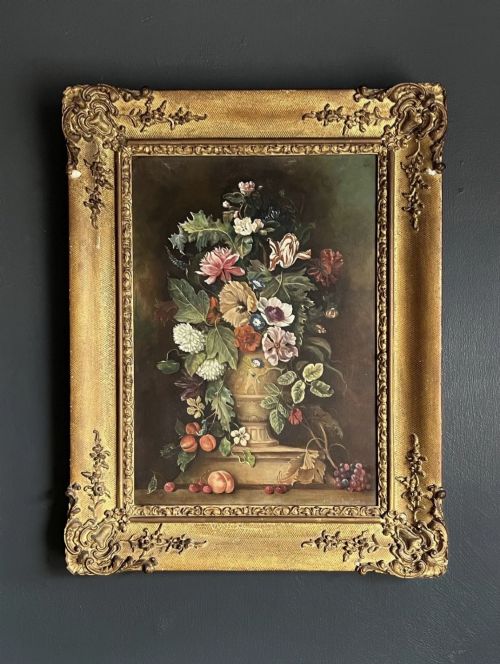
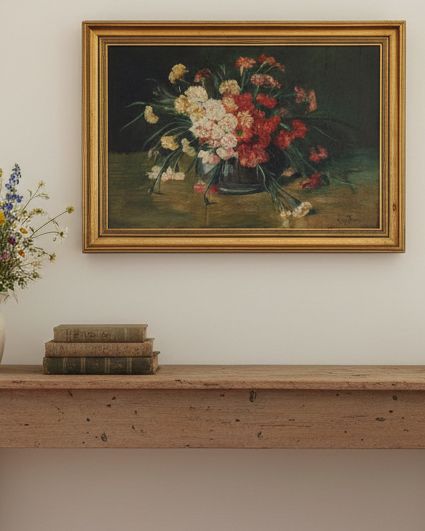
Traditional still life artwork brings together centuries of painted flora, game and fruit to anchor a room with quiet substance.
Traditional Still Life Artwork
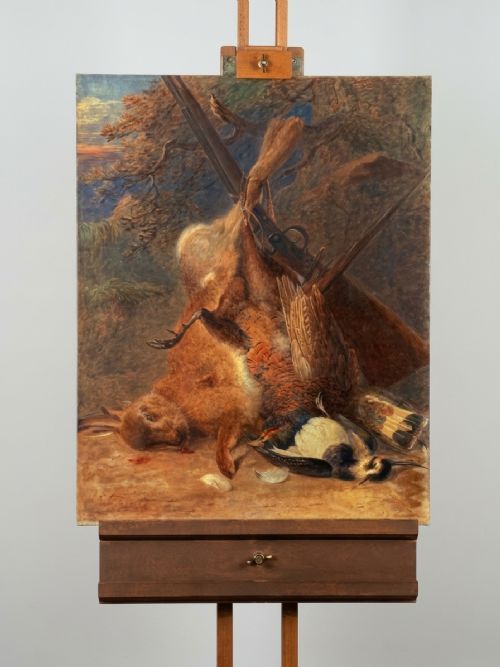
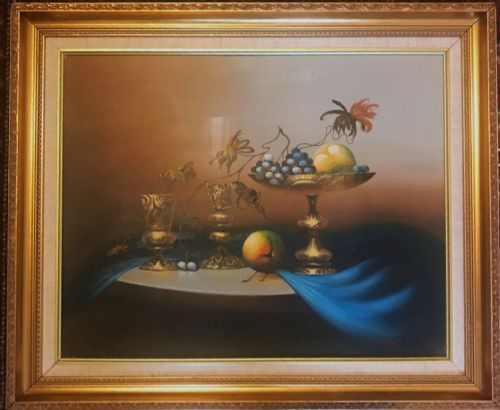
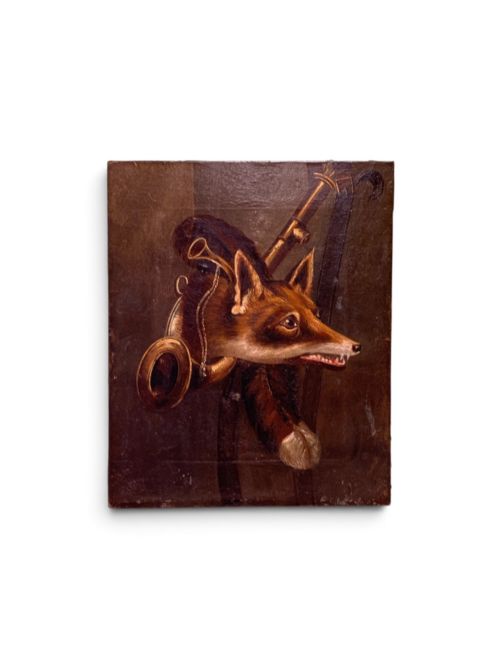
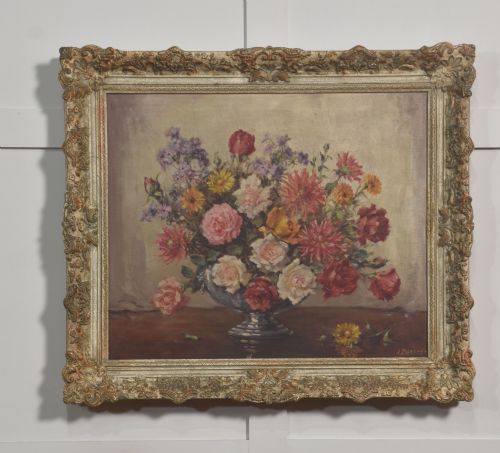
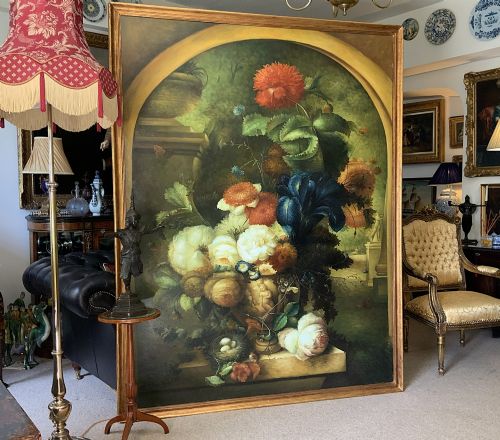
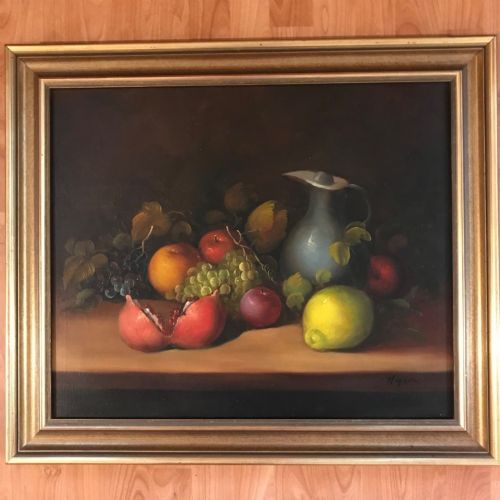
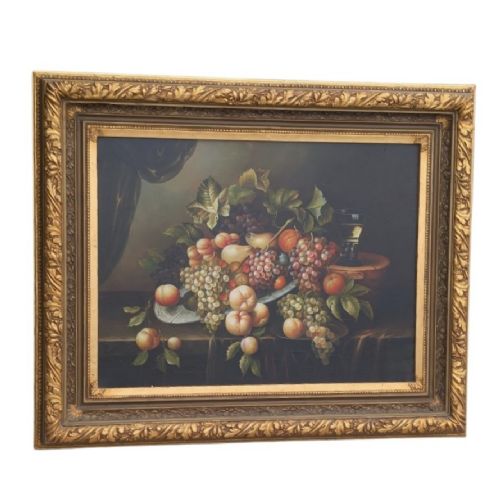
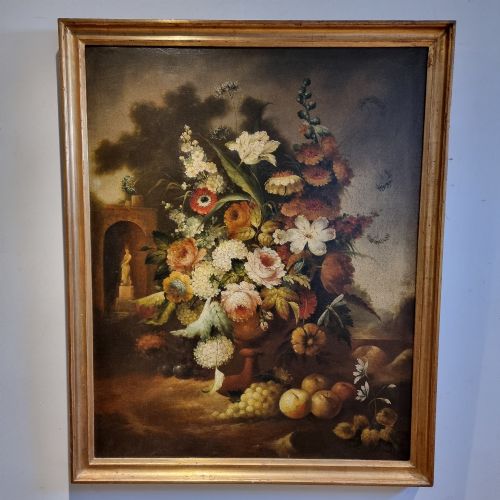
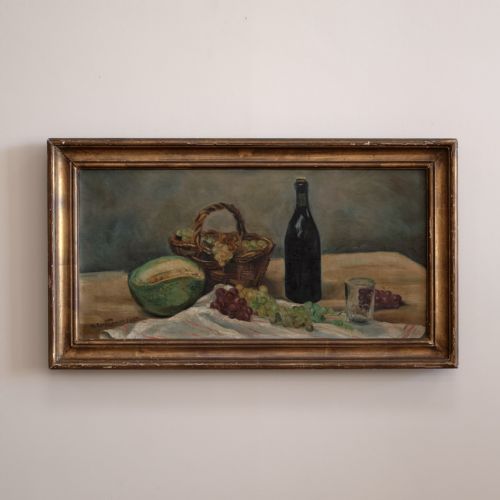
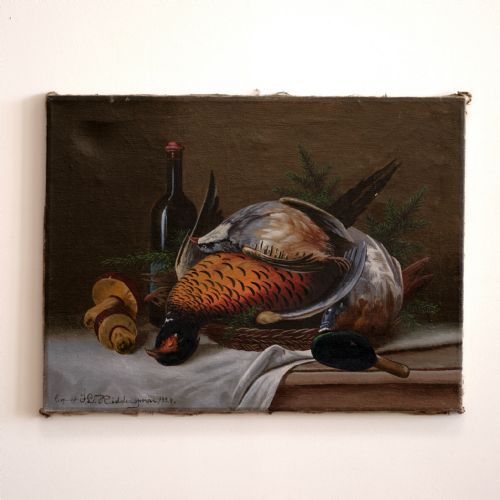
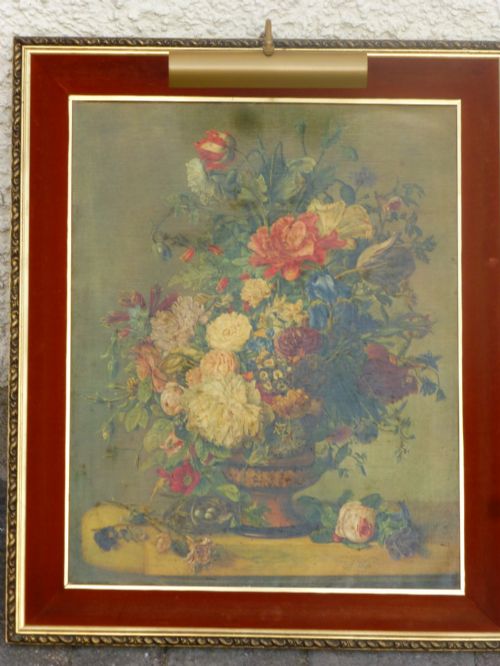
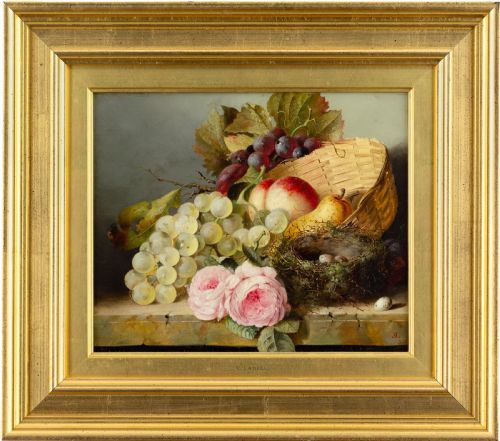
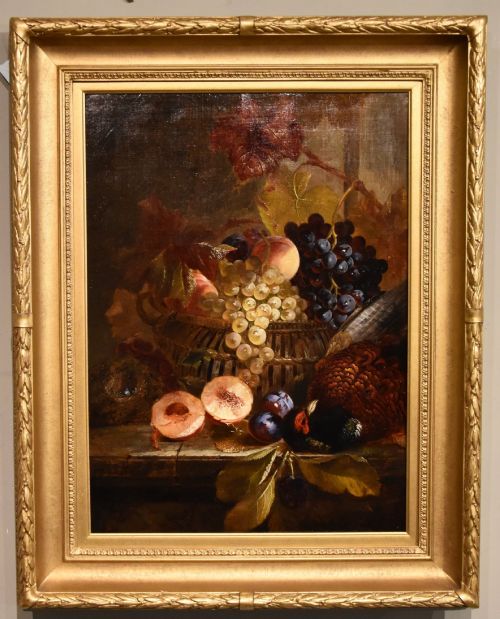
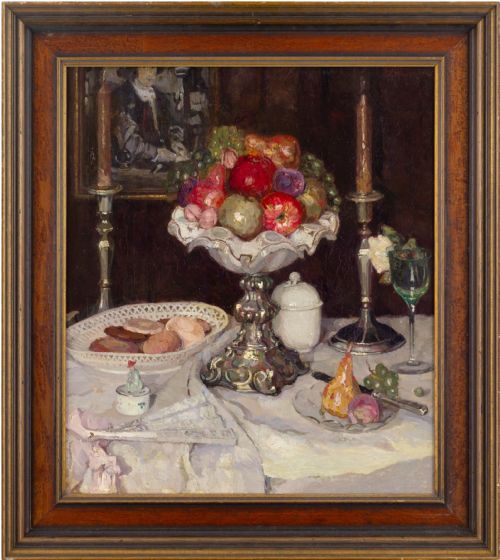
Traditional still life artwork encompasses oil paintings and watercolours depicting carefully arranged subjects such as fruit, flowers, game and larder scenes. Buyers browsing this selection encounter compositions spanning from the nineteenth century through the mid-twentieth century, alongside pieces referencing earlier Dutch and Flemish traditions.
The assortment on this page leans heavily towards canvas supports housed in period frames, capturing subjects from late summer roses and carnations to baskets of apples and pomegranates. Alongside original paintings, one discovers nineteenth-century watercolours and twentieth-century interpretations reflecting classical realist training.
Materials and Construction
The works rely primarily on oil paint applied to canvas or wood panels, though bodycolour and watercolour on paper appear frequently in the earlier selections. Pigments capture the rich textures of fruit skins, delicate petals and feathered game against dark, dramatic backgrounds.
Framing forms an integral part of these pieces, with many works housed in gilded wood or gesso frames that complement the depth and palette of the painted surface.
Traditional Still Life Artwork Retail Price Guide 2026
Typical asking prices for traditional still life artwork among the pieces listed under this phrase on Sellingantiques today, from the lower quarter to the upper quarter. They describe what is for sale here now, not the wider market.
Several canvases capture moments of domestic chaos, recording dogs caught red-handed stealing food from baskets.
Assessing Quality and Execution
Quality rests in the handling of light, shadow and texture, where skilled brushwork gives tactile weight to fruit, porcelain and flora rather than relying on flat colour. The strength of composition and the subtlety of tonal transitions distinguish ambitious studio pieces from more formulaic studies.
The integration of the artwork with its original or period-appropriate frame also contributes to the overall integrity of the piece, as a well-matched gilt setting enhances the depth of the canvas.
GEORGE SYDNEY SHEPHERD·Edward Ladell·William Henry Ward·Arthur Dudley·William Thomas Wood·Frans Snyders·Benjamin Blake·Owen Bowen·William Duffield
The Traditional Still Life Artwork Glossary
- Gesso
- A plaster-like mixture applied to wood frames as a base for gilding. This substance allows craftsmen to mould intricate decorative details before applying gold leaf.
- Bodycolour
- Watercolour mixed with white pigment to make it opaque. This technique adds dense, solid highlights to works on paper.
- Oil Paint
- Pigment suspended in a drying oil such as linseed. This medium allows for slow blending and rich luminosity across canvas surfaces.
- Oleograph
- A mechanical colour print on canvas designed to imitate an oil painting. These reproductions capture the surface texture of original works through specialised pressing.
Traditional Still Life Artwork: Frequently Asked Questions
What subjects are typical in traditional still life artwork?
Traditional still life artwork focuses on arranged inanimate objects, most commonly floral bouquets, gathered fruit, game birds and tabletop assemblies with glassware or tableware.
These subjects allowed artists to demonstrate technical skill in rendering texture, light reflections and botanical accuracy.
How do I date a traditional still life painting?
Dating relies on stylistic clues, the type of canvas or panel support, and the framing materials used. Nineteenth-century works often feature heavier gilt frames and darker palettes, while mid-century pieces show brighter tones and different canvas stretchers.
Signatures, stretcher construction and labels on the reverse also provide clues to the period of creation.
Where were these still life paintings displayed originally?
These paintings were traditionally hung in dining rooms, drawing rooms and libraries of private homes. Larder scenes and fruit arrangements were particularly suited for dining spaces to complement the room's function.
Larger monumental works often hung in reception halls as statements of artistic taste and affluence.
How should I care for an oil still life on canvas?
Oil paintings on canvas require stable indoor humidity and protection from direct sunlight to prevent the paint from cracking or fading. Dusting should be done gently with a soft, dry brush without applying pressure to the canvas surface.
Avoiding extreme temperature fluctuations preserves both the integrity of the oil paint and the underlying wooden stretcher.