


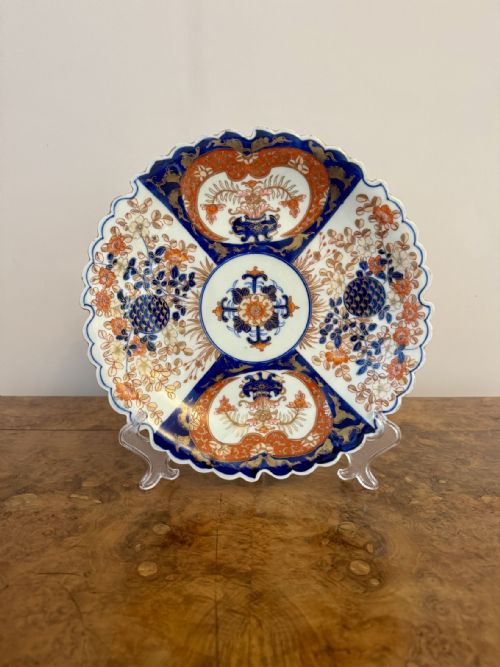
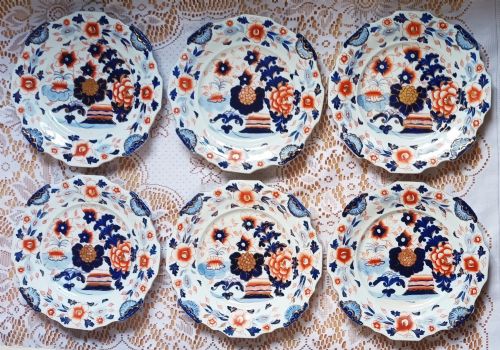


Traditional Painted Imari Porcelain
Traditional painted imari porcelain items are decorative ceramics from Japanese and English makers featuring striking cobalt blue and iron red motifs that bring immediate vibrancy to a room.
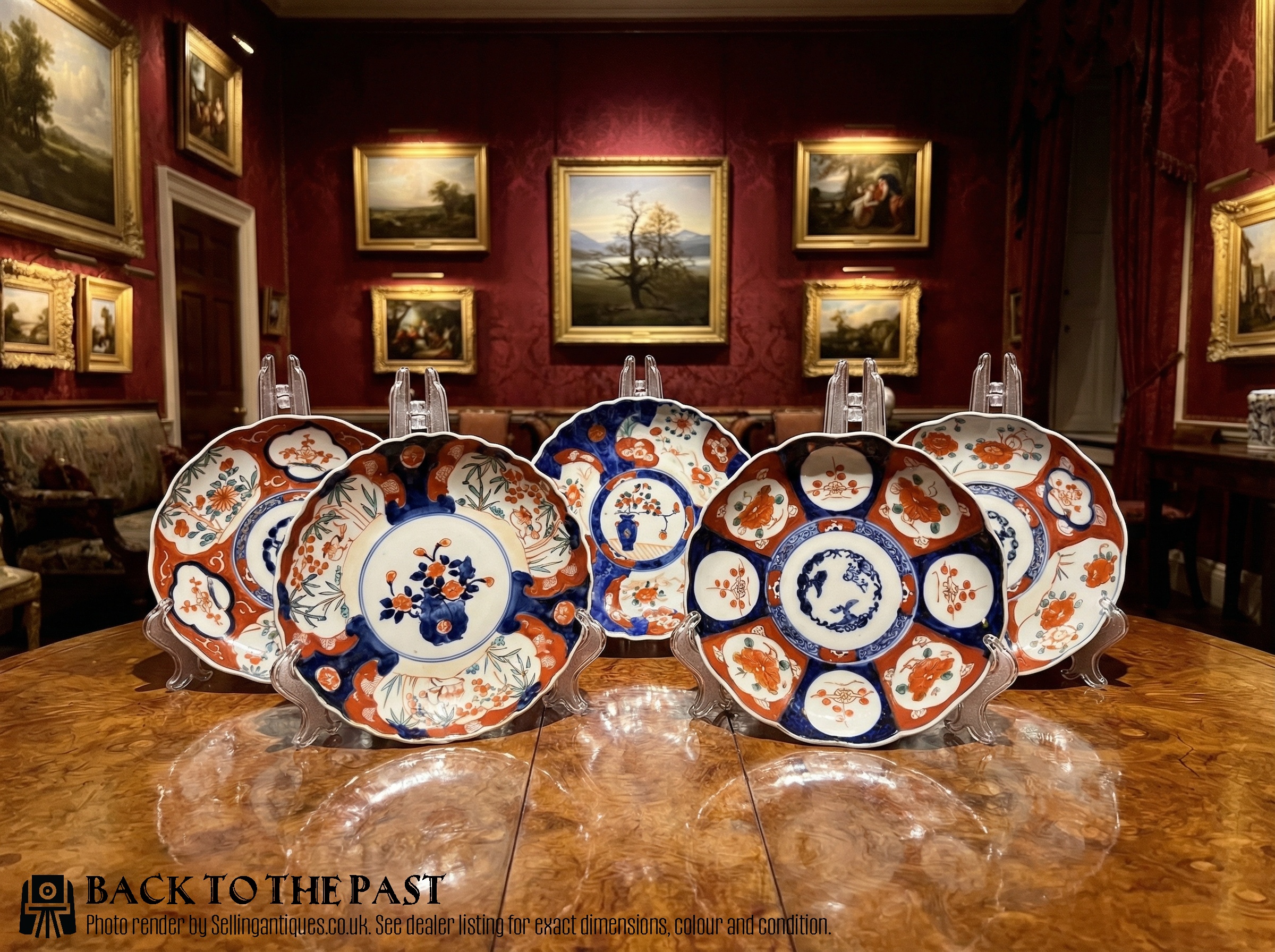
Traditional Painted Imari Porcelain
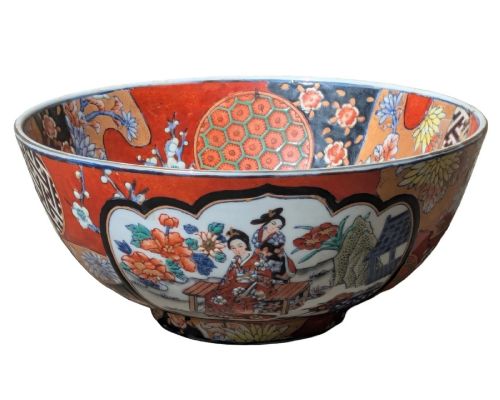
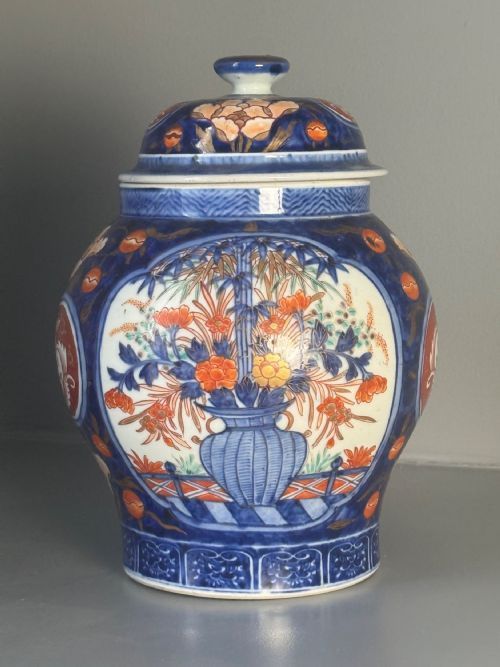
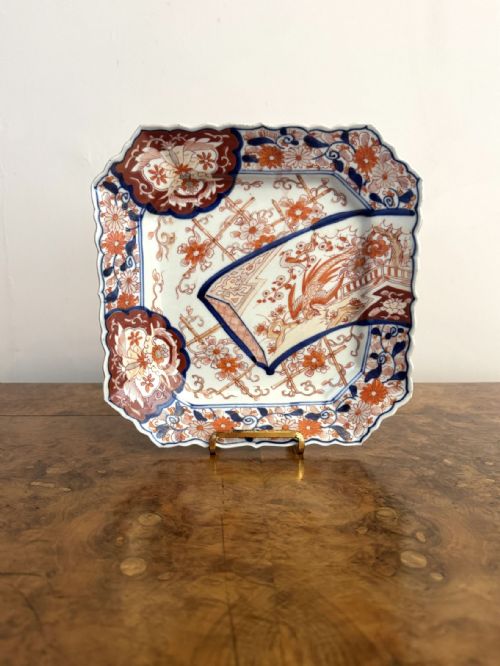
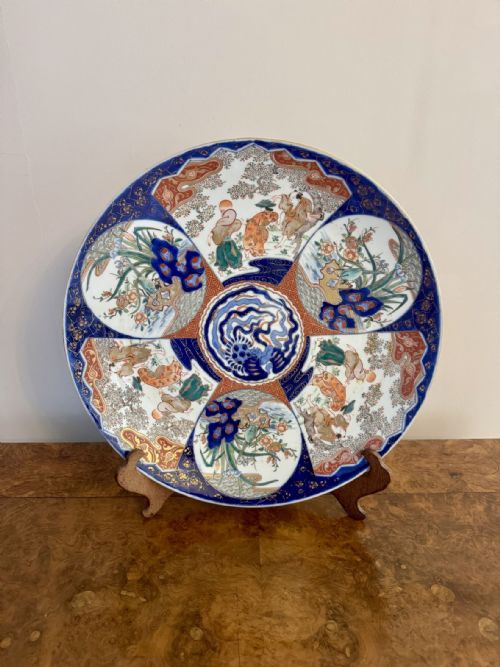
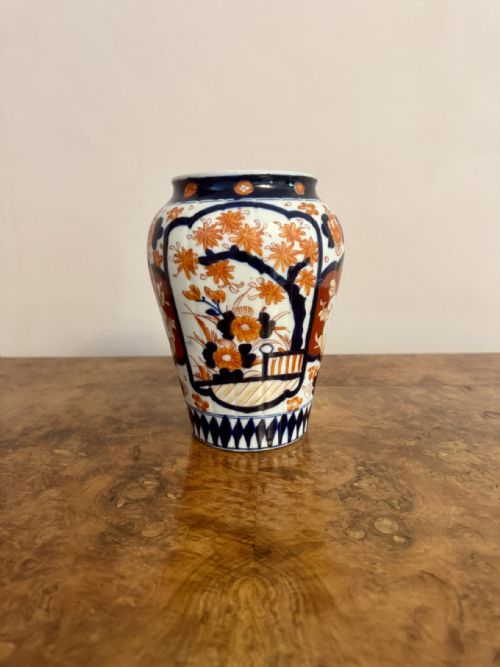
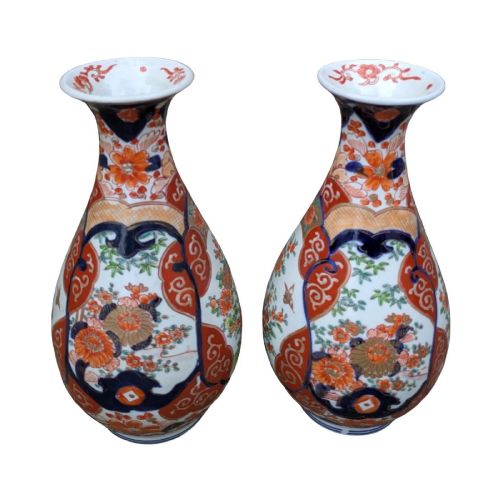
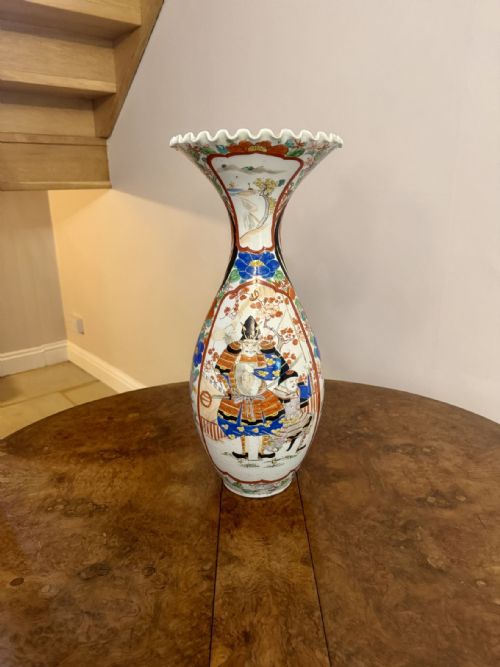
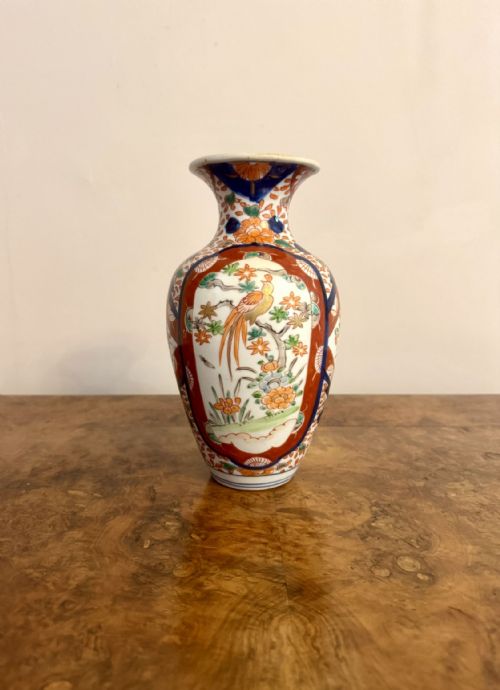
Traditional painted imari porcelain pieces comprise a varied selection of decorative items, most frequently appearing as large chargers, scalloped plates, bowls, and baluster vases. These objects span periods from the nineteenth century through to the early decades of the twentieth century, including Meiji, Showa, and Victorian eras.
The assortment on this page also includes English interpretations of the aesthetic, such as Georgian ironstone china plates utilising the Japan pattern and nineteenth-century pieces from Chinese export and Royal Crown Derby workshops. Japanese examples dominate the selection, showing distinct forms such as square-shaped plates and lidded vessels.
How they were made
Makers formed these pieces from ceramic and porcelain bodies, applying cobalt underglaze beneath clear protective coats to establish the foundational blue tones. Artisans then added enamel colours by hand, layering rich iron red pigments across the surface to build the characteristic palette.
Many examples incorporated gold leaf, gilt, and intricate gilding applied over the glaze to highlight specific decorative sections. Potters shaped these items into specific silhouettes like baluster vases and scalloped plates before firing them in kilns.
Some nineteenth-century potters were so keen on symmetry they painted identical floral secrets hidden on the unseeable base of a bowl.
What varies in quality
Quality in traditional painted imari porcelain rests upon the precision of the hand-painted brushwork and the complexity of the palette. Pieces designated as fine or outstanding display tightly controlled cobalt underglaze lines and carefully applied enamel details that remain crisp and vivid.
The application of gold leaf and gilding also dictates the grade of a piece, with superior examples showing lavish yet refined use of gold that elevates the visual depth of the ceramic body.
The Traditional Painted Imari Porcelain Glossary
- Charger
- A large decorative plate intended for display rather than standard dining use. These items form a major part of traditional imari collections.
- Cobalt Underglaze
- A blue pigment applied directly to the raw ceramic body before glazing and firing. This technique ensures the deep blue colour remains permanent and protected beneath the surface.
- Enamel
- Opaque glass-like pigments applied over the fired glaze to introduce vibrant colours such as iron red. Artisans fire the piece a second time to bond these decorative layers.
- Gilt
- A thin layer of gold applied to the surface of the porcelain or ceramic body. This material adds metallic lustre to highlight specific painted motifs.
- Scalloped
- A decorative edge shaped into a series of continuous curves resembling a scallop shell. This shaping appears frequently on antique plates and bowls.
Traditional Painted Imari Porcelain: Frequently Asked Questions
How do I display traditional imari porcelain?
Large chargers and decorative plates suit wall mounting or placement on plate stands within cabinets. Vases and bowls look best on stable wooden surfaces where their colourful patterns catch natural light.
Keep these ceramic items away from direct sunlight to protect the enamel colours and gilding from fading over prolonged periods.
Are these pieces from Japan or England?
The majority of items originate from Japanese kilns, spanning the Meiji and Showa periods. You will also find nineteenth-century English ironstone and porcelain pieces that replicated the aesthetic.
Examine the potting style and glaze characteristics to determine whether a piece follows traditional Japanese export methods or later English interpretations.
How do I clean antique imari porcelain?
Dust these decorative items gently using a soft, dry brush or a clean microfibre cloth. Avoid submerging antique pieces in water, particularly those with delicate gold leaf or overglaze enamels.
Professional conservation advice should be sought if an item requires deeper cleaning to preserve the integrity of the ceramic body.
What periods do these pieces date from?
The selection spans the nineteenth and twentieth centuries, encompassing Victorian, Edwardian, Meiji, and Showa eras. Many items date specifically around the late nineteenth and early twentieth centuries.
Stylistic shifts in the brushwork and the composition of the ceramic body help collectors differentiate between earlier nineteenth-century items and later twentieth-century pieces.