





Scalloped Japanese Export Porcelain
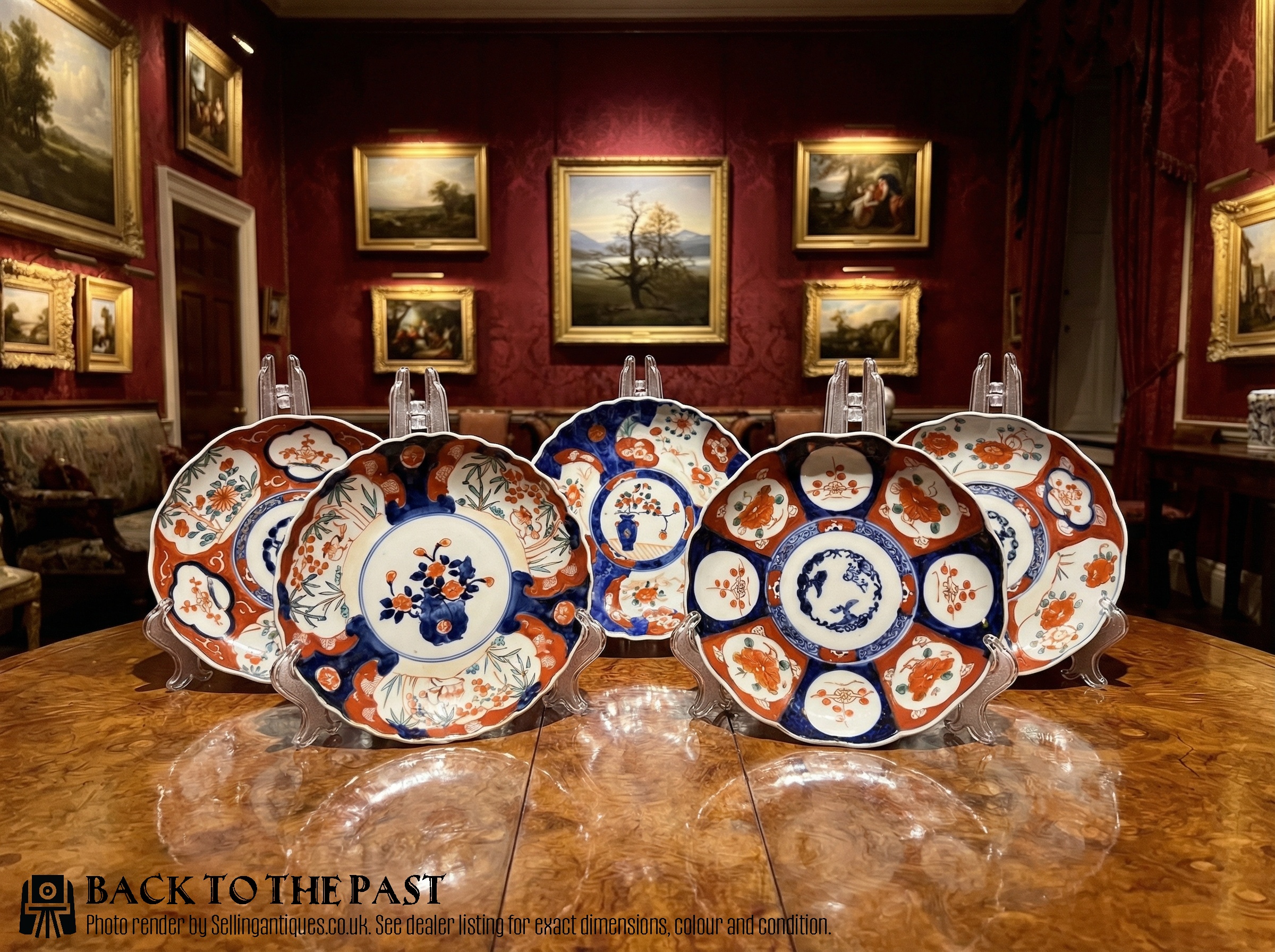
Scalloped Japanese export porcelain brings intricate cobalt blue, iron red, and gold leaf into rooms that need weight and pattern.
Scalloped Japanese Export Porcelain
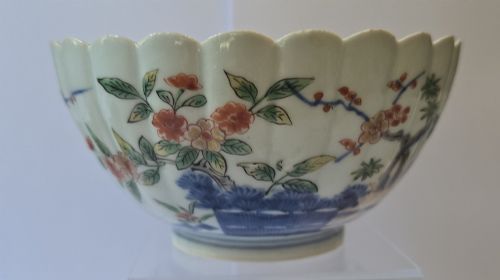
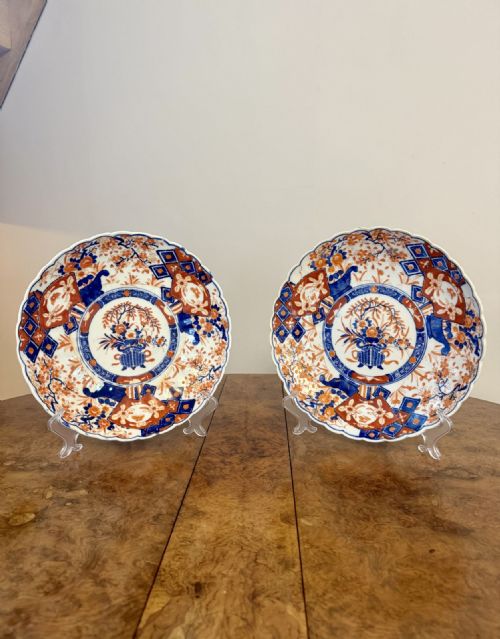
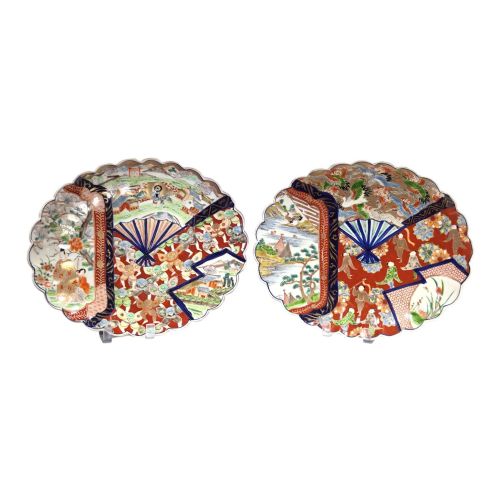
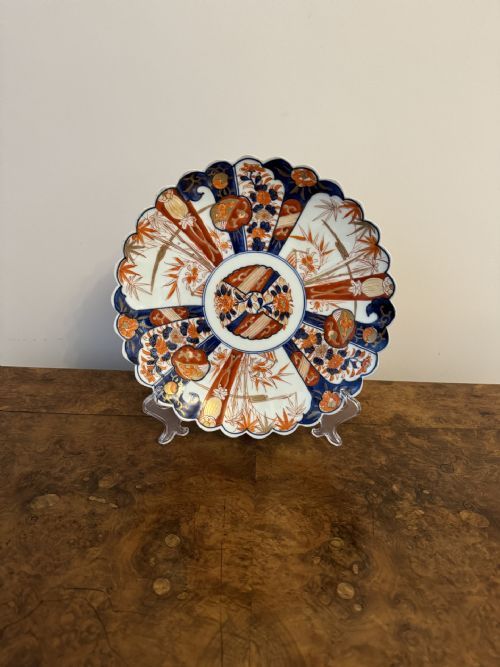
Scalloped Japanese export porcelain comprises decorative plates, chargers, bowls, and vases produced in East Asia for Western markets across several centuries. When searching for scalloped Japanese export porcelain, collectors encounter forms ranging from large 17th-century Edo period chargers to 19th-century Imari plates and Edwardian vessels.
The objects span periods from the 17th century through the Victorian, Edwardian, and Meiji eras, showing characteristic fluted and shaped rims. Buyers most frequently meet Imari wares featuring distinct compartmentalised motifs alongside cobalt underglaze and enamel pigments.
How they were made
Potters shaped hard-paste porcelain on the wheel or in moulds before trimming the edges into distinctive scalloped and fluted profiles. Cobalt pigment was applied under the glaze to create deep blue outlines and details before the initial firing.
Overglaze enamels in iron red and other colours were added in subsequent firings, frequently accented with gold leaf and gilt work. This layered technique produced the dense surface patterns seen on Arita and Imari wares.
Scalloped Japanese Export Porcelain Retail Price Guide 2026
Typical asking prices for scalloped japanese export porcelain among the pieces listed under this phrase on Sellingantiques today, from the lower quarter to the upper quarter. They describe what is for sale here now, not the wider market.
Materials recorded across current inventory include cobalt underglaze, enamel, gold leaf, and gilt.
What varies in quality
Quality rests in the crispness of the moulded edge and the stability of the porcelain body during high-temperature firing. Finer examples maintain precise symmetry in their fluted rims and clean separation between painted panels.
The depth and brilliance of the cobalt underglaze, combined with the careful application of enamel and gold leaf, distinguish standard domestic wares from exceptional export pieces. Brushwork vitality in depicting exotic birds and floral motifs also determines the standing of an individual bowl or charger.
The Scalloped Japanese Export Porcelain Glossary
- Imari
- A style of Japanese export porcelain characterised by a palette of cobalt blue, iron red, and gilt. The style originated in the town of Arita and was shipped through the port of Imari.
- Meiji Period
- The era in Japanese history spanning from 1868 to 1912, associated with increased trade and export of decorative arts to Western markets. Pieces from this time often exhibit elaborate enamel work.
- Edo Period
- The period of Japanese history lasting from 1603 to 1868, during which early blue and white export chargers were produced. Surviving examples from this time show robust potting and deep cobalt tones.
- Cobalt Underglaze
- A blue pigment applied to the raw porcelain body before glazing and firing, which reacts to high heat to produce a permanent rich blue colour. It forms the structural foundation of traditional Imari designs.
- Hard-paste Porcelain
- A dense, vitrified ceramic material made from kaolin and petuntse, fired at high temperatures. This composition gives export wares their durability and resonant ring when struck.
Scalloped Japanese Export Porcelain: Frequently Asked Questions
Are these pieces safe for food?
Historic export ceramics are intended for display rather than modern dining use. Older glazes and enamels can contain trace elements that react with acidic foods.
Display chargers and bowls on stands or hang wall plates securely using padded brackets. Enjoy them as visual focal points in your living spaces.
How do I date a charger?
Examine the weight of the porcelain body, the tone of the cobalt pigment, and the style of the hand-painted motifs. Earlier Edo and 17th-century pieces often present heavier potting and deeper cobalt hues.
Later Victorian and Edwardian examples show finer enamel work and brighter gilding. Comparing foot rings and baseline wear helps confirm the production era.
Can I hang wall plates safely?
Use spring-loaded brass hangers with plastic or rubber tubing protecting the rim from metal contact. Ensure the fixing in the wall is anchored securely to support the weight of larger chargers.
Position plates away from direct sunlight and high traffic areas to prevent accidental knocks. Check the tension of the hangers periodically.