
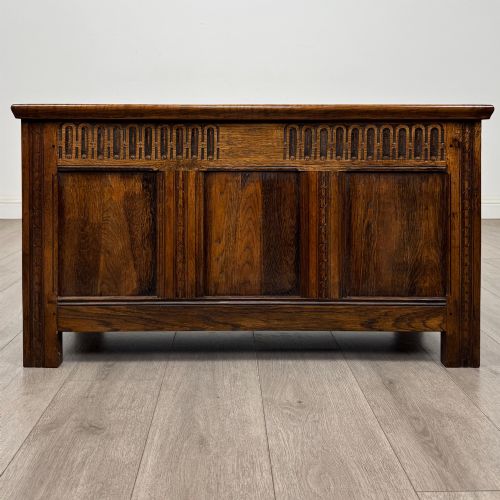

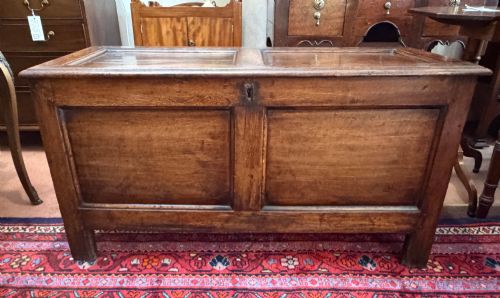
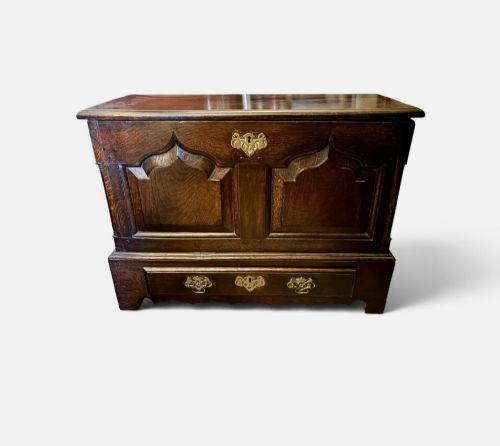
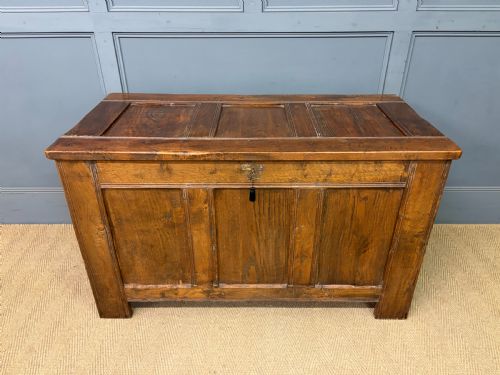
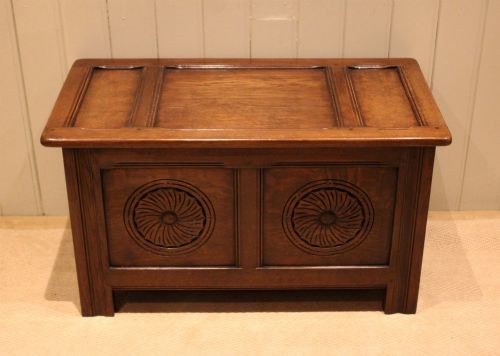
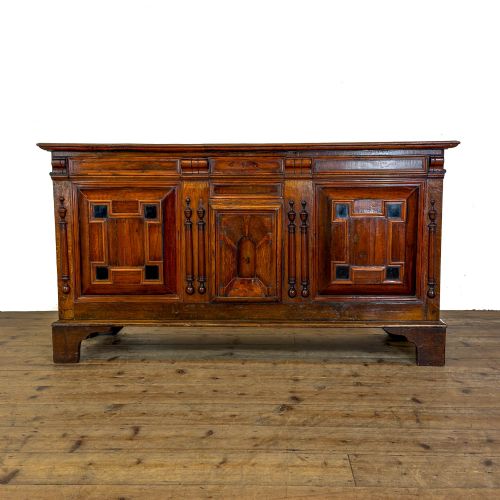
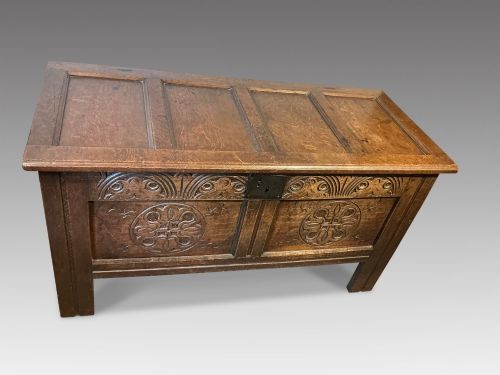
Traditional Oak Coffer Trunk
A traditional oak coffer trunk brings centuries of robust English craftsmanship and honest storage directly into a modern interior.
Traditional Oak Coffer Trunk
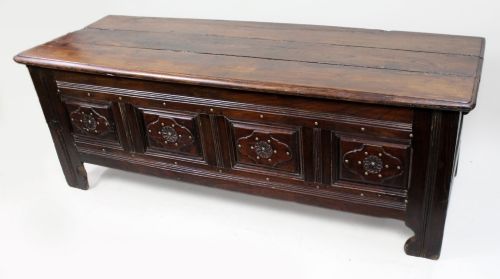
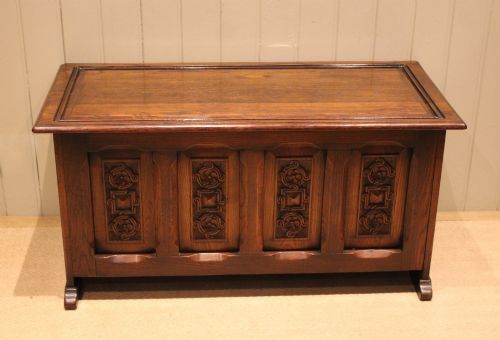
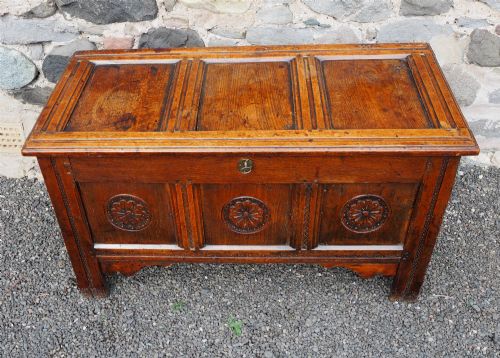
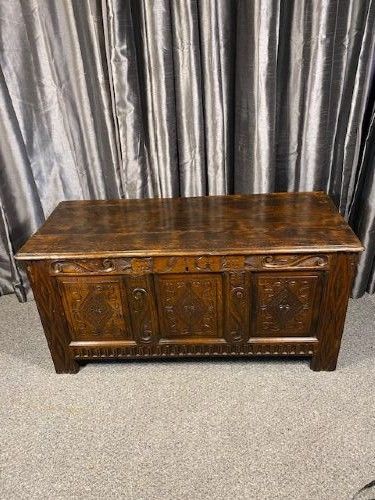
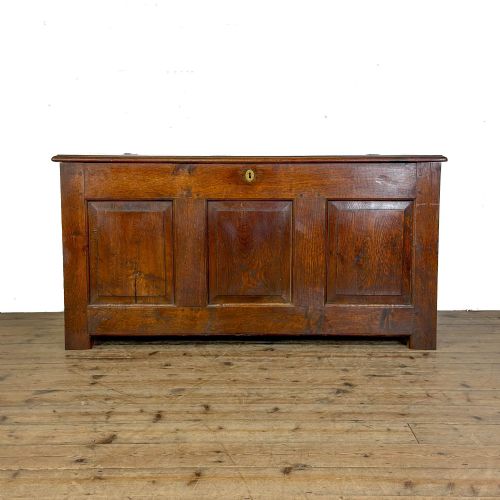
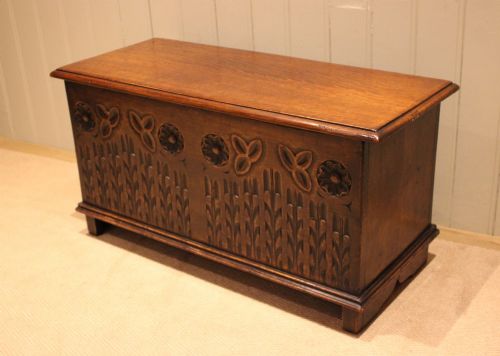
A traditional oak coffer trunk serves as a foundational storage chest, appearing in various forms from simple blanket boxes to fitted mule chests with lower drawers. Buyers searching this phrase most frequently encounter pieces originating from the seventeenth and eighteenth centuries, alongside later revival interpretations.
The regional variations span English country workshops, Welsh vernacular pieces, and French provincial examples. These items often double as functional blanket chests or occasional tables while retaining their historic character.
Materials and construction methods
Makers constructed these storage pieces primarily from solid oak, frequently enhanced with burr elm panels, pine internal elements, and wood inlay. Metal fittings in iron and brass provided structural reinforcement and functional hinges.
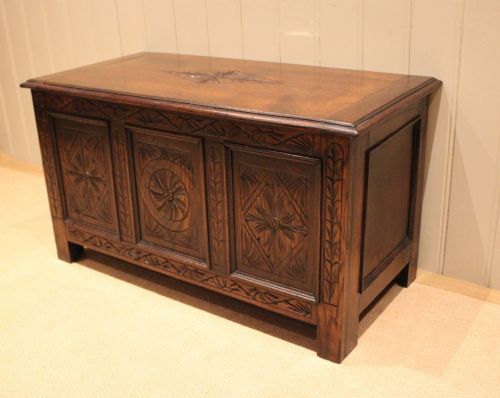
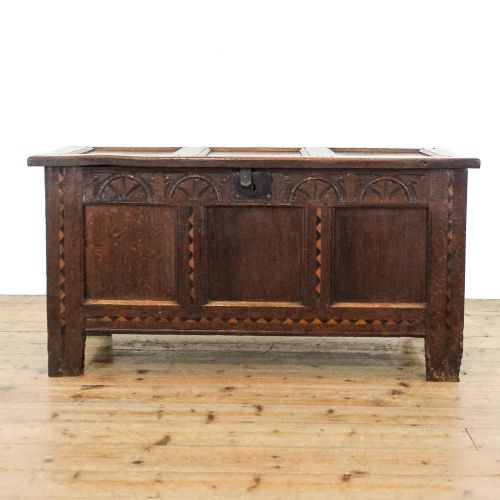
Joinery techniques relied heavily on panelled frames and carved detailing. Ebonised wood accents occasionally feature alongside traditional carved surfaces to create visual depth.
The listings on this page span the sixteenth century through the Edwardian era, featuring solid oak, burr elm panels, and iron hardware.
Distinctions in construction and surface
The standard of carving and the integrity of the timber frame distinguish finer examples from simpler provincial work. Crisp, deep carving and well-figured solid oak panels elevate a piece above standard utility items.
The presence of original hardware, such as iron or brass hinges and locks, preserves the historical integrity of the trunk. Coherence between the primary oak structure and secondary woods like pine dictates the overall quality.
The Traditional Oak Coffer Trunk Glossary
- Coffer
- A large wooden chest traditionally used for storing valuables, linens, or documents. These pieces often feature hinged lids and sturdy boarded or panelled construction.
- Mule chest
- A storage chest featuring one or more drawers beneath the main compartment. This form emerged in the eighteenth century to provide more accessible storage than a standard top-opening coffer.
- Panelled
- A method of construction where a frame holds thin wooden panels in grooves, allowing the timber to expand and contract with humidity. This technique prevents the wood from splitting over centuries.
- Ebonised
- Wood treated with a chemical stain or finish to imitate ebony. Makers utilised this dark finish to create contrast on mouldings and details.
Traditional Oak Coffer Trunk: Frequently Asked Questions
How do I date an old oak coffer?
Dating relies on examining the construction methods, tool marks, and style of carving. Seventeenth-century examples typically display pegged frame and panel joinery with hand-split boards.
Later pieces from the eighteenth century or the revival periods often incorporate machine-sawn timber or different secondary woods in the interior structures.
What is the difference between a coffer and a mule chest?
A standard coffer opens only from the top lid to access the internal storage space. This design suits bulky items like blankets and textiles.
A mule chest adds one or more drawers beneath the main box, allowing users to retrieve smaller items without lifting the heavy top lid.
Where should I place a traditional oak trunk at home?
These robust chests function effectively as blanket storage at the foot of a bed or as a coffee table in a living room. Their flat lids provide a stable surface for display while keeping clutter hidden inside.
Keep them away from direct heat sources and strong sunlight to protect the historic oak timber.
What maintenance does antique oak require?
Historic oak benefits from occasional applications of natural beeswax to nourish the dry timber and maintain a soft sheen. Avoid modern silicone polishes that can build up on the antique surface.
Maintain a stable room humidity to prevent the solid panels from warping or cracking over time.