


Traditional Mahogany Gateleg Table
A traditional mahogany gateleg table offers clever space-saving folding leaves supported by swinging legs, bringing rich timber warmth and practical versatility to any room.
Traditional Mahogany Gateleg Table
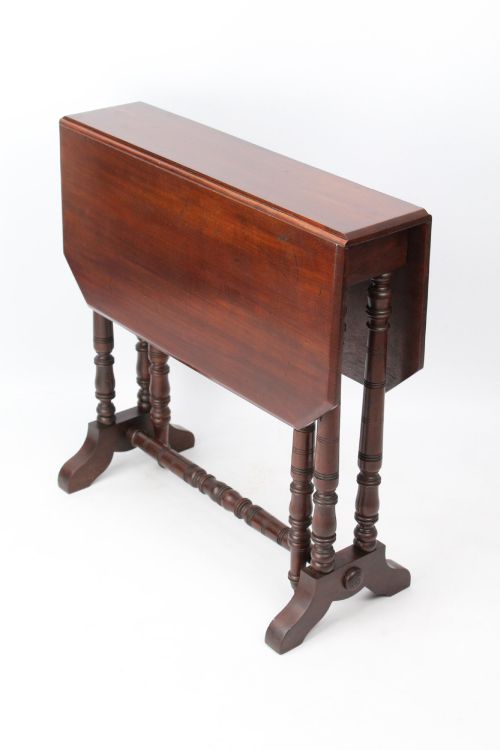
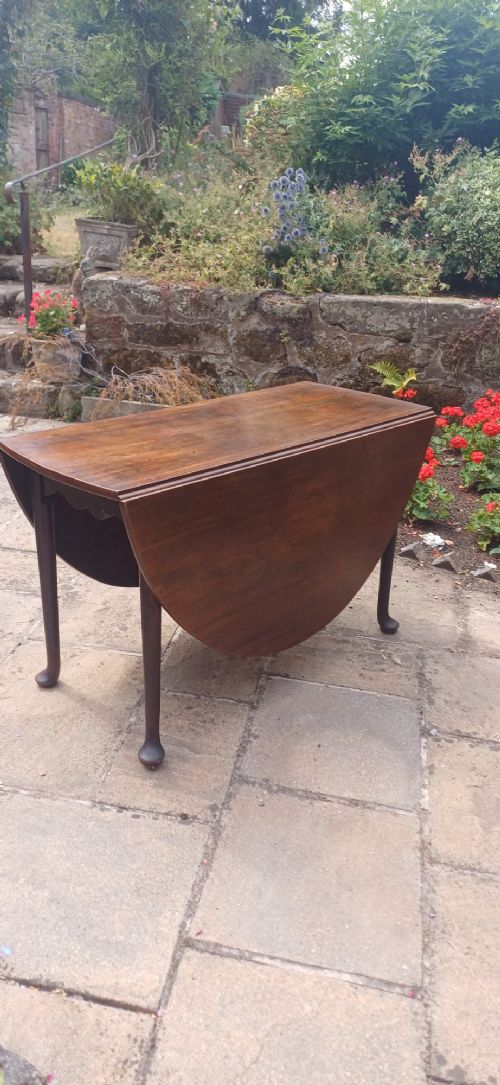
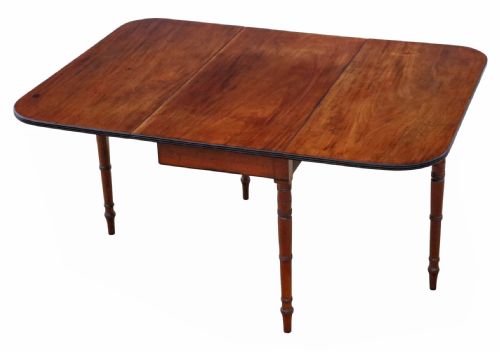
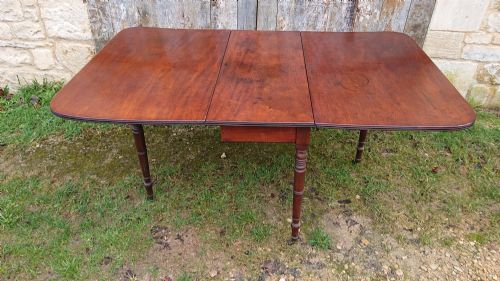
A traditional mahogany gateleg table takes several forms across the Georgian, Victorian, and Edwardian periods, including large dining versions alongside smaller occasional and coffee tables. Buyers most frequently encounter drop leaf and Sutherland designs featuring hinged flaps that expand the surface area when needed.
The selection ranges from eighteenth-century examples to early twentieth-century revivals like the 1930s traditional and Jacobean Revival styles. Pieces vary from compact spider leg tables and cottage diners to large dining tables intended to seat up to eight people.
Materials and construction
Makers utilised solid mahogany, sometimes accented with stringing in boxwood and satinwood, paired with structural iron and brass hinges to support the swinging drop leaves. The timber provides a deep reddish-brown grain that takes a polished finish.
Structural support relies on ingenious gateleg actions, where hinged legs swing outward to hold the extended leaves, alongside specialised leg designs including barley twists and slender spider legs.
Listings span the Georgian, Victorian, and Edwardian eras, featuring mahogany alongside brass, iron, boxwood, and satinwood.
Judging the work
Quality rests in the timber selection and the precision of the joinery where the swinging gateleg meets the main frame. Superior examples display carefully matched mahogany grains across the top leaves and solid construction that remains stable when fully extended.
Proportion and refinement separate standard items from finer pieces, such as those built during the George III period with delicate turning or well-executed spider leg framing. The integrity of the original brass and iron hardware further distinguishes better examples.
The Traditional Mahogany Gateleg Table Glossary
- Gateleg table
- A table with hinged leaves supported by legs that swing outward like a gate. This clever design allows the table to fold flat when not in use.
- Sutherland table
- A narrow drop leaf table with particularly slender legs and leaves that fold down almost vertically. They were introduced in the Victorian era to save floor space.
- Spider leg table
- A delicate table featuring exceptionally thin turned legs that provide lightweight support. These are commonly found on smaller occasional and tea tables.
- Drop leaf table
- A table with a fixed central section and hinged flaps on either side that lift up. Brackets or swinging legs hold the flaps in place.
Traditional Mahogany Gateleg Table: Frequently Asked Questions
How do you fold a traditional mahogany gateleg table?
Lift the hinged leaf slightly to release any weight from the support mechanism, then swing the supporting leg inward toward the centre frame.
Lower the leaf gently downward so it hangs vertically at the side of the table, leaving the central fixed section accessible.
Were these tables used for dining?
Larger versions built during the Georgian and Victorian periods served as everyday dining furniture that could be tucked away against a wall between meals.
Smaller iterations, including Sutherland and spider leg tables, were designed for tea, occasional use, or compact cottage living.
How can you tell a Georgian table from an Edwardian one?
Georgian tables often feature simpler, robust structural lines or period characteristics like Chippendale styling in solid mahogany.
Edwardian interpretations tend to include lighter proportions, coffee table heights, or specific variations like double spider legs.
How do you maintain a mahogany finish?
Dust the surface regularly with a soft, dry cloth and avoid placing the timber in direct sunlight or near heat sources.
Apply a traditional wax polish occasionally to nourish the wood and maintain its natural lustre without building up heavy residue.