
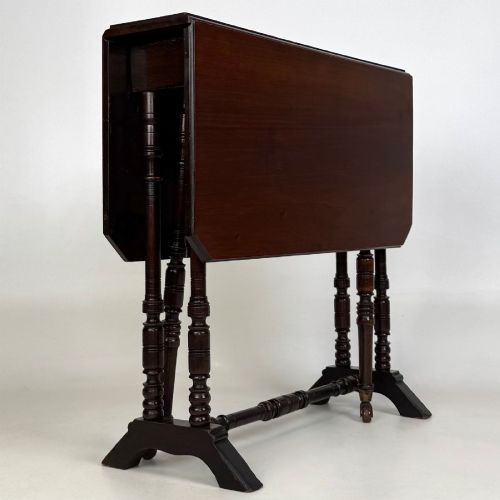
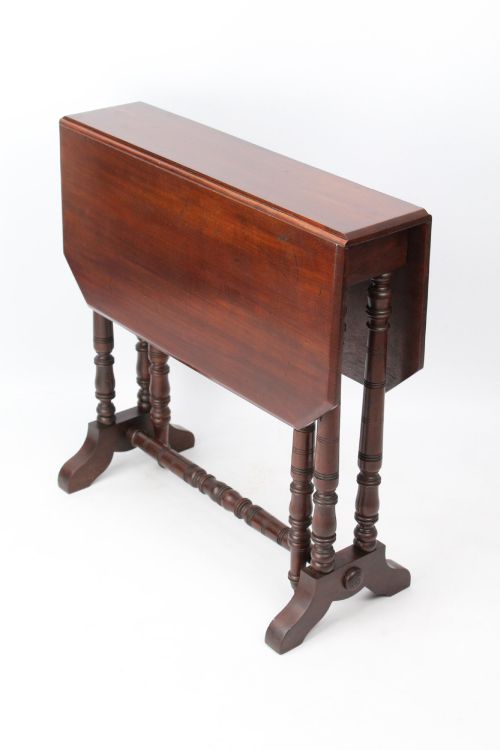


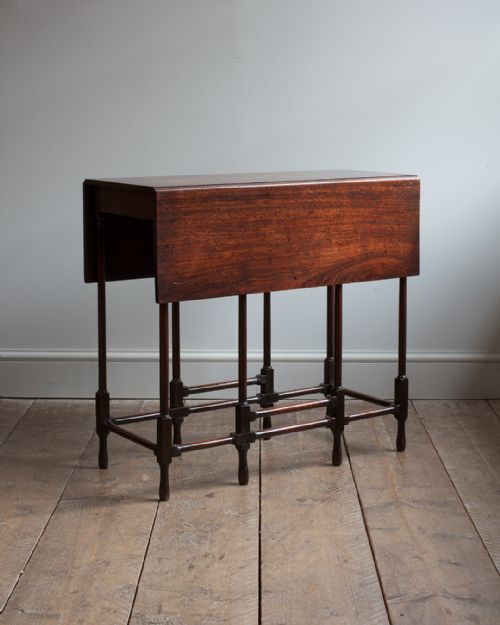
Compact Mahogany Gateleg Table
A compact mahogany gateleg table is a space-saving folding timber surface designed for flexible dining and occasional use.
Compact Mahogany Gateleg Table
When you search for a compact mahogany gateleg table, you look at drop-leaf folding furniture intended to maximise floor space in smaller rooms. These pieces feature hinged leaves supported by swing-out legs that pivot from the frame, operating as occasional tables, coffee tables, or small dining tables.
The versions you meet most frequently on this page belong to the Edwardian period and the Victorian era, alongside Georgian and 18th Century examples. They span forms such as Sutherland tables, spider leg tables, and drop-leaf supper tables.
Makers constructed these tables with oval or rectangular tops that fold down into slim profiles when not in use. You find them utilised in studies, sitting rooms, and compact dining spaces where adaptability matters.
Materials and construction
Cabinet makers relied primarily on solid mahogany and mahogany veneers for the main structure, tabletops, and swing legs. They often selected dense timber to withstand the constant movement of folding leaves and gateleg hinges.
Workshops integrated secondary materials like brass for castors and hinges, alongside decorative accents in satinwood, boxwood, and ebonised mahogany. Inlaid banding and contrasting stringing appeared on Edwardian and revival pieces to frame the mahogany surfaces.
Joinery techniques focused on sturdy pivot joints and gate mechanisms capable of supporting cantilevered leaves. Craftsmen ensured the slender legs of spider tables and Sutherland variants remained stable under everyday weight.
Several tables fold down so slim they could practically hide behind a grandfather clock.
Assessing quality in folding tables
The integrity of the gateleg pivot mechanism and the smoothness of the hinge action separate standard domestic pieces from finer workshop productions. Superior examples maintain firm leaf support without sagging or wobbling when extended.
Timber selection and grain matching across the drop leaves dictate visual harmony when the table opens fully. Workshops that utilised finely figured mahogany and crisp satinwood inlay achieved a more coherent surface finish.
The refinement of the leg turning, particularly on spider leg and slender gateleg variants, demonstrates the maker's skill. Thicker, clumsier turnings contrast with the crisp detailing found on George III and well-executed Edwardian pieces.
The Compact Mahogany Gateleg Table Glossary
- Gateleg table
- A table with hinged leaves supported by one or more legs that swing outward like a gate. This design allows the surface area to expand or contract swiftly.
- Sutherland table
- A narrow drop-leaf table featuring exceptionally slender legs and leaves that fold down almost vertically. It originated in the Victorian era as a space-saving tea or occasional table.
- Spider leg table
- A small occasional table characterised by extremely thin, delicate turned legs. They provide lightweight support for compact drop-leaf surfaces.
- Drop-leaf table
- A table with a fixed centre section and movable flaps on either side. These flaps drop down when unsupported by swing legs or brackets.
- Satinwood inlay
- Decorative wood ornamentation inserted into recesses within the primary mahogany surface. Craftsmen used this technique to create contrasting borders and geometric patterns.
Compact Mahogany Gateleg Table: Frequently Asked Questions
How do I use a compact gateleg table daily?
You keep the leaves dropped against the sides to use the piece as a narrow console or hall table. When guests arrive or extra surface area is required, you swing out the supporting legs and raise the leaves.
Position the table away from direct heat sources to prevent the mahogany timber from drying out and warping. Ensure you lift the leaves gently rather than letting them drop hard onto the frame.
How do I date an antique mahogany drop-leaf table?
You examine the timber colour, secondary woods, and construction methods used in the frame and drawer linings. Georgian examples often display deep patination and hand-cut joinery, while Edwardian pieces frequently incorporate satinwood inlay and factory-standard brass hinges.
Look at the turning style of the legs and the shape of the drop leaves. Rounded corners and ebonised highlights point towards the later Victorian and Edwardian revivals.
Will a small gateleg table seat four people?
Certain larger Sutherland and supper table variants can accommodate four people for light dining when fully extended. Their drop-leaf design creates a square or oval surface once both flaps are raised.
Check the clearance beneath the frame and the position of the swing legs to ensure diners have adequate knee room. Smaller occasional and coffee table versions are not built for dining seating.