




Traditional Mahogany Floor Mirror
A traditional mahogany floor mirror gives a room both deep timber tone and full-length reflection.
Traditional Mahogany Floor Mirror
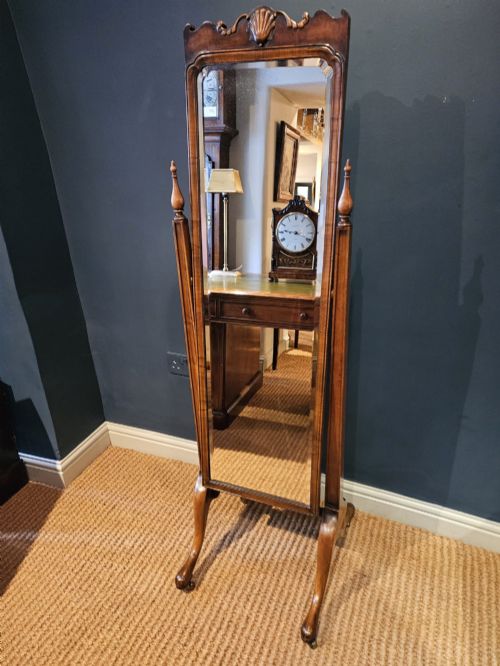
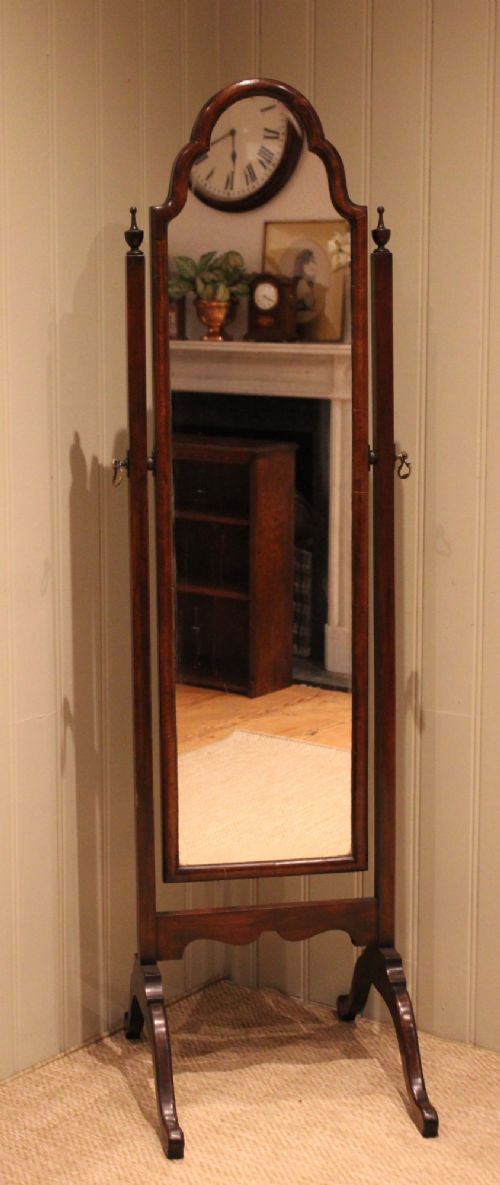
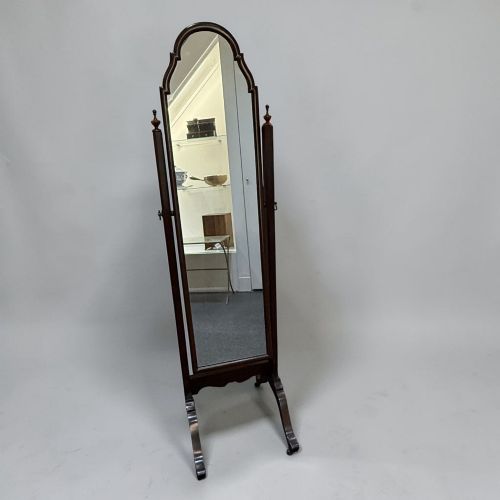
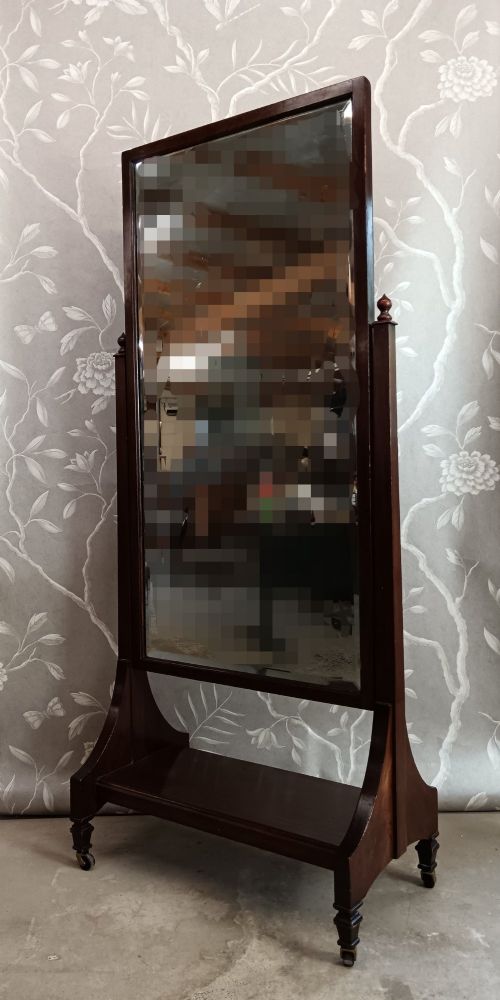
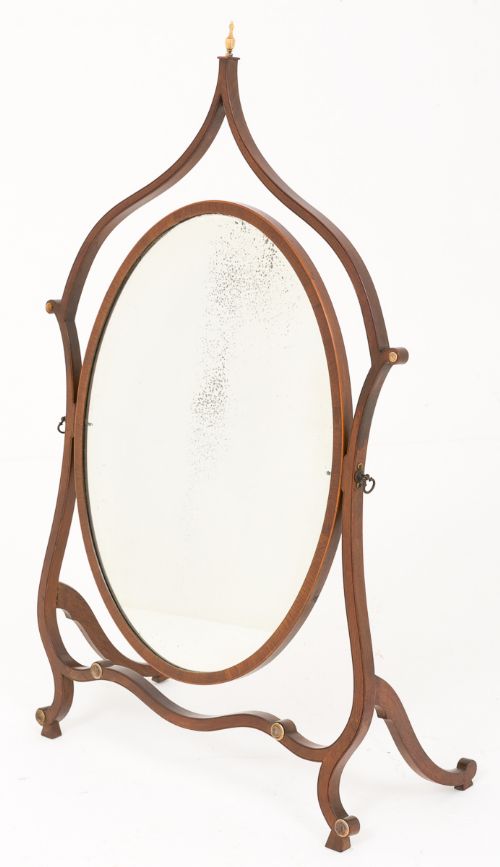
When you search for a traditional mahogany floor mirror, you find freestanding cheval glasses designed for the dressing room or bedroom. The pieces on this page span the Georgian, Victorian, and American Empire periods, showing how the form evolved across the nineteenth century.
Most examples take the form of cheval mirrors, held within pivoting wooden frames that allow the glass to tilt. You also encounter wall mirrors and large dressing pieces alongside standard freestanding frames.
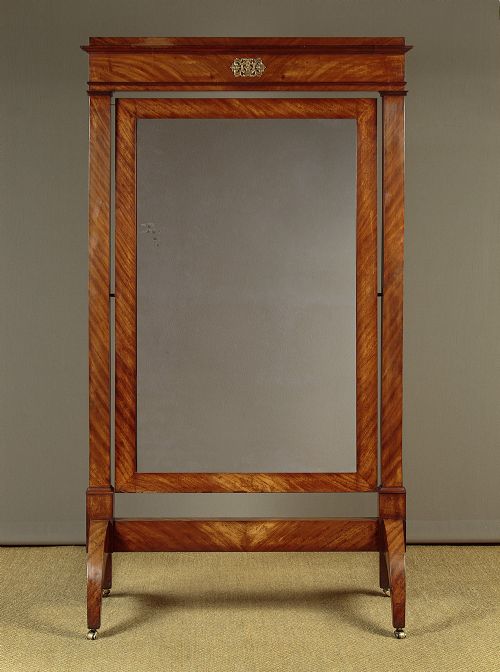
Makers utilised rich timbers and brass hardware, creating substantial furniture designed to anchor a room. The styles range from restrained George III and Hepplewhite lines to heavier William IV and grand Regency proportions.
How they were made
Craftsmen built these frames from solid and veneered mahogany, often selecting timber with rich grain patterns and warm patination. Satinwood inlay occasionally appears as a contrasting detail on specific stylistic revivals.
The heavy glass plates sit securely within adjustable frames supported by sturdy floor stands. Brass mounts, castors, and pivot screws provide both mechanical function and decorative accent to the timber construction.
Traditional Mahogany Floor Mirror Retail Price Guide 2026
Typical asking prices for traditional mahogany floor mirror among the pieces listed under this phrase on Sellingantiques today, from the lower quarter to the upper quarter. They describe what is for sale here now, not the wider market.
Materials across these items combine solid mahogany, mirror glass, and polished brass.
What varies in quality
Quality rests in the proportion of the frame and the depth of the timber's grain. Pieces from the Georgian and early Victorian eras often display finer joinery and more considered turning on the uprights.
The weight of the brass hardware and the clarity of the original mirror glass further separate standard examples from finer works. Substantial proportions and well-balanced support stands indicate superior cabinet work.
The Traditional Mahogany Floor Mirror Glossary
- Cheval mirror
- A freestanding full-length mirror mounted on a pivoting frame between two upright posts. This design allows the user to tilt the glass plate to various angles.
- George III
- A British stylistic period spanning the second half of the eighteenth century and early nineteenth century. Furniture from this era often exhibits refined classical proportions and elegant mahogany framing.
- William IV
- A British design period dating from the 1830s characterised by heavier, robust forms and substantial timber presence. Pieces often utilise bold mahogany grains and strong architectural lines.
- Satinwood
- A durable, yellowish timber native to India and Sri Lanka used for contrasting inlay and stringing on finer mahogany furniture. It provides a bright visual accent against dark woods.
Traditional Mahogany Floor Mirror: Frequently Asked Questions
Where should I place a floor mirror?
These tall mirrors suit bedrooms, dressing rooms, and spacious hallways where a full-length reflection is practical.
Position them near natural light sources to brighten darker corners and add a sense of depth to the interior.
Are these mirrors heavy to move?
Solid mahogany construction and large glass plates make these pieces substantial items of furniture. Many examples feature original brass castors on the feet to assist with gentle repositioning across flat flooring.
Enlist help when moving them between rooms to protect the frame joints and floor surfaces.
How do I date a mahogany mirror?
Dating relies on observing the timber choice, cabinet joints, hardware style, and overarching period characteristics. Georgian and Victorian pieces show distinct shifts in proportion, turning details, and structural heft.
Comparing the frame design to documented pieces from the same era helps narrow down the decade of manufacture.