

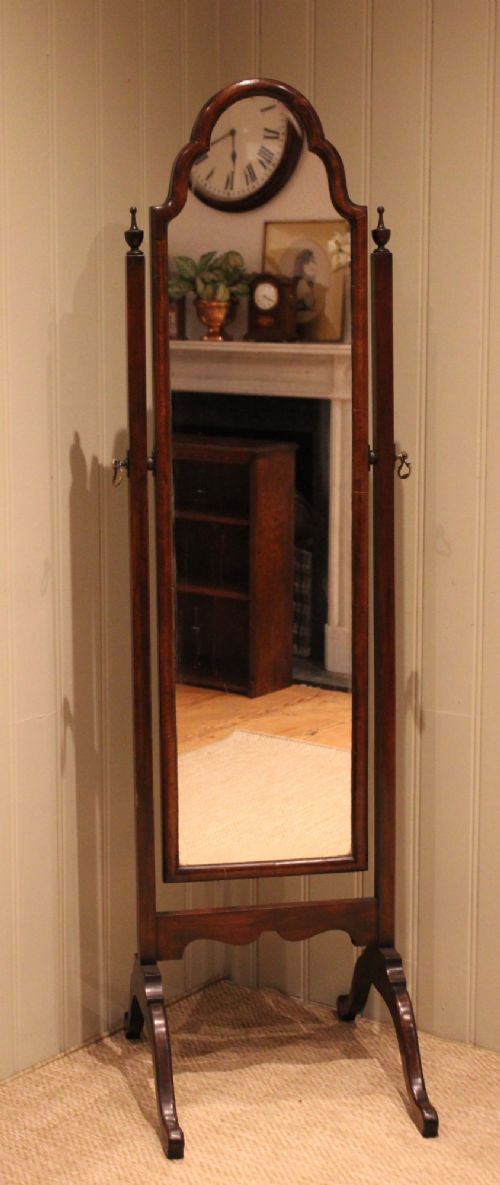
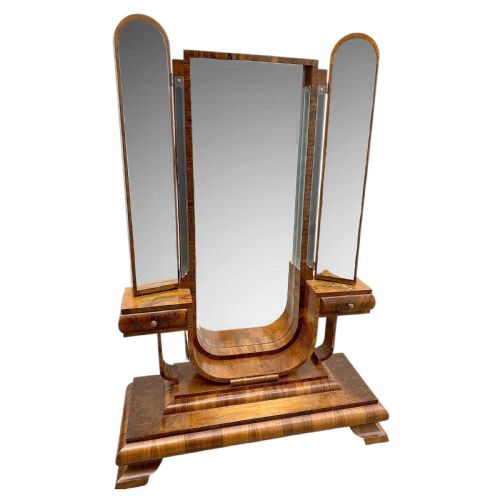
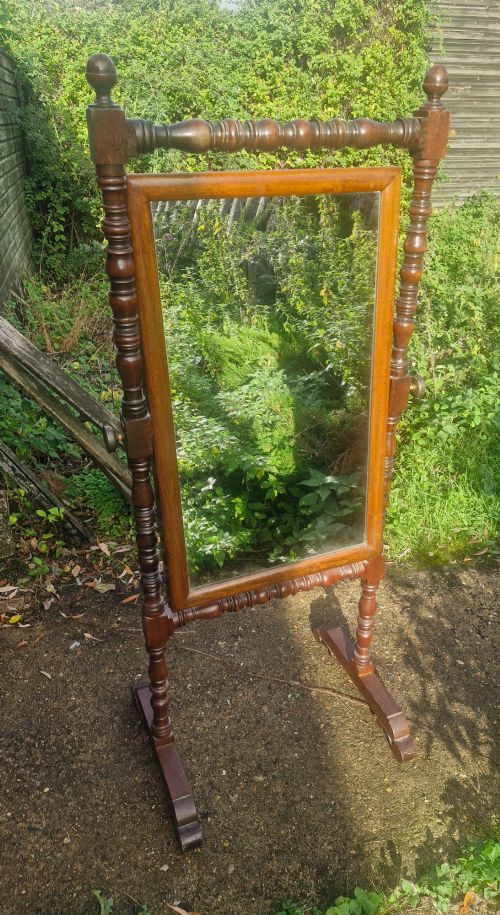
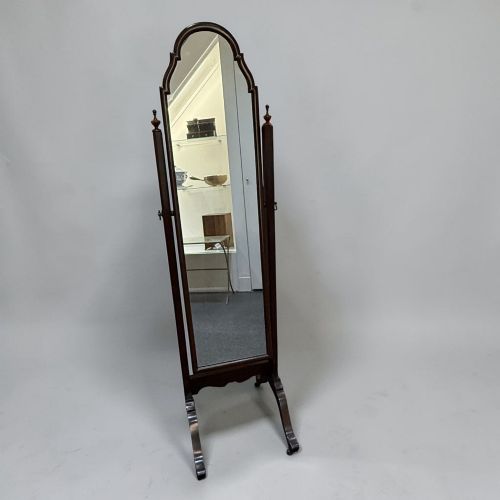
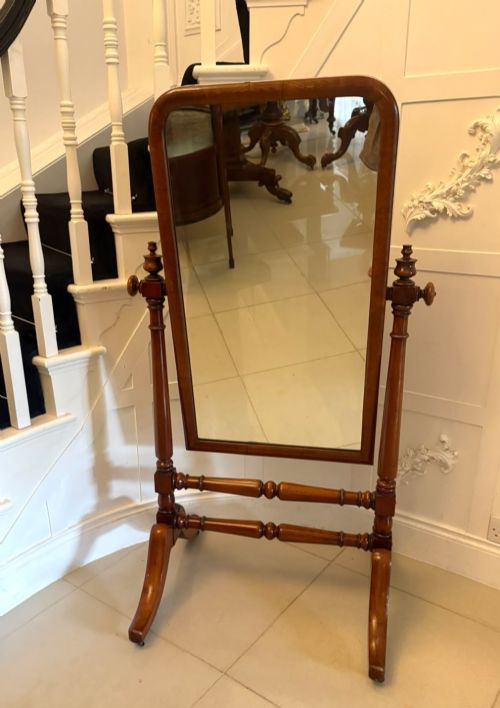
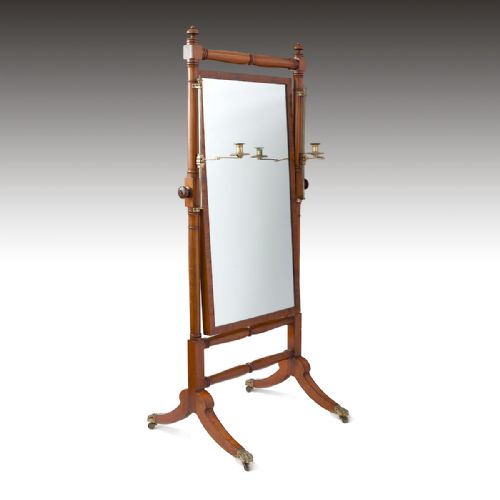
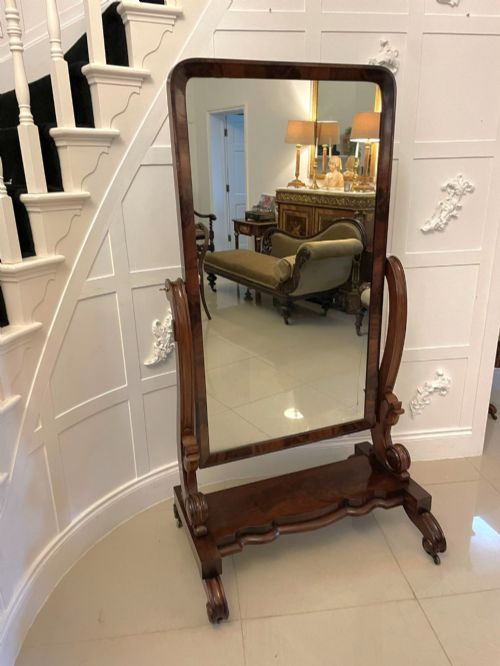
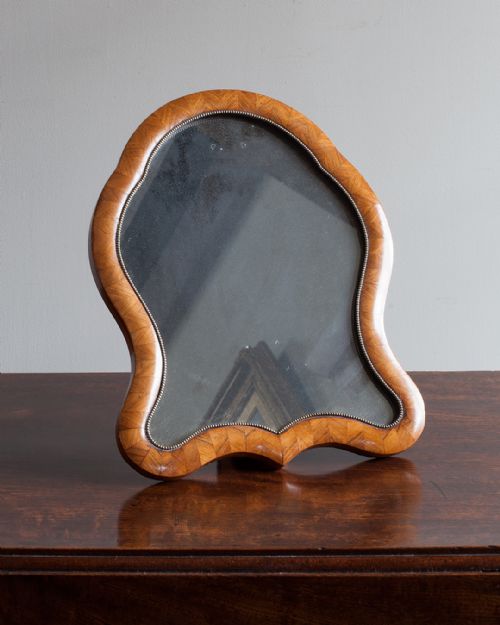
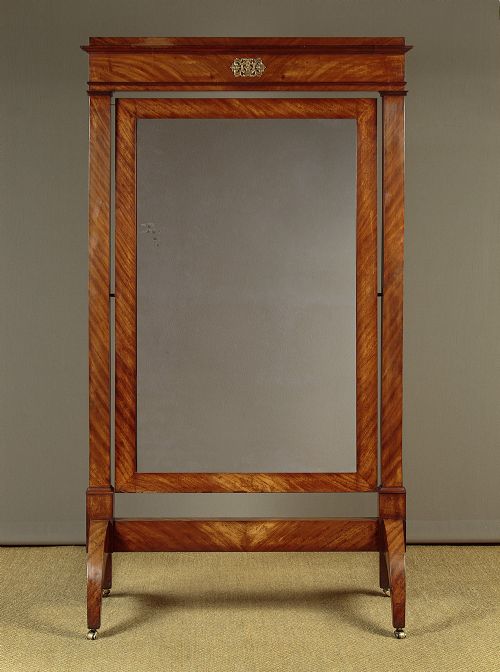
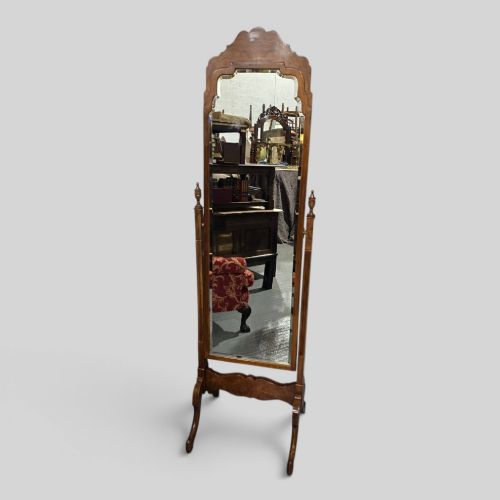
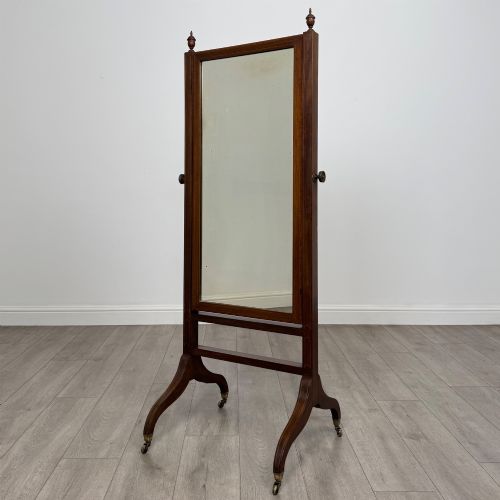
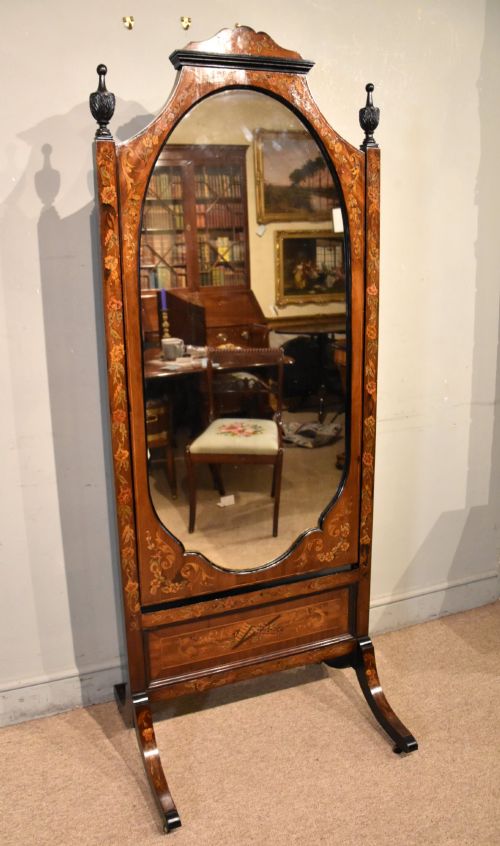
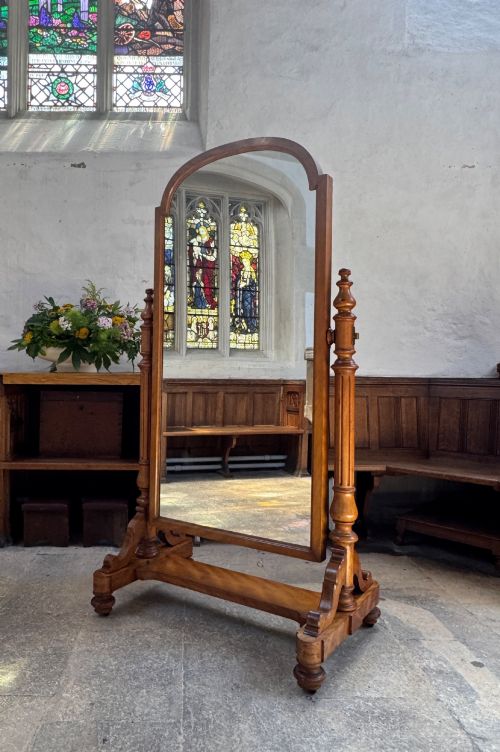
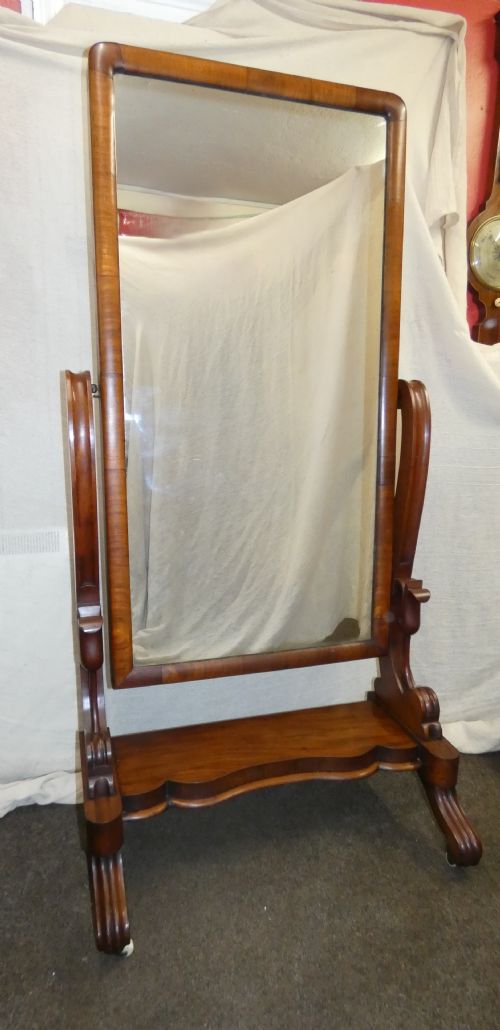
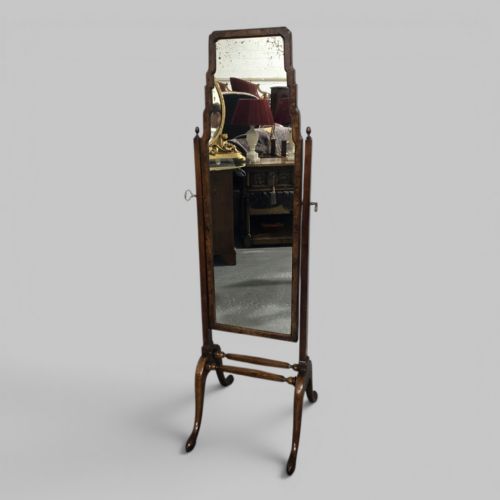

Freestanding Dressing Glass Mirror
A freestanding dressing glass mirror brings practical elegance to a room, offering a full-length reflection framed in period timber.
Freestanding Dressing Glass Mirror
When you search for a freestanding dressing glass mirror, you encounter pieces designed to tilt and adjust for personal grooming across several centuries. The selections on this page span the nineteenth century, the Regency era, the Victorian period, and the Edwardian years.
The most common forms are full-length cheval mirrors and smaller table or toilet mirrors. These objects sit upon sturdy floor frames or rest directly on furniture surfaces.
Makers utilised woods such as mahogany, walnut, satinwood, and oak, often incorporating brass fittings and mirror glass. Styles range from Georgian and Regency to Victorian and Edwardian interpretations.
What varies in quality
The calibre of a freestanding dressing glass mirror rests on the selection of timber and the crispness of the carving. Finely figured mahogany veneers and substantial brass mounts distinguish superior examples from simpler utilitarian pieces.
Proportion and stability dictate the merit of the frame. Well-designed standards support the weight of the glass smoothly without sagging at the pivot joints.
Freestanding Dressing Glass Mirror Retail Price Guide 2026
Typical asking prices for freestanding dressing glass mirror among the pieces listed under this phrase on Sellingantiques today, from the lower quarter to the upper quarter. They describe what is for sale here now, not the wider market.
Listings feature freestanding dressing glass mirror examples spanning the Regency, Victorian, and Edwardian periods in mahogany, walnut, and oak.
Gillow
The Freestanding Dressing Glass Mirror Glossary
- Cheval mirror
- A large freestanding mirror designed to show the full figure, suspended on vertical pivots between two upright posts. This form became popular during the late eighteenth century and remained a bedroom staple.
- Toilet mirror
- A smaller glass designed to sit upon a dressing table or chest of drawers, often featuring small accessory drawers in the base. These pieces are sometimes called dressing table mirrors.
- Swing mirror
- Any mirror plate hung on horizontal pivots allowing the glass to tilt forwards and backwards. This mechanism is central to the operation of both table and floor-standing dressing glasses.
- Flame mahogany
- Timber cut from the fork of the mahogany tree where the branch joins the trunk, producing a distinctive flickering flame pattern. Cabinetmakers prized this veneer for principal display surfaces.
Freestanding Dressing Glass Mirror: Frequently Asked Questions
Where should I place a cheval mirror?
A freestanding dressing glass mirror functions best in a bedroom or dressing room where natural light can strike the glass. Position the piece perpendicular to windows to maximise illumination without creating direct glare.
Ensure the floor surface is level so the heavy frame rests securely on its feet or castors. Adequate clearance around the swivel frame allows the glass to tilt fully without striking surrounding furniture.
How do I adjust a tilt mirror?
Most period swing mirrors rely on threaded brass pivot screws set into the side uprights. Tightening or loosening these thumb screws controls the tension that holds the glass at your chosen angle.
Support the weight of the glass with one hand while adjusting the hardware with the other to prevent sudden slipping. Regular checking keeps the pivots functioning smoothly across the lifetime of the piece.
What is the difference between cheval and toilet mirrors?
A cheval mirror is a tall, freestanding floor model designed for viewing the entire outfit. These items require floor space and often feature heavy trestle bases.
Toilet mirrors are compact versions built to rest on top of a dressing table or chest. They usually incorporate small drawer boxes beneath the swing frame to store personal items.
How do I date a mahogany dressing glass?
Dating relies on observing the construction methods, wood selection, and prevailing decorative style of the frame. Earlier pieces from the Regency period often display crisp reeding and finer brass mounts.
Later Victorian and Edwardian examples tend to feature heavier proportions and varied secondary timbers. Comparing the hardware style and veneer grain helps narrow the decade of manufacture.