


Traditional Living Room Carpet
A traditional living room carpet grounds a large interior with enduring pattern, offering rich Persian and Turkish styles woven from wool, cotton, and silk.
Traditional Living Room Carpet
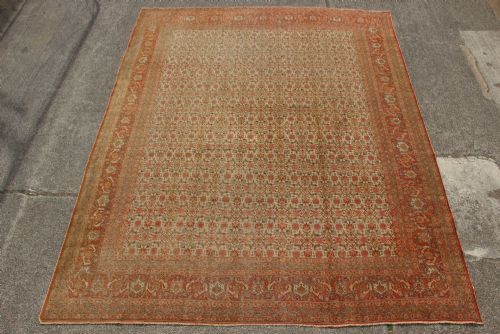
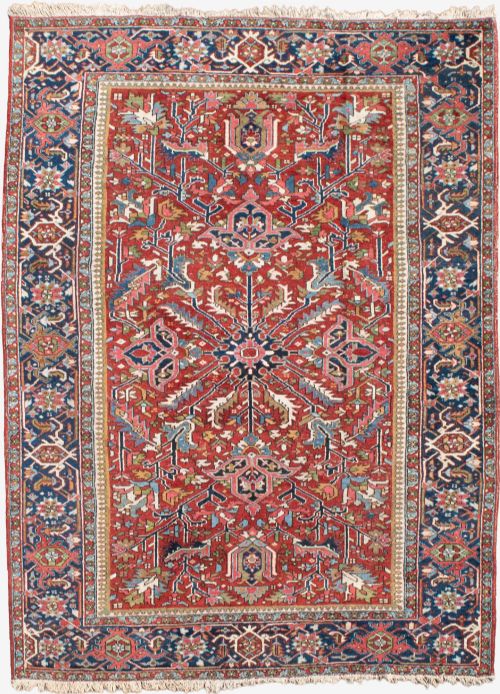
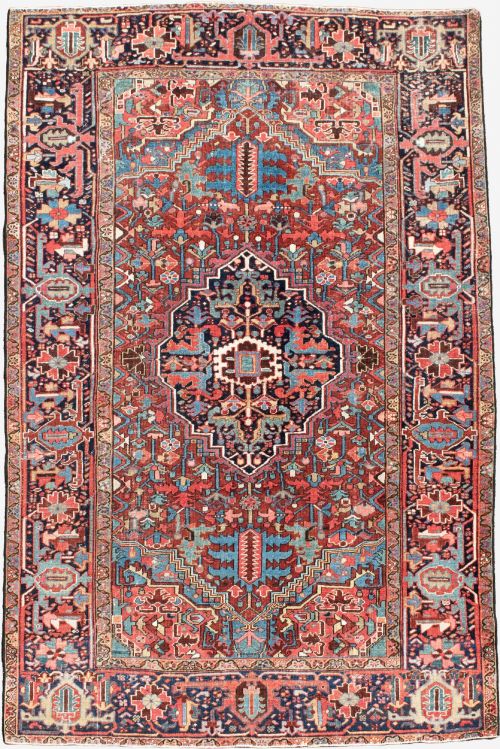
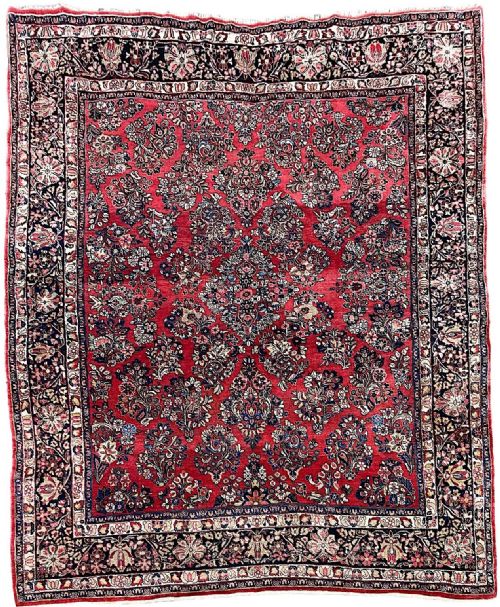
When searching for a traditional living room carpet, a buyer encounters large floor coverings originating primarily from Persia and Turkey, spanning the late nineteenth century through the mid twentieth century. These pieces encompass named weaving traditions such as Heriz, Tabriz, Oushak, and Qum, alongside regional types like Hamadan, Malayer, and Kashan.
The most common forms on this page are substantial room-sized carpets and smaller area rugs, produced in workshops and tribal communities alike. They display varied palettes, from pale blues and scarce pinks to deep ivory grounds and colourful traditional schemes.
Each specimen reflects the distinctive design vocabulary of its origin, ranging from large central medallions in Oushak carpets to geometric precision in Heriz room-sized pieces.
How they were made
These floor coverings are constructed predominantly from wool, frequently utilising cotton foundations for warp and weft threads to ensure structural stability. Certain finer examples incorporate silk, particularly in specific regional pieces where partial silk content permits intricate detail.
The technique relies on hand-knotting fibres onto a foundation, a laborious process executed by skilled artisans in workshops and villages across the Near East. Natural and early chemical dyes provide the enduring colourways seen across the surviving nineteenth and twentieth century examples.
A solitary willow tree stands quietly woven into a pink Turkish ground, watching the decades pass beneath quiet living room floors.
What varies in quality
The distinction between tiers rests upon knot density, the precision of the design execution, and the quality of the wool employed in the pile. Finer knotting permits sharper curves and more detailed motifs, whereas coarser weaves result in bolder, more simplified geometric interpretations.
Condition and integrity also define the upper end of the scale, where intact borders and minimal wear preserve the original artistic vision of the weaver. The choice of materials further elevates a piece, as seen in examples incorporating silk elements or exceptionally fine wool.
The Traditional Living Room Carpet Glossary
- Medallion
- A central ornamental motif dominating the field of the carpet. This design element serves as the focal point around which surrounding corners and borders are organised.
- Warp
- The stationary vertical threads stretched onto a loom before weaving begins. These parallel strands form the foundational skeleton that supports the knots and weft.
- Weft
- Horizontal threads passed alternately over and under warp threads to lock knots in place. This material contributes to the structural firmness of the woven textile.
- Pile
- The upright yarn surface formed by knotted threads on a carpet. Walking and age interact directly with this upper layer, revealing the underlying foundation where wear occurs.
- Ground
- The background field colour surrounding the central design elements of a carpet. This expanse defines the primary visual tone observed in the room.
Traditional Living Room Carpet: Frequently Asked Questions
How do I choose the right size for a room?
Measure the intended floor space while allowing a consistent margin of bare flooring around the perimeter of the furniture arrangement. Large room-sized formats anchor central seating groups effectively.
Consider the door clearance and placement of heavy furniture legs when selecting dimensions to ensure the carpet sits comfortably within the living space.
How do I clean an old carpet?
Gentle regular vacuuming without a rotating brush roll prevents dust accumulation within the wool pile. Professional specialist cleaning remains essential for deep restoration.
Avoid excessive moisture and harsh chemical treatments which damage natural fibres and fugitive traditional dyes.
How do I tell Heriz and Tabriz carpets apart?
Heriz carpets typically display bold, geometric medallion designs with strong architectural lines woven in northwest Persia. Their construction is robust and sturdy.
Tabriz carpets tend to feature more curvilinear floral motifs and intricate medallion patterns reflecting established urban workshop traditions.
What is an Oushak carpet?
An Oushak carpet originates from Turkey and is known for a softer palette and looser knotting technique. These pieces often feature large-scale floral designs or central medallions against pale ivory or pink grounds.
Their relaxed aesthetic integrates well into both traditional and contemporary interiors.